Audience analysis is the process of systematically gathering and interpreting information about your target audience to make smarter marketing, content, and product decisions. In modern AI-driven search, demographic analysis alone explains less than 20% of user purchasing behavior, while behavioral analysis combined with psychographic data can increase targeting accuracy by up to 65%.
If you're publishing solid content and still not getting traction, there's a good chance the issue isn't volume. It's fit. Teams often know what they want to say, but they haven't done enough work to understand what the audience needs, how that need shows up in search behavior, and what kind of evidence an AI system is likely to treat as useful.
That's why most old audience analysis advice breaks down now. It was built for campaign planning, broad personas, and static content calendars. Search doesn't work that way anymore. AI Overviews, LLM-based discovery, and multi-touch buyer journeys reward teams that understand audience intent in motion, not just audience traits on a slide.
What Is an Audience Analysis and Why Does It Matter
At its simplest, audience analysis is the disciplined process of figuring out who you're trying to reach, what they care about, what they already know, what they do, and what will help them act. That sounds basic. In practice, it's the difference between publishing generic pages and creating material that earns attention.
The roots of the practice go back much further than digital marketing. In 1997, McQuail described audience analysis as a systematic consideration of an audience's "demographic characteristics," and that foundation has since expanded into a far more data-heavy approach that requires processing "vast volumes of data" to create intelligent groupings for modern marketing, as outlined in this overview of audience analysis in communication theory/05:_Audience_Analysis/5.02:_Approches_to_Audience_Analysis).
Today, a useful analysis doesn't stop at age, job title, or location. It also looks at motivations, content habits, buying signals, objections, and search patterns. That's where teams usually feel the gap. They have dashboards, survey notes, CRM fields, and keyword lists, but those inputs aren't unified into decisions.
Practical rule: If your audience analysis can't change a content brief, a landing page, or an SEO priority, it isn't analysis yet. It's just collected data.
A modern workflow usually starts with better instrumentation, not better guesswork. If your team is still working from scattered spreadsheets and anecdotal sales feedback, it's worth reviewing a more structured approach to implementing data analytics strategies so audience insights become operational instead of theoretical.
What matters most is this. Audience analysis isn't a brand exercise. It's a decision system. It tells you what to publish, how to frame it, which segments deserve different treatments, and where your current messaging misses the audience you think you're attracting.
The Business Case for Understanding Your Audience
Teams often don't struggle because they lack content. They struggle because they produce content for an imaginary average customer who doesn't exist.
That creates expensive waste. Broad targeting weakens messaging, bloats production, and gives internal teams false confidence because the campaign looks busy even when it isn't relevant. The business case for audience analysis is simple. It helps teams stop treating all traffic, all leads, and all readers as if they behave the same way.
Why broad demographics don't carry the strategy
A lot of older marketing plans still lean on age bands, company size, geography, and income level. Those fields have value, but they're rarely enough to explain why one audience segment converts and another stalls.
A better model combines what people are with what they do. According to Azira's explanation of modern audience analysis, getting a 360-degree view now requires combining quantitative metrics like churn or time-on-site with qualitative feedback like social sentiment or interviews. That's a meaningful shift. It moves audience work from category labels into actual decision behavior.
That matters in day-to-day operations:
- Content teams can stop producing one-size-fits-all pages and instead build pages for different levels of awareness and intent.
- Paid media teams can tighten targeting based on observed actions, not just assumed fit.
- SEO teams can separate informational demand from commercial demand and assign the right page type to each.
- Account teams and strategists can explain performance with more precision because they know which segment the work was built for.
What good audience insight changes inside a team
The strongest audience analysis work creates fewer arguments about tactics because it gives everyone the same frame of reference. Instead of debating whether a page needs more detail, the team can ask whether the target segment needs more detail. Instead of arguing over channel mix, the team can look at where the intended audience engages.
For agencies handling multiple clients, this gets even more important. Audience insight is what keeps one account from borrowing assumptions from another. That's also why audience work overlaps with market and search analysis. If your team is trying to sharpen strategic positioning across competitive SERPs, this guide to competitive intelligence SEO is a useful companion read.
Audience analysis doesn't just improve messaging. It improves prioritization, which is usually where margin is won or lost.
Gathering Intelligence Key Methodologies and Data
Bad audience analysis usually fails for one reason. It relies on a single lens.
A team pulls analytics from GA4, or runs one survey, or asks sales for feedback, then treats that slice as the whole story. Useful audience intelligence comes from combining different types of data that answer different questions.
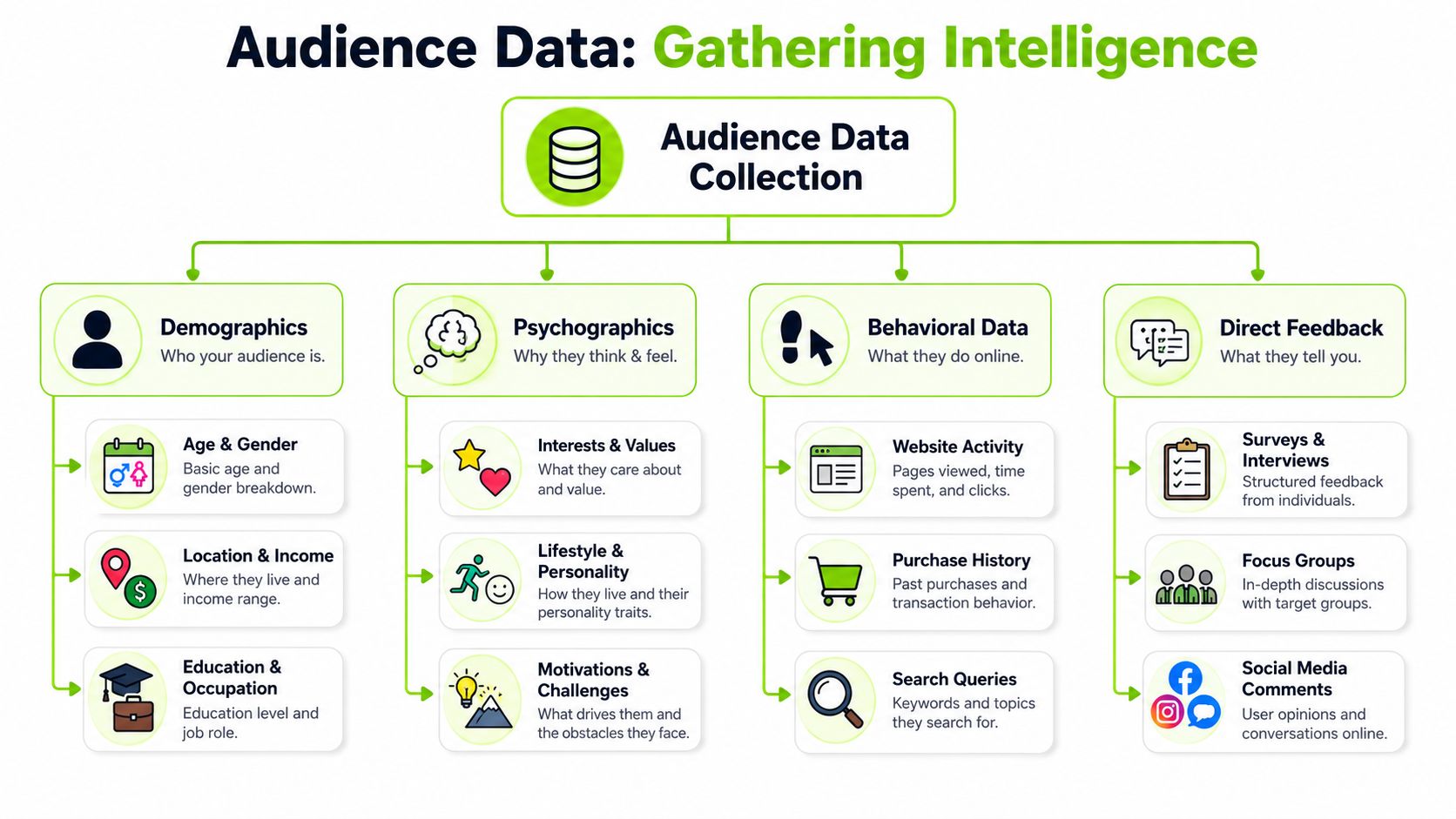
Demographics tell you who
Demographic data gives you the structural basics of an audience. Think age, location, income, education, role, industry, or company size. In B2B, it may also include team function and buying authority.
This layer helps with:
- Market fit checks that confirm whether you're attracting the people you serve
- Localization decisions like region-specific content or language variants
- Channel planning when certain segments cluster in different platforms or formats
Useful sources include CRM records, ad platform reporting, customer forms, lead enrichment tools, and internal sales data.
Psychographics tell you why
Psychographic data explains values, beliefs, anxieties, priorities, and motivations. Messaging quality typically rises or falls based on this insight. Two buyers can look identical in a CRM and still respond to completely different positioning.
Psychographic clues often come from:
- Customer interviews where you listen for recurring concerns and desired outcomes
- Survey responses that reveal priorities in the customer's own language
- Review mining across G2, Reddit, app stores, and support logs
- Sales call notes that expose objections, urgency triggers, and trust factors
One useful method from the verified research is ordered categories sampling, where audience members rank values in order of importance. That matters because many teams know the audience's topics, but not the audience's hierarchy of priorities.
Behavioral data tells you how
Behavioral data is where modern audience analysis gets sharper. It tells you what people do, not what they say they do.
That includes site behavior, purchase history, on-page engagement, content consumption paths, search query patterns, repeat visits, email clicks, community participation, and social interaction. This is also where audience analysis starts to matter directly for search visibility. Search behavior reveals timing, phrasing, and intent in a way demographic fields never can.
A practical stack often looks like this:
| Data type | What it answers | Common sources |
|---|---|---|
| Demographic | Who is this person or account? | CRM, forms, lead enrichment, ad platforms |
| Psychographic | What do they care about? | Surveys, interviews, reviews, call notes |
| Behavioral | What do they do? | GA4, Search Console, product analytics, email tools |
| Direct feedback | What do they say plainly? | NPS responses, support tickets, sales transcripts |
For content teams, keyword research belongs in this mix too. Not as a standalone SEO task, but as audience evidence. The language people use in search often reveals the gap between your internal terminology and the way real buyers frame a problem. That's why this guide on using keywords in content fits naturally into audience work.
The strongest audience models don't come from one perfect source. They come from pattern matching across imperfect sources.
Winning in AI Search with Audience Insights
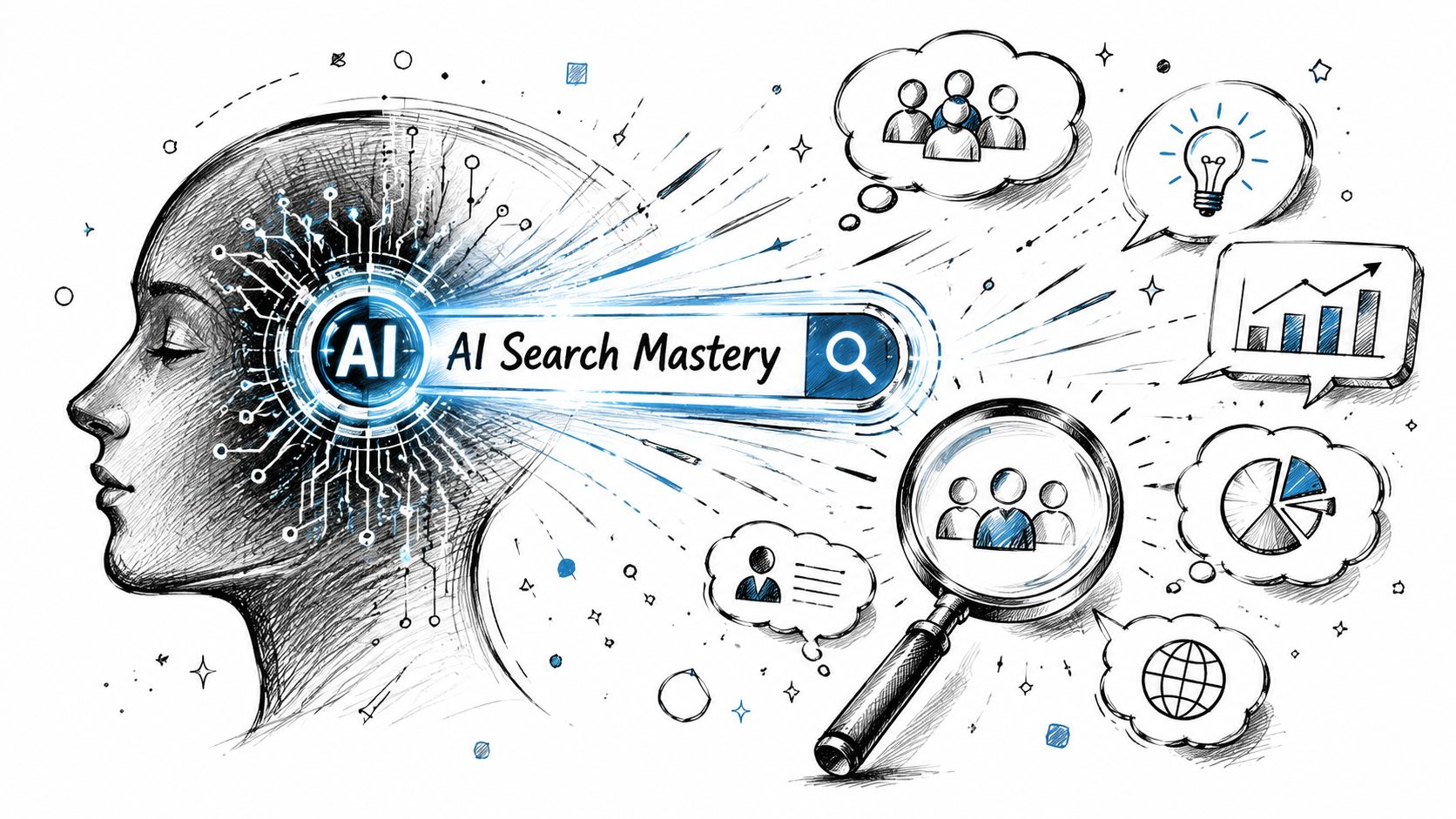
AI search has changed the standard for relevance. Ranking for a keyword still matters, but it's no longer enough to know that a topic has demand. You also need to understand which audience segment is asking, what form of answer they expect, and what signals make your content citation-worthy in AI-driven environments.
Why AI systems reward deeper audience understanding
In modern AI-driven search, traditional demographic analysis alone explains less than 20% of user purchasing behavior, while behavioral analysis can increase targeting accuracy by up to 65% according to QuestionPro's discussion of audience analysis in modern marketing. The same source states that brands performing real-time, multi-axis audience analysis see a 2.5x higher ROI in search campaigns.
Those numbers line up with what many teams are seeing operationally. AI surfaces don't just reward topical coverage. They reward alignment. If your page addresses the right topic but misses the audience's actual framing, level of sophistication, and situational context, it often won't become the source people expect it to be.
That changes how SEO teams should work. Instead of asking only, "What keyword should we target?", the stronger question is, "What audience intent pattern is behind this query, and what proof would make our page useful for that pattern?"
How to connect audience intent to AI visibility
Older audience analysis guides usually stop too early. They help you define a persona, but they don't explain how that persona connects to AI Overviews or LLM discovery.
A workable approach looks like this:
- Track query framing by comparing informational, evaluative, and action-oriented searches across segments.
- Study engagement paths to see which pages different audiences read before converting or returning.
- Watch cross-platform behavior because community discussions, social commentary, and repeat mentions often reveal language patterns before they show up in formal SEO tools.
- Map citation gaps by identifying questions your audience asks repeatedly but your current content answers poorly or not at all.
This is one reason social listening has become more useful to search teams. A strong reporting process can reveal what audiences repeatedly discuss, where terminology is shifting, and which themes deserve dedicated coverage. For that angle, PostPulse's approach to social reporting is a practical reference.
A lot of teams are also using AI tools to accelerate this research process, but the tool isn't the strategy. The strategy is still audience understanding. The tool just makes pattern detection faster. If you're evaluating where automation fits, this overview of using AI in SEO gives a grounded view of where AI helps and where human judgment still matters.
Here's a useful explainer on how AI systems process and retrieve information in search workflows:
"Human audience fit" and "AI citation fit" aren't separate problems anymore. They're increasingly the same problem viewed through different interfaces.
Your Step-by-Step Audience Analysis Framework
A good audience analysis process shouldn't end with a glossy persona deck that nobody uses. It should produce a working document that shapes briefs, pages, campaigns, and reporting. The easiest way to get there is to keep the framework simple and repeatable.
Step 1 Define the decision you need to make
Start with the business question, not the data source. Are you trying to improve organic visibility for a product line, reduce mismatch on a landing page, tighten paid targeting, or build content for a new segment?
That scope changes what kind of audience analysis you need. A team creating onboarding documentation needs a different level of segmentation than a team testing category page messaging.
Step 2 Gather from multiple evidence types
Pull inputs from analytics, CRM data, keyword research, interviews, support logs, sales notes, and customer feedback. You don't need every possible source, but you do need contrast.
If one source says a segment cares about price and another shows they spend time on implementation content, don't rush to resolve the contradiction. That's often the signal. Audience behavior is rarely neat.
Step 3 Segment by meaningful differences
The point of segmentation isn't to create more personas. It's to separate groups that need different treatment.
In technical communication, effective analysis must produce a reader profile by segmenting audiences into categories such as experts, technicians, executives, and nonspecialists. Failing to do that can decrease comprehension for nonspecialists by 40 to 60 percent while increasing time-on-task for experts by 25 percent, based on this guidance on audience analysis in technical writing.
That lesson carries over to marketing. If you write for an "average" reader, you'll often end up too shallow for high-intent buyers and too dense for early-stage visitors.
Step 4 Build a persona that the team can actually use
A persona should help a strategist write a brief, help a writer shape the page, and help an SEO lead decide what not to publish. If it doesn't support those decisions, it's too abstract.
Here's a practical template:
| Category | Key Questions to Answer | Example Data Point |
|---|---|---|
| Segment name | What do we call this audience internally? | Mid-market operations lead |
| Role or context | What job, function, or situation defines them? | Manages cross-functional implementation |
| Primary goal | What are they trying to achieve? | Reduce rollout friction |
| Main pain point | What's blocking progress? | Tool sprawl and reporting gaps |
| Search intent | What kind of questions do they ask first? | Comparison, implementation, troubleshooting queries |
| Knowledge level | How familiar are they with the topic? | Informed buyer, not technical specialist |
| Trust signals | What convinces them? | Clear methodology, examples, transparent definitions |
| Content preference | What format helps them most? | Concise guides, checklists, product comparison pages |
| Objections | What makes them hesitate? | Complexity, migration effort, internal buy-in |
| Best next action | What should this person do after reading? | Request deeper technical review or compare options |
Step 5 Apply the analysis and update it
Many teams fall short at this stage. They finish the analysis, circulate a slide deck, then move on.
A better system turns the audience model into operating rules:
- Use it in content briefs so the target reader and intent are explicit before drafting starts.
- Use it in page reviews so revisions focus on fit, not preference.
- Use it in reporting so performance is read by segment, not just aggregate traffic.
- Use it in planning cycles so audience assumptions get checked against fresh evidence.
Build fewer personas, but make each one strong enough to influence real work.
Common Audience Analysis Mistakes to Avoid
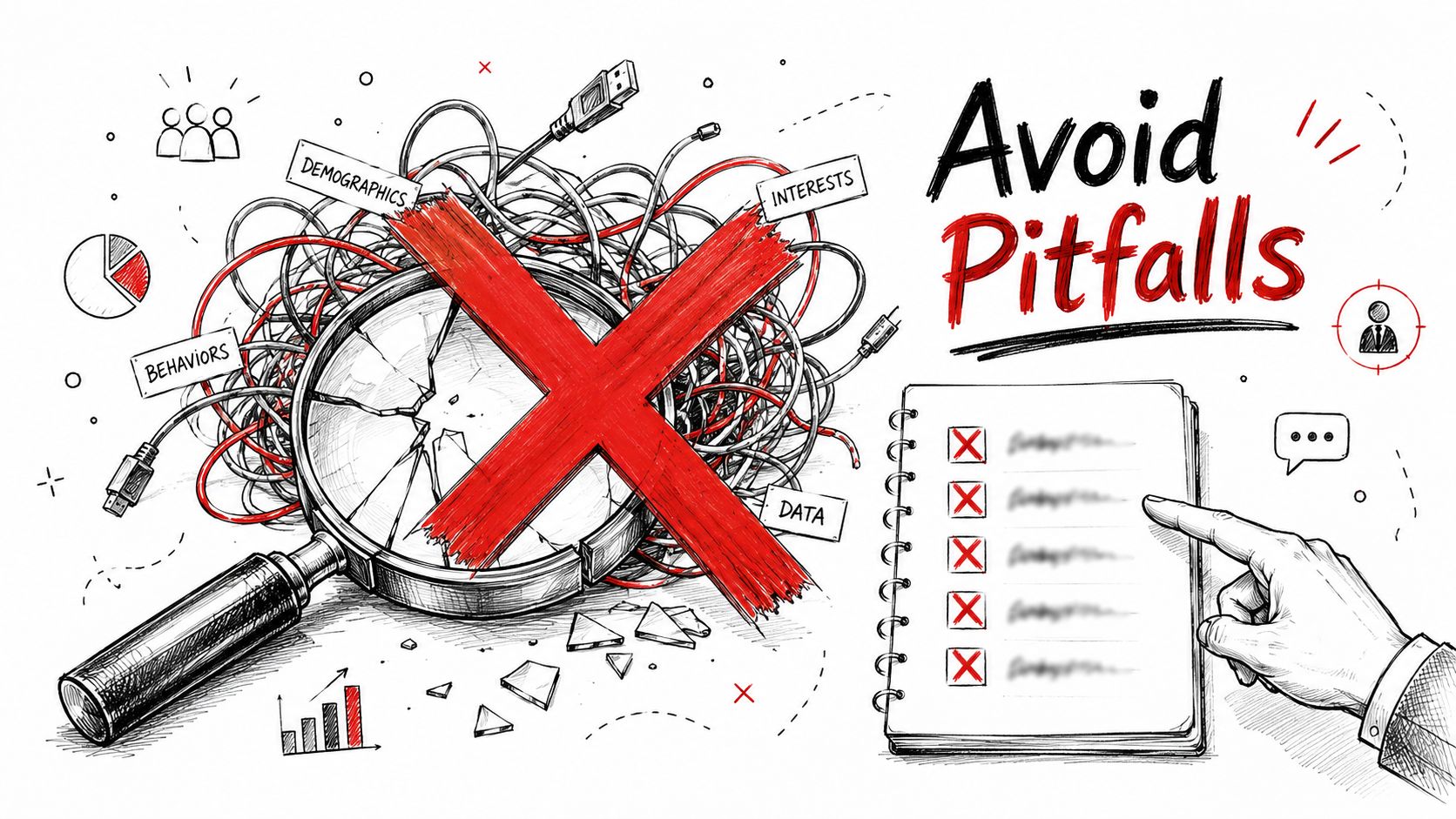
Most audience analysis problems don't come from lack of effort. They come from familiar habits that feel efficient but produce weak decisions.
Treating assumptions like insight
A team says, "Our audience is busy, so they want short content." Maybe. Or maybe they want dense, practical material that gets to the point and doesn't waste their time. Brevity and usefulness aren't the same thing.
This mistake often shows up when personas are built from internal opinions instead of observed behavior, customer language, and actual performance data.
Using one source and calling it complete
Analytics can tell you where users dropped. They usually can't tell you why. Interviews can reveal motivations. They often miss large-scale behavior patterns.
If you rely on only one source, you'll overfit your strategy to its bias. Good audience analysis is built from contrast.
Creating too many personas
When everything becomes a segment, nothing becomes actionable. Teams end up with a dozen lightly differentiated profiles and no clear production priorities.
A smaller set of distinct audiences works better. The key test is whether a segment needs different messaging, structure, or content pathways.
Freezing the analysis in time
This is the mistake that matters most now. A common but critical flaw is treating audience analysis as a static, one-time report. With 68% of search queries being voice or AI-assisted, user intent shifts so rapidly that static analysis becomes obsolete, according to internal Surnex market data or synthesized industry trends.
That doesn't mean your audience changes completely every week. It means the way their needs appear in search, comparison behavior, and content interaction can change fast enough that a once-a-quarter refresh is often too slow.
A more durable process includes a feedback loop:
- Review search behavior regularly through Search Console, site search, and query clustering
- Monitor content performance by intent instead of by traffic alone
- Feed support and sales insights back in so objections and terminology updates don't stay siloed
- Adjust audience profiles when patterns persist, not just when somebody asks for a refresh
Static personas age quickly. Living audience models stay useful because teams keep pressure-testing them against behavior.
Turning Audience Insights into Strategic Action
What is an audience analysis, in practical terms? It's a way to reduce guesswork. It helps teams choose the right topics, frame those topics for the right readers, and improve the odds that both humans and AI systems find the content worth surfacing.
The shift that matters most is moving from a one-time document to an ongoing process. Demographics still have a place. But the teams getting better search performance are usually the ones studying behavior, motivations, query patterns, and content interaction together, then using those insights to make sharper editorial and SEO decisions.
If you're trying to put this into practice, start smaller than you think. Pick one audience segment. Rework one content brief. Update one core landing page using actual audience evidence instead of internal assumptions. Then compare what changes in engagement quality, conversion paths, and search visibility.
For teams that need help translating audience understanding into content production, Feather's strategies for growing reach offer a useful perspective on how audience development connects to distribution and consistency. And when you're ready to apply those insights directly in your editorial workflow, this guide on how to write SEO content is a practical next step.
The teams that win in modern search won't be the ones publishing the most. They'll be the ones that understand their audience well enough to publish the most relevant thing at the right moment, in the right format, with the right depth.
If your team needs a clearer way to connect audience insight with search performance, Surnex gives agencies, in-house teams, and developers one place to track AI visibility, monitor SEO signals, spot citation gaps, and understand how brands surface across AI Overviews, ChatGPT-driven discovery, and traditional search.