Are all backlinks still pulling their weight, or are many teams building links for a version of search that no longer exists? That's the actual gap in 2026. Most backlink guides still sort links into old buckets like dofollow, nofollow, guest post, directory, and call it a day. That's useful, but it's incomplete.
Search now has two jobs. You still need rankings in classic results, where backlinks remain one of the clearest authority signals. But you also need visibility in AI-driven experiences, including Google's AI Overviews and answer engines that pull from a broader mix of authority, citation trust, and content usefulness. One recent industry analysis pointed out that most existing content still doesn't explain how AI-driven search models may weigh different backlink types, even though that question is now central for SEO teams working across both traditional and AI search (gap in modern backlink guidance).
That changes how I prioritize links. A backlink isn't just a vote anymore. It's also a credibility marker, a discovery path, and in some cases a citation hint that helps your content become easier to trust, quote, and surface. Some links do all three. Others only create noise.
The good news is that the core playbook still works if you use it with more discipline. Earn links people would place without being forced. Focus on topical fit. Prefer links that sit inside useful content, not boilerplate pages. Build a profile that looks like a real brand being referenced across the web, because that's what both search engines and AI systems can interpret most confidently.
Here are the 10 types of backlinks that matter most, what each one is good for, where each one falls short, and how I'd prioritize them now.
1. Editorial/Content Backlinks
If you can earn only one category of links, make it this one. Editorial backlinks come from publishers, news sites, trade journals, and respected blogs that link because your content helped them write something better.
These are the hardest links to get, which is exactly why they matter. They usually sit in the body of an article, surrounded by relevant text, and they tend to come from sites that already have strong trust with both readers and search systems.
A strong benchmark reinforces that point. Editorial backlinks show up on 72% of top-ranking Google pages, while only 28% of low-ranking pages have them, according to OWDT's overview of backlink value and risk (editorial backlink benchmarks).
Why they matter in SEO and AI search
Traditional SEO likes editorial links because they signal authority and relevance. AI search likely values them for a related reason. If a known publication cites your data, explains your product, or references your guide, that creates a stronger trust trail than a random blog mention.
Think about examples like a cybersecurity publication citing your breach response checklist, or an industry news site referencing your annual salary report. The link is useful on its own, but the citation context matters just as much.
Practical rule: Build assets that deserve to be cited, not just pages that deserve to rank.
What actually works
Editorial links are rarely won with generic blog posts. They come from publishing something another writer needs.
- Original research: Surveys, proprietary usage trends, and benchmark reports give journalists something concrete to cite.
- Strong point of view: Contrarian takes on a market shift often earn links when they help writers frame a story.
- Timely launches: Product announcements, category moves, acquisitions, and major partnerships can create linkable coverage.
If you need a press angle, this guide on how to get press coverage is a useful starting point.
For AI visibility, I put editorial backlinks at the top because they create the clearest combination of authority, context, and external validation.
2. Guest Post Backlinks
Why do some guest posts lift rankings, referral traffic, and brand visibility, while others leave behind a forgettable link on a forgettable site?
The answer is placement quality and contribution quality.
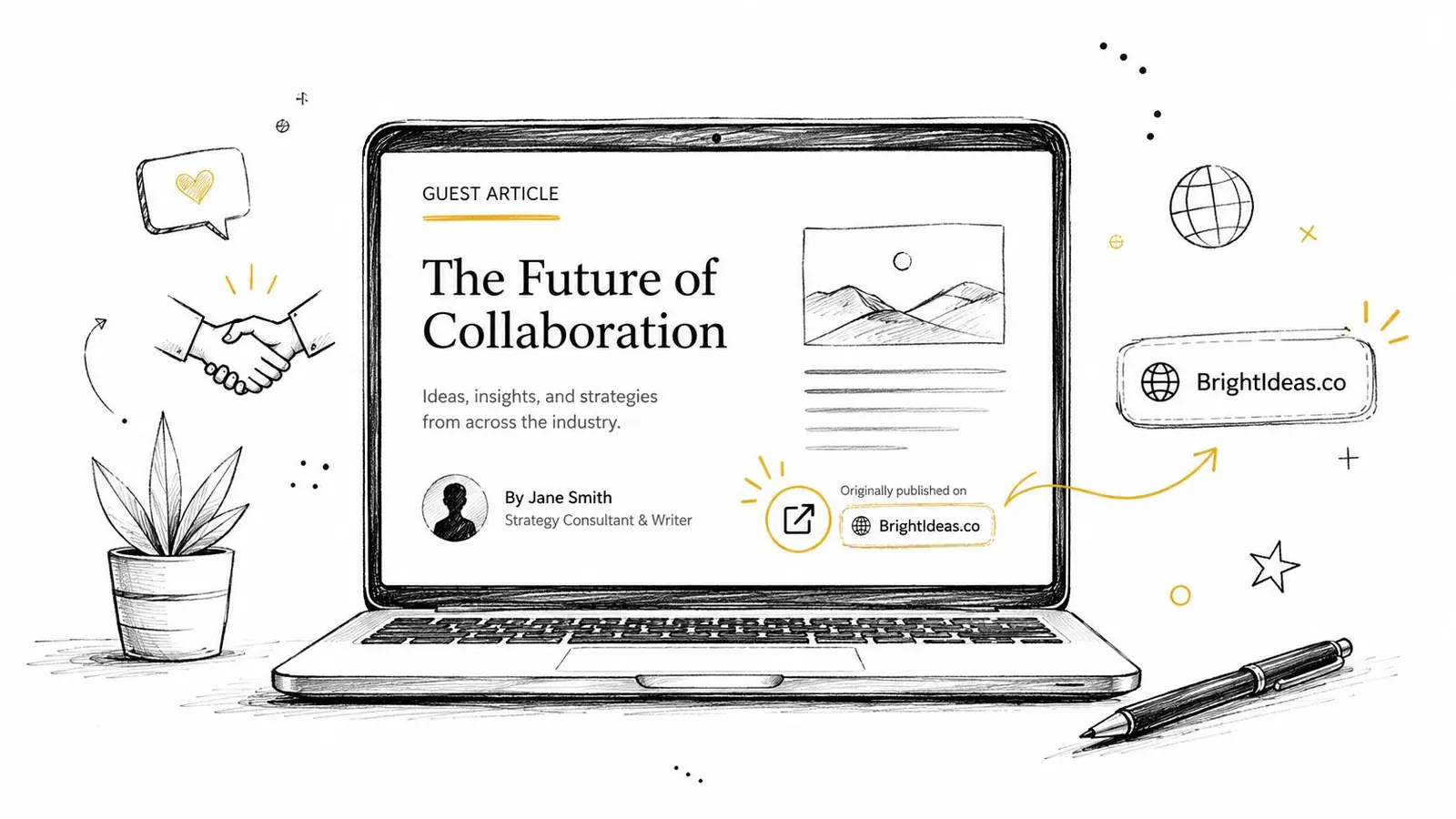
Guest post backlinks still earn their place in a modern link strategy because they let you publish on sites your audience already trusts. That said, they work best as a selective tactic, not a content placement quota. A contributed article on a respected industry publication can strengthen topical relevance, send qualified traffic, and expand the set of places where search engines and AI systems encounter your brand in context.
Where guest posts fit now
I treat guest posting as a controlled way to build relevant mentions on third-party sites. It is not as strong as an unsolicited editorial citation, because you had a hand in creating the placement. But it is far better than waiting passively for links if you already have useful expertise and a clear target publication list.
A strong example is a technical SEO lead publishing a detailed article for Search Engine Journal, Moz, HubSpot, or a tight niche SaaS publication. If the piece teaches something specific and the link points to a page that supports the article, the result can help classic SEO and also improve AI visibility. Large language systems and search assistants look for repeated, credible mentions across the web. Useful contributed content can add to that footprint.
The trade-off is simple. Guest posts scale more easily than earned editorial mentions, but quality drops fast when the outreach list gets too broad.
What separates a strong guest post from a weak one
The strongest guest post links appear inside articles that could stand on their own even without the backlink. The weakest placements sit on sites with thin review standards, broad topic drift, and obvious pay-to-publish patterns.
For a practical benchmark, see this guide to the best backlinks for SEO.
Use these filters before pitching:
- Topical fit: The host site should cover your market, adjacent problems, or the exact audience you want to reach.
- Editorial standards: Real editors, named authors, updated articles, and comments or shares are better signals than raw traffic estimates.
- Link fit: The link should support the argument in the article, not interrupt it.
- Brand value: Ask whether you would still want the placement if the link were nofollow.
That last test matters more now. If a guest post puts your brand next to original insight on a credible site, it can still help discovery and citation patterns even when the direct SEO value is limited.
Guest posting works best when you contribute expertise to a publication with real readers.
For AI visibility, I prioritize guest posts that add a distinct point of view, original examples, or firsthand experience. Generic contributed content rarely gets referenced, summarized, or surfaced later. Strong guest posts do more than pass PageRank. They give your brand another trustworthy document associated with your topic.
3. Resource Page Backlinks
Resource pages are curated lists of tools, guides, vendors, glossaries, or reference materials. They look simple, but they can be very effective because the page's whole purpose is to send users to useful destinations.
These links are especially strong when they sit on niche pages with clear topical intent. A “best AI transcription tools” page, a university library resources page, or a “recommended CRM templates” list can all drive qualified traffic alongside SEO value.
Why these links punch above their weight
A good resource page has built-in relevance. Nobody lands there by accident. They're already looking for solutions, so the link often carries clearer intent than a generic homepage mention.
Resource links also age well. A guest post might fade if the article loses traffic. A useful listing on a maintained resource page can send visits for a long time if the page keeps ranking.
The same principle matters for AI search. Curated resource pages often present entities, categories, and descriptions in a neat format that's easy to interpret. If your product or guide shows up consistently across reputable resource pages, you're building a stronger web footprint around your topic.
How to earn them
I've had the best success with resource pages when the pitch is short and specific. Don't send a generic “please add us” email. Show exactly where your page fits and why it improves the list.
Try this approach:
- Match the page's purpose: Pitch your calculator to a tools roundup, not to a basic definitions page.
- Write the blurb for them: A one-line description makes the update easier for the editor.
- Update angle: If their page contains outdated tools, mention what changed and where your page helps.
A SaaS company can do well here by creating pages such as template libraries, free checklists, benchmarking guides, or buyer's guides. Those assets tend to earn placements more easily than product pages.
Resource page backlinks are not glamorous. They're practical. And in many campaigns, practical wins.
4. Broken Link Building Backlinks
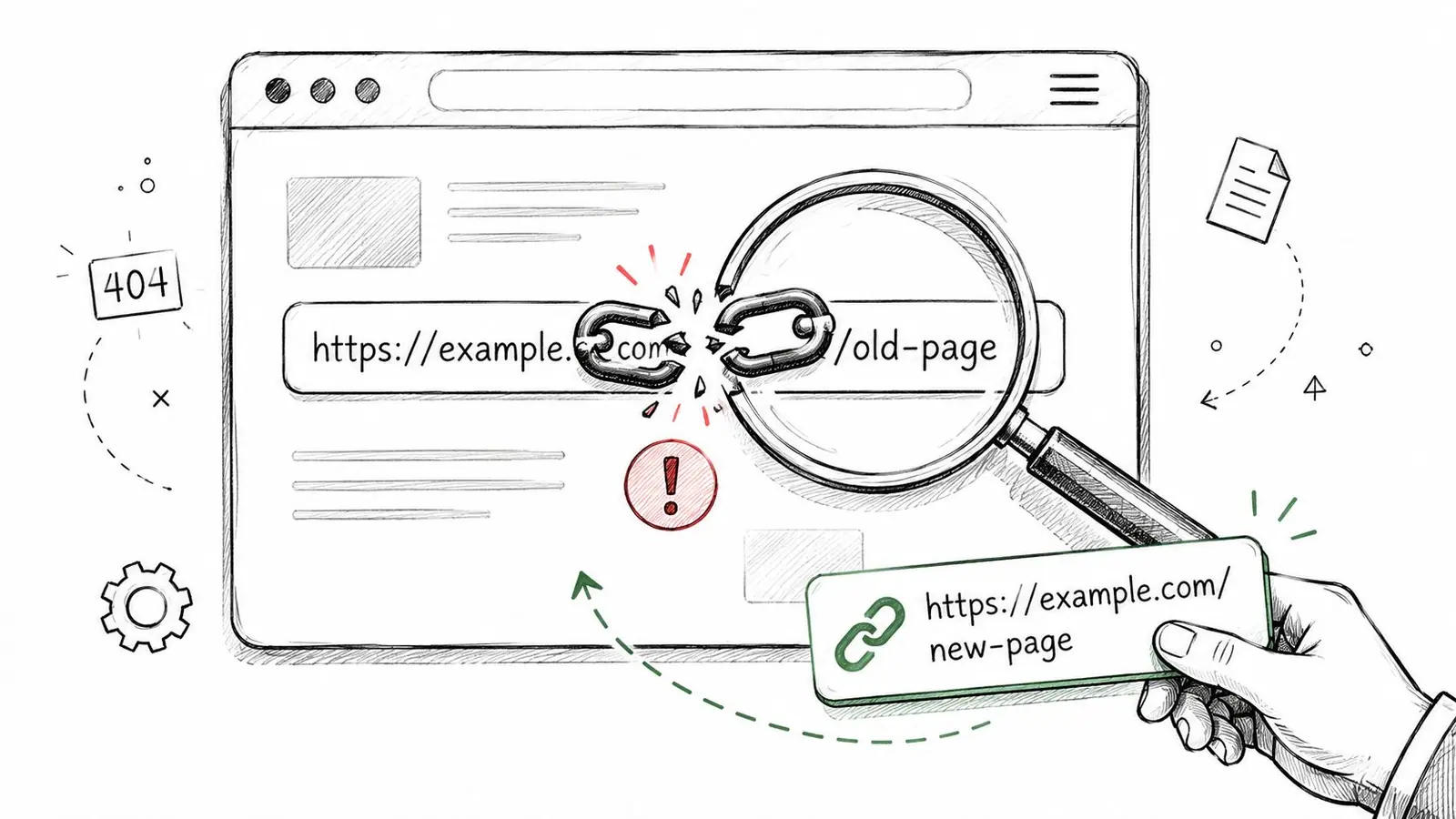
Broken link building is one of the few outreach tactics that still feels fair when it's done right. You find a dead link on someone else's page, then offer a relevant replacement from your site.
The logic is simple. The site owner already intended to link to that topic. Their reader still needs the resource. You're helping them repair the page.
A sketch makes the idea obvious:
Why broken link building still works
This tactic works best on content-heavy sites with aging archives. Think universities, associations, old blog networks, software roundups, and evergreen guides that haven't been fully refreshed.
A common mistake is forcing the match. If the dead page was a detailed study and you're pitching a thin service page, the webmaster won't swap it. Your replacement has to serve the same need.
If you want to build a target list, Surnex's guide on finding pages that link to a page is useful for tracing where older assets earned links in the first place.
What to send in outreach
Keep these emails direct. Point to the broken URL, where it appears, and your replacement. Don't write three paragraphs about your company.
- Lead with the fix: Mention the exact broken page and anchor.
- Explain the match: Tell them why your page is a suitable replacement.
- Offer a backup: If you have two relevant assets, include both.
Here's a walkthrough if you want to see the process visually:
For AI visibility, broken link building is neutral to positive. The link itself matters, but only if the destination page is useful. Replacing a dead source with a stronger live source can improve both your SEO profile and the odds that your page gets treated as a current reference.
5. HARO/Expert Quote Backlinks
HARO-style backlinks come from journalist requests for expert input. A reporter asks for a comment. You answer quickly with something worth quoting. If they use your contribution, you may get a mention and a link.
This type sits close to editorial links, but the path is different. You're not waiting for someone to discover your content. You're inserting expertise into a story that is already being written.
Where this tactic is strongest
Expert quote links work especially well when your team has subject-matter depth that journalists can't easily fake. Good examples include legal interpretation, technical SEO diagnostics, data privacy commentary, product engineering insight, or pricing strategy analysis.
A founder of a fraud detection startup might get quoted in a retail publication discussing chargeback patterns. A search strategist might appear in a B2B marketing article about AI Overviews. The publication gets speed and expertise. You get credibility.
The hidden value here is entity reinforcement. Your name, company, expertise area, and site get associated together on third-party domains. That's useful in classic SEO, and I suspect it matters even more in AI systems that are stitching together who is authoritative on what.
How to increase your hit rate
Journalists usually want concise material they can drop straight into copy. Long introductions and credential paragraphs get ignored.
Give reporters a quote they can publish with minimal editing.
Use this structure:
- Answer first: Lead with the quote, not your biography.
- Support the claim: Add one sentence of reasoning or context.
- Close with credentials: Include title, company, and a clean homepage URL.
The trade-off is volume. HARO-style outreach can consume a lot of time, and many replies won't convert. But when it works, the link quality can be excellent, especially if the publication has strong editorial standards.
6. Skyscraper Backlinks
The Skyscraper method starts with an uncomfortable truth. Sometimes the content getting links in your niche isn't bad. It's just old, thin, or incomplete. Your job is to build something better enough that people have a reason to switch.
That might mean creating a deeper guide, a more current comparison, a cleaner visual explanation, or a stronger data set.
When this strategy works best
Skyscraper content works in topics where people already link heavily to educational resources. SEO, finance, developer tooling, cybersecurity, HR compliance, and SaaS operations are all fertile ground because guides and benchmark pages attract citations naturally.
There's a strong content-format angle here too. Sure Oak's analysis found that posts with one list per 500 words attract 40% more backlinks than posts without lists, and posts with a single video gain 30% more backlinks than those without video. The same analysis also notes that infographics and how-to guides consistently rank among the top formats for earning high-quality editorial backlinks (content formats that attract backlinks).
That tells you what “better” often means. Better doesn't always mean longer. It often means easier to reference, easier to skim, and easier to reuse.
What most teams get wrong
They improve the article, but they don't improve the asset. If the competing page has stats, charts, screenshots, and a clean structure, your “better” version needs to feel more cite-worthy.
You'll also need good link intelligence to make this efficient. Surnex's roundup of the best backlink analysis tools can help you identify what already attracts links in your niche.
If you want a deeper tactical walkthrough, this 2026 Skyscraper SEO guide is a useful reference.
For AI visibility, Skyscraper pages can do well when they become the clearest consolidated resource on a topic. AI systems tend to favor pages that are extensive, current, and easy to extract facts from.
7. Directory and Citation Backlinks
Directory and citation links are foundational, especially for local businesses, service providers, and software companies that need clean brand signals across the web.
They are not the most powerful links in a profile. That's fine. Their job is different. They confirm that your brand exists, operates in a category, and presents consistent details wherever people look.
What these links are actually for
Think Google Business Profile, Yelp, Clutch, Capterra, local chambers, trade associations, SaaS directories, and vetted industry listings. A single directory link usually won't transform rankings, but a consistent set of legitimate citations can strengthen trust and discoverability.
This matters for AI visibility too. When multiple reputable pages repeat the same company name, website, category, and description, your entity becomes easier to verify. That's a quiet advantage.
How to use them without wasting time
Don't chase every directory. Most are worthless. Prioritize listings that users browse or that your industry trusts.
Use a simple filter:
- Relevance first: A niche directory beats a random general directory.
- Brand accuracy: Keep your name, address, phone, and URL consistent.
- Page quality: Avoid pages bloated with spammy outbound links.
If you're evaluating where to list, it helps to review a site's credibility first. Surnex has a practical guide for how to check domain trust.
Directory links are low-drama, low-risk, and worth doing once, properly. Just don't confuse them with authority links. They support the profile. They don't define it.
8. Podcast Interview and Sponsorship Backlinks
Podcast backlinks come from show notes, episode pages, and transcripts. They often get overlooked because people think of podcasts as brand channels, not link sources. That's a mistake.
A good podcast appearance can create three assets at once. You get an external link, a searchable mention on a trusted site, and a long-form discussion of your expertise that can influence branded search behavior later.
Why podcast links are underrated
Podcast sites often publish permanent pages for each episode. Those pages can include your homepage, a resource you mentioned, your social profiles, and sometimes the full transcript. Even when the link itself isn't the strongest SEO signal, the surrounding context is useful.
A strong example is a founder discussing customer retention on a SaaS podcast, with show notes linking to a free retention calculator. That page can send referral traffic, rank for long-tail terms, and create another public association between your brand and that topic.
Podcast sponsorships are more mixed. They can be useful for awareness, but they don't always produce high-value backlinks unless the show notes page is maintained and indexed well.
What to ask for before the episode goes live
Don't assume the host will handle links the way you want. Clarify it in advance.
- Primary link: Ask for one clear homepage or landing page link.
- Mentioned asset: If you discuss a guide or template, request that URL too.
- Transcript inclusion: If they publish transcripts, confirm the links carry over.
Some of the best backlinks aren't on the biggest sites. They're on the pages where your exact audience spends an hour listening to you.
For AI visibility, podcasts help more than many teams realize because they build reputation signals in a natural language format. That can support topical authority beyond the link itself.
9. Press Release and News Wire Backlinks
Press release backlinks are easy to overrate and easy to dismiss. Both reactions are wrong.
A wire-distributed release by itself usually isn't a great link asset. Many syndications are duplicated, lightly indexed, or clearly transactional. But a real announcement can still trigger the kind of pickup that leads to stronger editorial links from journalists, blogs, and trade publications.
When press releases are worth doing
Use press releases when you have actual news. Product launches, acquisitions, major hires, research findings, funding, and category-level partnerships are the obvious examples.
The release is not the strategy. The release is the spark. What matters is whether the story creates genuine interest outside your own site.
There's also a risk angle that many teams ignore. A frequently raised question in current backlink discussions is the cost and risk premium between niche edits and guest posts, especially under tighter spam enforcement and stricter handling of rel="sponsored" and rel="ugc" attributes. One industry writeup highlights that these trade-offs remain poorly explained in many backlink guides, which is exactly why press-driven earned coverage is often the safer long-term bet than heavily engineered paid placements (cost and risk discussion for paid link tactics).
How to make releases useful
A press release works better when it gives writers material they can build on.
- Lead with the angle: Why should a journalist care now?
- Include usable details: Add context, not fluff.
- Support with proof: If you have original data, that's your strongest hook.
If you want to improve the quality of your releases, this article on a strategy for impactful press releases is a practical resource.
For AI visibility, press release pages themselves are rarely the main win. The upside comes from the secondary citations and coverage they help generate.
10. Community and Forum Participation Backlinks
Community backlinks come from Reddit, Quora, Stack Overflow, niche Slack groups with public archives, product communities, and specialist forums. These links are usually weaker in direct SEO value than editorial placements, but they can be excellent for relevance, discovery, and feedback.
The key is intent. If you join communities to drop links, people will ignore you or ban you. If you solve problems consistently, your links become welcome.
Where these links shine
Communities surface intent in plain language. Someone asks how to audit cannibalization, compare AI writing tools, choose a CRM, or debug structured data. If you answer with real detail and link only when your resource helps, the traffic quality can be high.
These links also expose your content to future linkers. A writer researching a topic may find your answer, click through to your article, and later cite it from a stronger domain.
How to participate without looking spammy
Community work rewards restraint.
- Answer the question fully: Your post should help even if nobody clicks.
- Use links sparingly: Add them when they extend the answer, not replace it.
- Link beyond your own site: Referencing useful third-party resources makes you more credible.
This category also matters in the AI era because communities are rich with language patterns, use cases, and troubleshooting details. Even when the links are not your strongest authority signals, the mentions and real-world context can help your brand stay visible in places where buyers look for advice.
10 Backlink Types Comparison
| Backlink Type | Implementation Complexity 🔄 | Resource & Speed ⚡ | Expected Quality & Impact ⭐📊 | Ideal Use Cases 💡 | Key Advantages |
|---|---|---|---|---|---|
| Editorial / Content Backlinks | 🔄🔄🔄 High, needs PR, relationships, exceptional content | ⚡ Low speed, time‑intensive research & outreach | ⭐⭐⭐⭐⭐ 📊 Very high authority and referral value | Brand launches, original research, high‑profile stories | Durable, high‑trust links that boost authority |
| Guest Post Backlinks | 🔄🔄 Moderate, pitching + content creation | ⚡⚡ Medium, scalable with writers | ⭐⭐⭐ 📊 Good authority when on reputable sites | Thought leadership, audience expansion, topical authority | Scalable content distribution and referral traffic |
| Resource Page Backlinks | 🔄🔄 Low–Moderate, curator outreach and listing | ⚡⚡⚡ Faster acquisition; repeatable process | ⭐⭐⭐ 📊 Targeted referral traffic and topical signals | Tool listings, "best of" roundups, niche resource pages | High conversion potential from targeted visitors |
| Broken Link Building Backlinks | 🔄🔄🔄 High, discovery tools + personalized outreach | ⚡⚡ Medium, requires content inventory & follow‑ups | ⭐⭐⭐⭐ 📊 High‑quality placements if successful | Replacing dead resources on authoritative sites | High conversion rate and authoritative placements |
| HARO / Expert Quote Backlinks | 🔄🔄🔄 High, time‑sensitive vetting and rapid replies | ⚡⚡ High urgency; low monetary cost but time‑heavy | ⭐⭐⭐⭐ 📊 High‑authority media mentions when selected | Expert commentary, PR and credibility building | Media backlinks and brand credibility gains |
| Skyscraper Backlinks | 🔄🔄🔄 High, extensive research, production, outreach | ⚡⚡⚡ Resource‑intensive; slower to produce | ⭐⭐⭐⭐ 📊 Strong ranking and link attraction potential | Creating definitive guides or data‑rich resources | Long‑term topical authority and link magnet content |
| Directory & Citation Backlinks | 🔄 Low, submission and verification | ⚡⚡⚡ Fast and highly scalable | ⭐⭐ 📊 Improves local visibility; lower per‑link authority | Local SEO, consistent business listings (NAP) | Quick citations and local search signal consistency |
| Podcast Interview & Sponsorship Backlinks | 🔄🔄 Moderate, pitching and interview prep | ⚡⚡ Medium, scheduling and prep time | ⭐⭐⭐ 📊 Growing referral traffic and audience exposure | Thought leadership, niche audience engagement | Audience reach plus contextual show‑note links |
| Press Release & News Wire Backlinks | 🔄🔄 Moderate, needs newsworthy angle and distribution | ⚡⚡ Variable, can be costly; distribution speeds vary | ⭐⭐⭐ 📊 Potential for wide media pickup and authoritative links | Product launches, funding, major company news | Broad reach and potential syndicated coverage |
| Community & Forum Participation Backlinks | 🔄🔄 Low–Moderate, ongoing authentic participation | ⚡⚡ Low cost but time‑consuming consistency | ⭐⭐ 📊 Qualified referral traffic and reputation gains | Q&A, niche forums, technical help (Stack Overflow, Reddit) | Builds trust and drives targeted, engaged visitors |
Building Your Backlink Strategy: From Types to Action
How do you turn a list of backlink types into a strategy that improves rankings now and builds visibility in AI search experiences later?
Start by assigning each link type a job. Editorial links build authority. Guest posts and resource page links expand topical reach. Citations confirm business identity. Podcast, community, and expert quote links widen brand exposure across the places buyers and search systems encounter your name.
That distinction matters because modern search rewards more than raw link count. Standard organic rankings still respond to authority, relevance, and internal page signals. AI Overviews and other AI-driven discovery layers appear to reward a broader trust picture, including whether your brand is cited consistently, mentioned by credible sources, and associated with a topic across multiple formats. A backlink strategy built only around easy placements often misses that second layer.
The priority is still straightforward. Put serious effort into link-worthy assets that can earn editorial citations on their own. Original data, opinionated research, free tools, and clear frameworks tend to do this best because publishers can reference them without forcing the fit. SpyFu highlights proprietary statistics and original studies as strong drivers of backlinks, especially when the findings come from firsthand data instead of repackaged public information (original data as a backlink driver).
After that, build a portfolio instead of a pattern. A healthy campaign usually combines a few hard-to-win authority links with repeatable link acquisition from outreach-driven tactics and baseline trust signals from citations or industry profiles. That mix reduces risk. If one channel slows down, the program still moves.
A practical way to structure it:
- Authority layer: Editorial backlinks, expert quotes, digital PR, original research
- Expansion layer: Guest posts, resource pages, broken link outreach
- Validation layer: Directories, citations, podcast mentions, relevant community references
This model works well because each layer supports a different outcome. Authority links help rankings and increase the odds that your content gets cited. Expansion links strengthen topic coverage and send qualified referral traffic. Validation links help search engines and AI systems connect your brand details, expertise, and relevance across the web.
Measurement needs to reflect that reality. "We got 20 links" is not a useful report if none of those links influenced rankings, assisted conversions, or increased branded mentions. Track links by page-level ranking movement, referral traffic quality, assisted conversions, link durability, and whether the linking domains are the kinds of sources that show up in AI-generated answers and cited summaries.
I also recommend separating link metrics into three buckets: SEO impact, business impact, and AI visibility signals. SEO impact covers rankings, crawl frequency, and indexation support. Business impact covers leads, assisted revenue, and referral engagement. AI visibility signals cover brand mentions, citation frequency, and presence in the sources that large language model interfaces and Google features appear to rely on.
The trade-off is clear. Chasing only scalable backlinks is faster, but it often produces a profile that looks thin under closer review. Chasing only premium editorial links gives you stronger authority, but it can slow momentum and leave important commercial pages under-supported. The best programs combine both.
The strongest backlink profile in 2026 will not be the one with the biggest spreadsheet. It will be the one that shows real authority, repeated topic association, and consistent brand references across search results, publisher sites, communities, and AI-driven discovery surfaces.
If you need one platform to connect backlink work with rankings, audits, and AI visibility, Surnex is built for that job. Agencies, in-house teams, and developers can use it to track how brands appear in traditional search, Google's AI Overviews, and newer AI discovery experiences, while keeping core SEO workflows in the same system.