Your biggest competitor just jumped a few spots in the SERPs. You open a backlink tool, paste in their domain, and get a giant export full of URLs, anchors, and metrics. At that point, many teams realize the problem isn’t access to data. It’s knowing which data changes what you do next.
A simple backlink count won’t help you explain why a competitor is gaining authority, where their links are coming from, or which gaps matter enough to pursue. It also won’t help if your team already juggles rank tracking, audits, reporting, client comms, and now the growing pressure to understand how authority shows up in AI search experiences too.
That’s why the best backlink analysis tools aren’t just the ones with the biggest databases or the prettiest dashboards. The right choice depends on workflow fit. Agencies need repeatable audits and client-ready reporting. In-house teams need tools that tie links to content planning, technical cleanup, and stakeholder updates. Developers need APIs and structured outputs they can build with.
This guide reviews the best backlink analysis tools through that lens. Not just what each platform can do, but where it fits, where it creates friction, and where it saves time. Some tools are excellent for deep competitor link research. Some are better for monitoring and reporting. A few are more useful when you’re trying to reduce tool sprawl across traditional SEO and newer AI-driven search surfaces.
If you need a quick refresher on link attributes before comparing platforms, this guide on understanding dofollow and nofollow links is worth bookmarking.
1. Surnex
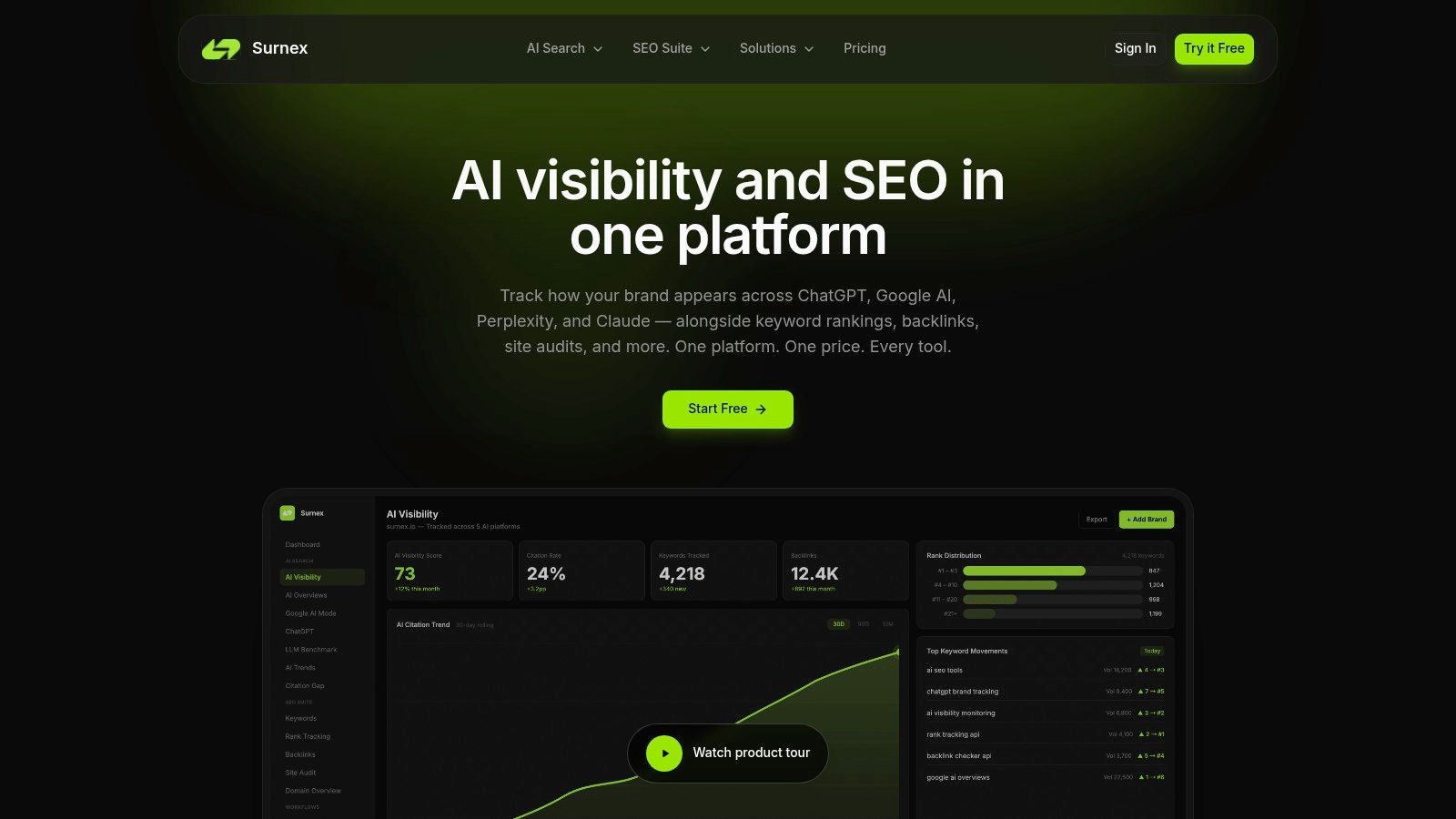
A common agency problem looks like this: the backlink audit lives in one tool, rank tracking in another, AI visibility notes in a spreadsheet, and the client report gets stitched together the night before the meeting. Surnex is built for teams trying to stop that cycle. It puts backlink analysis inside the same system as rankings, technical audits, AI answer monitoring, and reporting.
The reason this matters is operational, not cosmetic. If link reviews, authority tracking, and AI citation checks sit in separate platforms, the work slows down at handoff points. Analysts export data. Account managers rewrite findings. Leadership gets three versions of the same story. Surnex reduces that friction by keeping those workflows connected.
For backlink work specifically, Surnex covers the basics you need to run recurring reviews: profile analysis, change tracking, and gap discovery. It also gives teams a clearer path from analysis to action through a backlink review and opportunity workflow. That makes it more useful for weekly operating cadence than tools that are strong on raw data but weak on process.
Why Surnex fits modern workflows
Surnex makes the most sense for teams that no longer treat backlinks as a standalone SEO task. In practice, links now feed several decisions at once: competitor benchmarking, authority building, content prioritization, and AI search visibility. If your team needs to explain how off-page authority connects to Google AI Overviews or LLM citations, having those signals in one platform saves time and reduces reporting noise.
That gives it a different role from classic backlink-first tools. Ahrefs or Majestic may still be the better choice for pure link research in some cases. Surnex is stronger when the job is cross-functional execution, especially for agencies managing client reporting, in-house teams tying links to broader search visibility, or developers who want one system feeding internal dashboards and automations.
A practical example is the team that needs one weekly review covering new links, lost links, authority gaps, ranking shifts, and AI citation movement. In that workflow, consolidation beats depth in any single report.
Surnex is especially useful for three groups:
- Agencies: It supports repeatable audits and client-ready outputs, which cuts down the time spent translating analyst notes into deliverables.
- In-house teams: It helps connect link acquisition and cleanup work to content planning, reporting, and brand visibility across traditional and AI-driven search.
- Developers: REST API access makes it easier to pull backlink and visibility data into internal systems without relying on manual exports.
Trade-offs to know before you buy
Surnex is a good fit when reducing tool sprawl is the priority. It is less ideal for buyers who want fully transparent pricing before they start a trial or talk to sales. That does not make it a poor choice, but it changes the buying process.
Coverage is the second item to check early. Teams with specific market, language, or engine requirements should validate those before rollout, especially if AI search tracking is part of the reason for buying.
One more practical point. If your evaluation shortlist includes traditional platforms, review how each tool handles workflow fit, not just database size. A side-by-side Serpstat vs Ahrefs comparison can help frame that decision, but Surnex belongs in a different conversation. It is less about choosing the deepest standalone backlink index and more about choosing a platform your team will use end to end.
2. Ahrefs
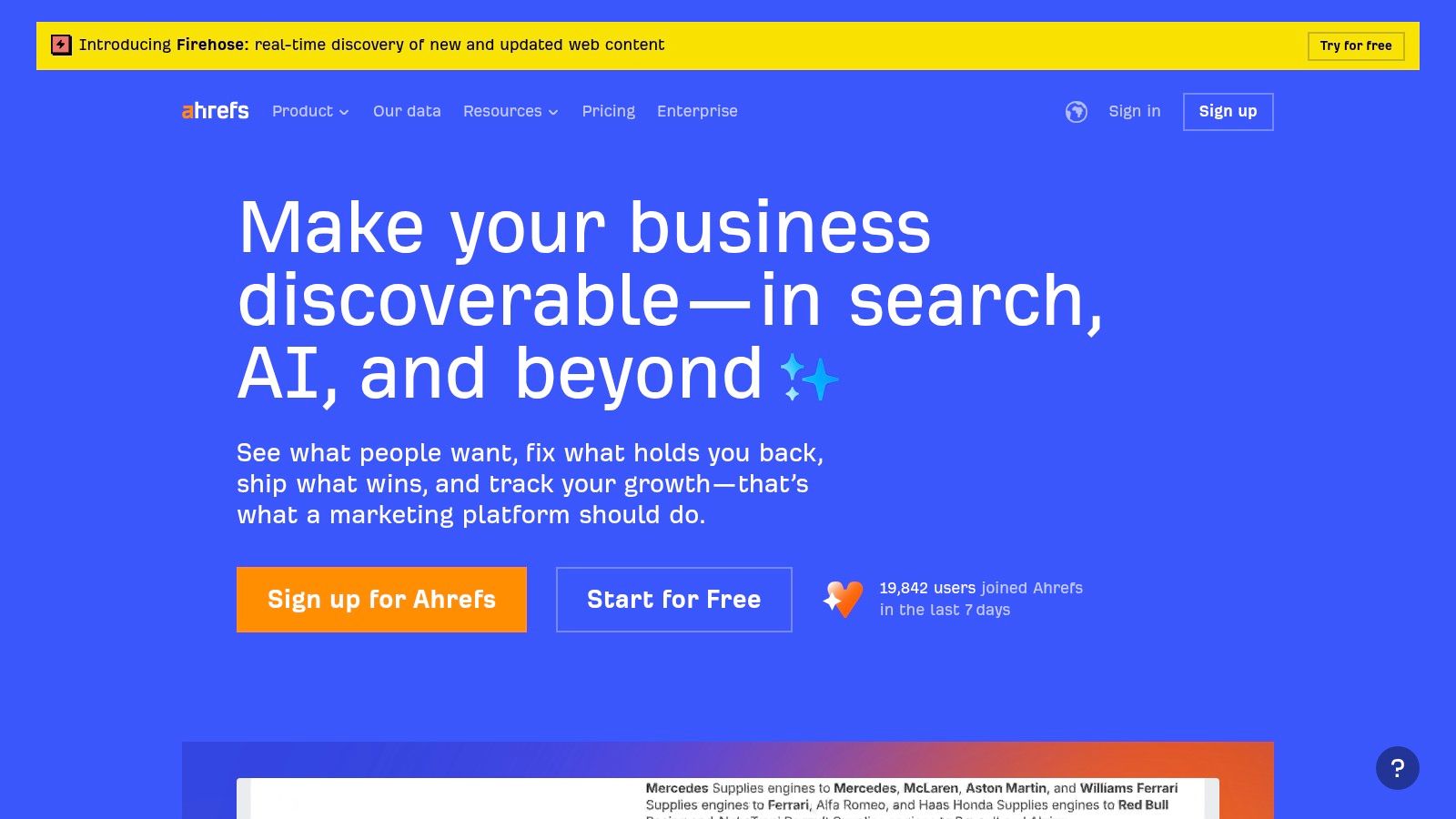
A common agency scenario goes like this. A client asks why a competitor keeps picking up links from sites your team has never even shortlisted. Ahrefs is one of the fastest ways to answer that question with enough detail to turn it into action.
Ahrefs earns its place on a shortlist because it is built for backlink-first research. Site Explorer is quick, Link Intersect is still one of the better ways to find missed opportunities, and the historical views help separate a short campaign spike from a pattern worth copying. That matters in real workflows. Analysts need to move from "who links to them?" to "which pages got those links, why did they work, and is this repeatable for our client or category?"
It fits best when backlink analysis sits near the front of the workflow, not at the reporting layer. Agencies use it to build prospect lists and pressure-test outreach angles before account managers ever touch a client deck. In-house teams use it to spot which competitor assets attract links so content, digital PR, and SEO are working from the same evidence. Developers usually value it less as a day-to-day UI tool and more when they need backlink research to feed another process, such as internal scoring, alerting, or a domain overview workflow for backlink triage.
That workflow fit is a key reason to buy Ahrefs. The tool is strong at discovery, comparison, and historical analysis. It is less convincing if your team needs backlinks tightly connected to broader campaign management, stakeholder reporting, or multi-team collaboration inside one platform.
- Best for: Competitor backlink research, link gap analysis, and prospect discovery
- Strongest feature: Link Intersect paired with fast historical backlink review
- Less ideal for: Teams with strict seat limits, tight monthly usage controls, or a need for cross-channel reporting in the same tool
Its DR and UR metrics are useful because they speed up first-pass qualification. They are also easy to misuse. Junior analysts often treat them as approval scores, when they should be one filter alongside topical relevance, traffic quality, outbound link patterns, and whether the linking page can send actual referral value.
The trade-off is mostly operational. Ahrefs can get expensive as more people need access, and usage caps can become part of your process whether you want them there or not. For a team that lives in link research every week, that cost can be justified. For a team that only checks backlinks during quarterly reviews, it often creates friction.
If you are comparing pure backlink research depth with lower-cost options, this Serpstat vs Ahrefs comparison is a useful secondary read.
Website: Ahrefs
3. Semrush
A common agency problem looks like this. The SEO team finds a competitor link gap, the technical team spots site issues in a separate crawler, and the account lead still has to stitch everything into one client update. Semrush earns its place when you want those steps closer together.
Semrush fits teams that do not treat backlink analysis as a standalone task. It works well when link research needs to feed technical audits, rank tracking, reporting, and outreach without constant exports between tools. That matters more now that SEO teams are being asked to connect link data to broader visibility signals, including how authority and brand mentions support AI-driven search discovery.
Why Semrush works in real workflows
The practical value is workflow integration. A backlink audit is more useful when the analyst can move straight into site health checks, position tracking, and reporting from the same platform. If your team already reviews technical issues alongside off-page performance, that setup saves time and reduces handoff errors.
Semrush is a good fit for in-house teams that need one platform leadership can understand. It is also a strong option for agencies managing several client accounts where the work does not stop at prospecting. You can review new and lost links, compare competitors, flag risky patterns, and tie that work into a broader reporting process. If your team already runs a technical site audit workflow before prioritizing link cleanup or acquisition, Semrush fits that sequence well.
Its Backlink Gap tool is one of the clearer examples of this. Junior analysts can quickly find domains linking to competitors but not to you, then validate whether those opportunities deserve outreach based on relevance, authority, and business fit. The tool speeds up the first pass. It does not remove the need for judgment.
- Best for: Agencies and in-house teams that want backlinks connected to audits, rank tracking, and client or stakeholder reporting
- Strongest feature: Backlink analysis inside a broader SEO operating system
- Less ideal for: Lean teams that only need link intelligence and want the lowest possible software overhead
The trade-off with Semrush
The trade-off is focus and cost control. Semrush gives you more surrounding capability than a specialist link tool, but that also means more interface complexity and more features than some teams will use. If your workflow is mostly prospect discovery and backlink vetting, a narrower tool can feel faster.
Plan structure also matters. As noted earlier, Semrush offers an entry point that makes testing easier before a full rollout, but some advanced workflows depend on higher tiers. I usually recommend it when multiple functions will use the platform every week. If backlink work only happens during occasional audits, the suite can be harder to justify.
Website: Semrush
4. Majestic
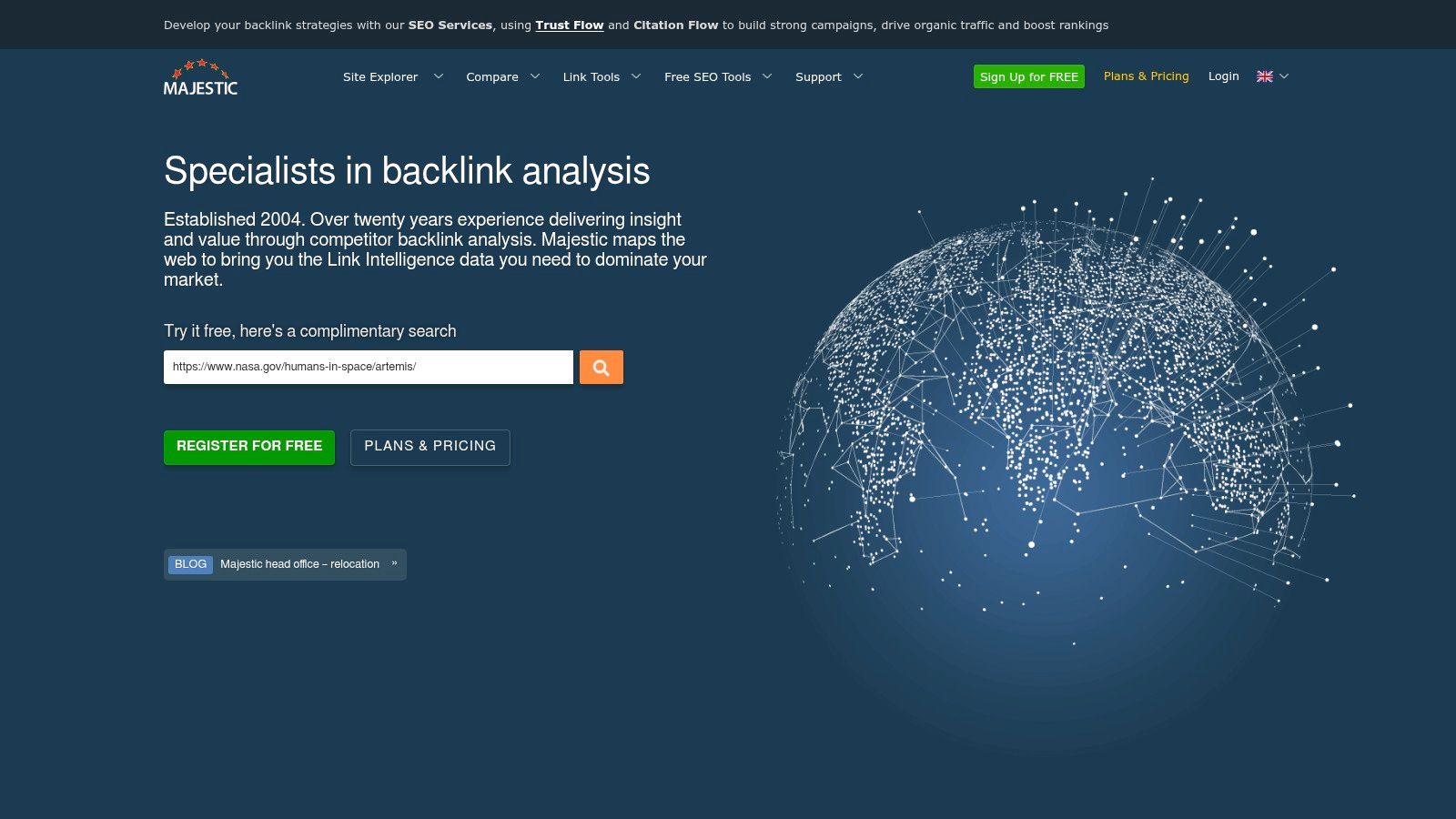
Majestic is for people who want backlink analysis without the distractions of a broad marketing suite. It’s a link intelligence specialist. That’s why technical SEOs still keep it in rotation.
The platform’s value starts with its proprietary metrics. Trust Flow and Citation Flow give you a quick way to separate raw link volume from higher-trust prospects. In the verified data, Majestic’s historical data is noted as going back to 2008, which is useful when you’re auditing profile evolution or investigating legacy link issues from old campaigns (YouTube reference).
Where Majestic earns its place
Majestic is strong when you need a link-first view and don’t care much about keyword research, content tools, or broad campaign dashboards. Fresh and Historic index views are useful for time-based comparisons, and topical trust analysis can help when relevance matters as much as authority.
I like Majestic most in two situations:
- Prospect vetting: You want a fast read on trust signals before outreach
- Risk review: You’re auditing a messy backlink profile and need another perspective beyond DR or DA
If your team also wants a quick snapshot of a domain before going deeper, pairing this style of review with a domain overview workflow makes sense operationally.
What to watch out for
Majestic has a learning curve. Junior SEOs who already understand DA or DR may need time to interpret TF and CF confidently.
It’s also narrow by design. That focus is a strength for specialists, but it means many teams use Majestic as a secondary tool rather than the main platform.
Website: Majestic
5. Moz Pro Link Explorer
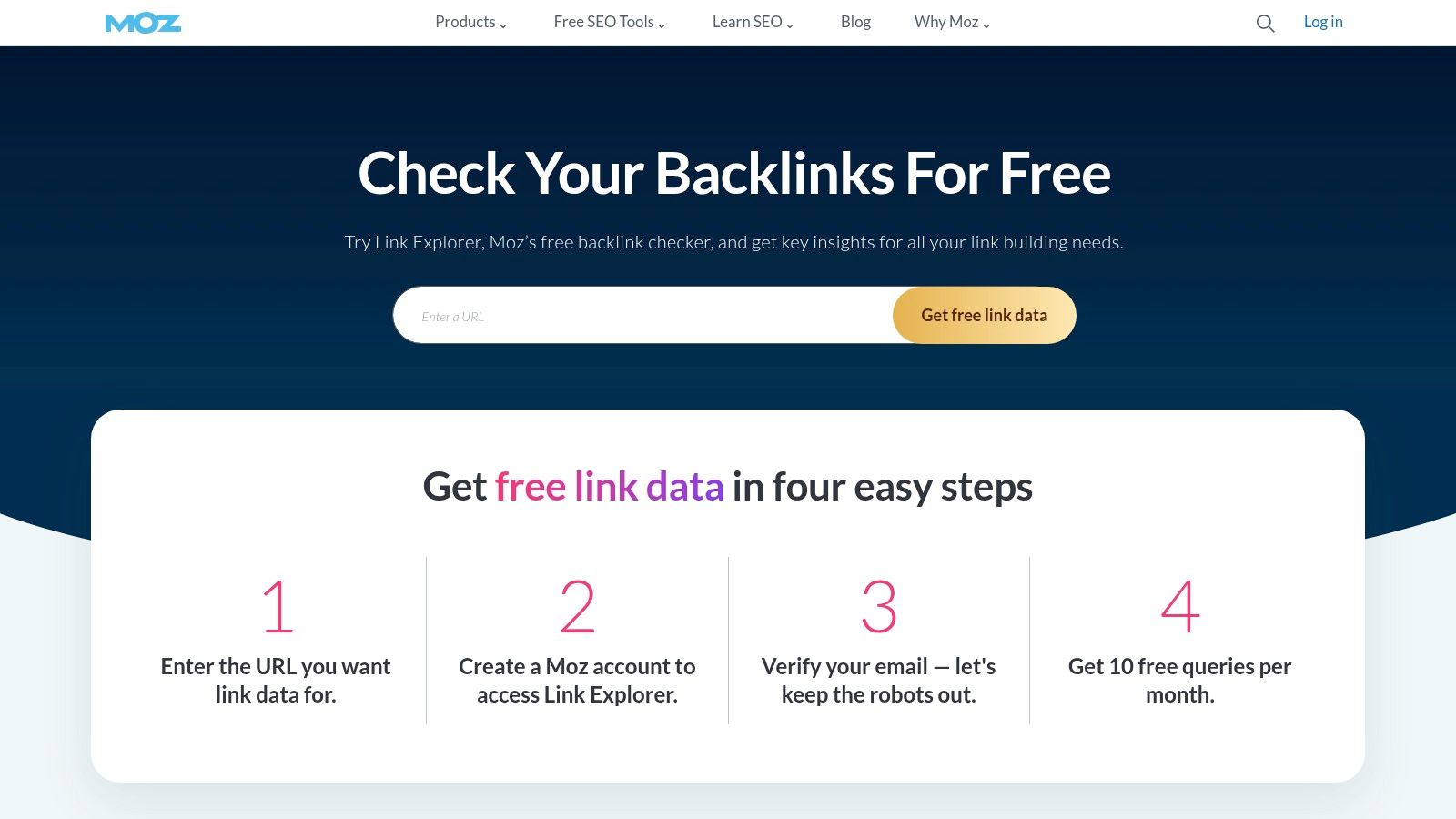
A common agency scenario looks like this. The SEO lead wants a quick read on a prospect’s backlink profile before a pitch, the content manager wants to compare authority against two competitors, and nobody wants to open a tool that needs 20 minutes of explanation. Moz Pro Link Explorer fits that job well.
Its value is less about raw backlink depth and more about decision speed. Domain Authority, Page Authority, and Spam Score are familiar enough that non-specialists can review a site, flag concerns, and hand the work off without creating confusion. That matters in mixed teams where SEO, content, PR, and account staff all touch the same research.
Where Moz fits in a real workflow
Moz works best as an accessibility-first backlink tool. I would put it in front of junior marketers, client-facing account managers, or in-house teams that check links as part of a broader SEO process rather than as a dedicated discipline.
It is especially useful in workflows like these:
- Pre-sales and stakeholder reviews: fast domain comparisons and simple authority checks
- Content planning: quick competitive benchmarking before deciding whether a topic is realistically winnable
- Triage: spotting suspicious patterns before handing the case to a specialist for a closer review
That workflow angle matters more now because backlink analysis rarely sits alone. Teams are feeding link signals into broader decisions about content quality, site trust, entity strength, and visibility across AI-assisted search results. A tool that people will use often beats a deeper platform that only one specialist can interpret.
The trade-off
Moz is easier to adopt than many link-first platforms. The trade-off is ceiling, not clarity.
If your team runs digital PR campaigns every week, audits large link profiles, or needs the freshest possible discovery data, Moz will feel limited faster than Ahrefs or Majestic. If your team needs a clean, shared view of authority signals inside a broader marketing workflow, that limitation is often acceptable.
The practical question is simple. Do you need a specialist research environment, or do you need a backlink tool that fits cleanly into everyday reporting and decision-making?
Moz still earns a place for the second case. Teams that escalate findings into technical review can then push those issues into a broader site audit workflow.
Website: Moz Link Explorer
6. SE Ranking
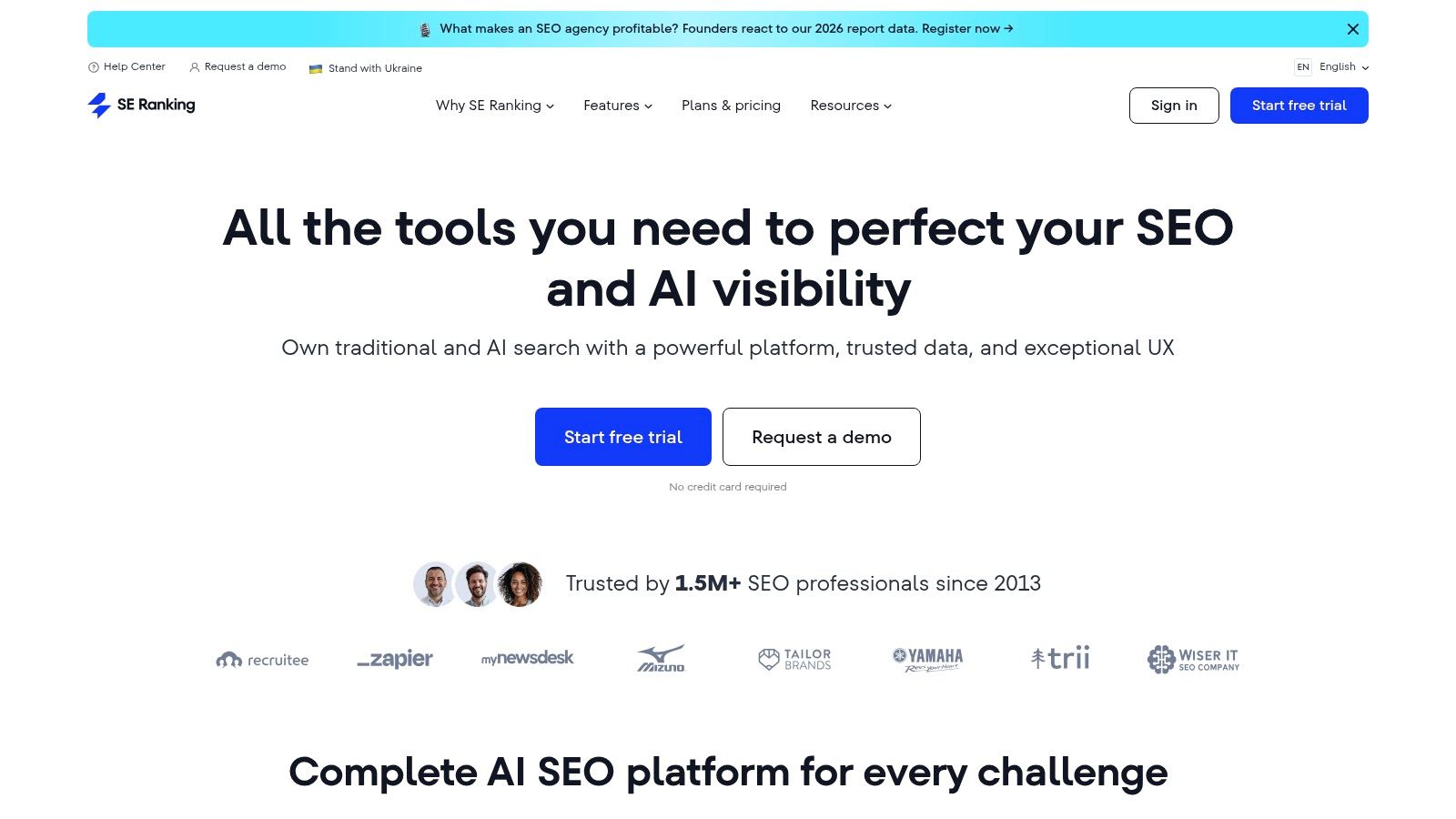
SE Ranking sits in a useful middle ground. It gives agencies and SMB teams an all-in-one environment with backlink monitoring, rank tracking, audits, and reporting, without immediately pushing them toward enterprise-level complexity.
That balance is why it shows up so often in smaller agency stacks. You can monitor anchors, link status, dofollow and nofollow patterns, and prep disavow work without needing a separate specialist platform for every task.
Where SE Ranking makes sense
The main appeal is price-to-value, but its primary workflow advantage is simplicity. Agencies that manage several clients often need one platform that junior staff can learn quickly and account managers can report from without much cleanup.
Its backlink monitoring features are practical rather than flashy. You can review quality signals, watch for changes, and tie findings into broader SEO work in the same interface. The white-label options also help if client presentation matters as much as analysis.
A tool doesn’t need the biggest index to be useful. It needs to be good enough for the decisions your team makes every week.
SE Ranking is a good fit when:
- Your team needs one platform for several SEO functions
- You care about client reporting and operational simplicity
- You don’t need the deepest possible backlink database
Where it falls short
The trade-off is predictable. Its backlink index isn’t as extensive as the largest dedicated crawlers, so highly competitive gap analysis may still require a second opinion from Ahrefs or Semrush.
That doesn’t make SE Ranking weak. It just means it’s better as a balanced operational platform than as the final word on deep link intelligence.
Website: SE Ranking
7. Serpstat
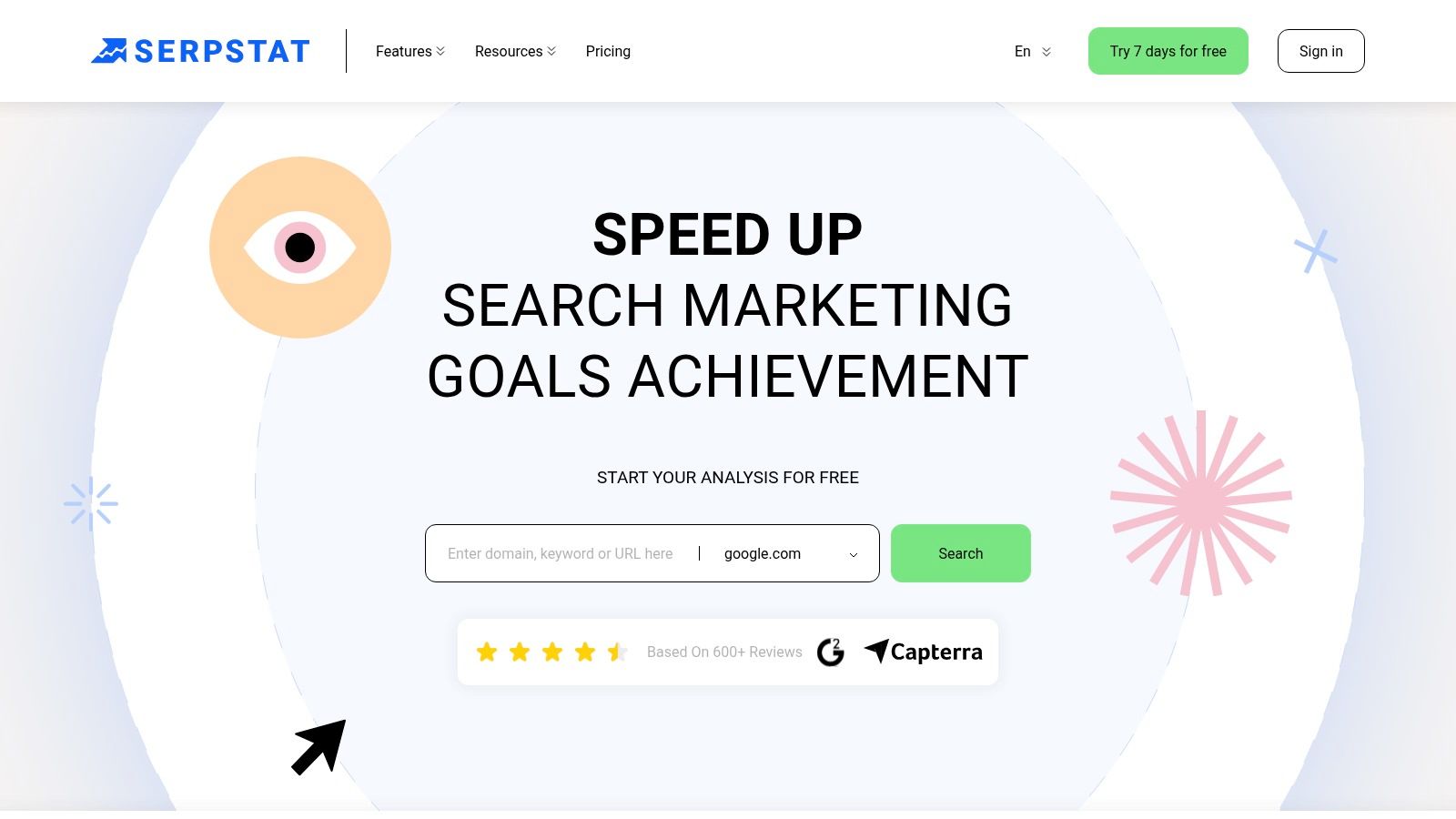
A common agency scenario: the team needs backlink data, rank tracking, keyword research, and competitor monitoring in one place, but the budget does not support a premium stack for every seat. Serpstat fits that setup well.
Its backlink toolkit covers the checks smaller teams run every week. You can review referring domains and pages, anchor text, new and lost links, and compare link profiles against competitors without handing the work to a specialist analyst. That matters in real workflows where content, SEO, and account teams often share the same platform.
Where Serpstat fits best
Serpstat is a practical choice for teams that value coverage and speed of execution over maximum link index depth. The interface is straightforward, exports are easy to work with, and the historical view helps when you need to explain link growth patterns to a client or trace which content attracted links over time.
That makes it useful in three common setups. Small agencies can keep delivery inside one platform. In-house teams can fold backlink checks into broader search reporting instead of maintaining a separate specialist tool. Developers and technical SEOs can use exports to move data into spreadsheets, internal dashboards, or AI-assisted reporting workflows without much cleanup.
Serpstat is a good fit when:
- Your team wants one subscription to support several SEO jobs
- Backlink analysis needs to be usable by generalists, not only specialists
- You care more about workflow efficiency than having the biggest crawler
The trade-off
Serpstat gives enough link intelligence for monitoring, prospect review, and competitor benchmarking. It is less convincing when the job depends on absolute depth, very fresh discovery, or high-stakes link gap analysis in aggressive markets.
That distinction matters. If your team is building repeatable SEO operations, Serpstat can keep work moving. If you need a final answer on edge-case link data, you will often want to verify findings in Ahrefs or Semrush before acting on them.
Website: Serpstat
8. SEO SpyGlass
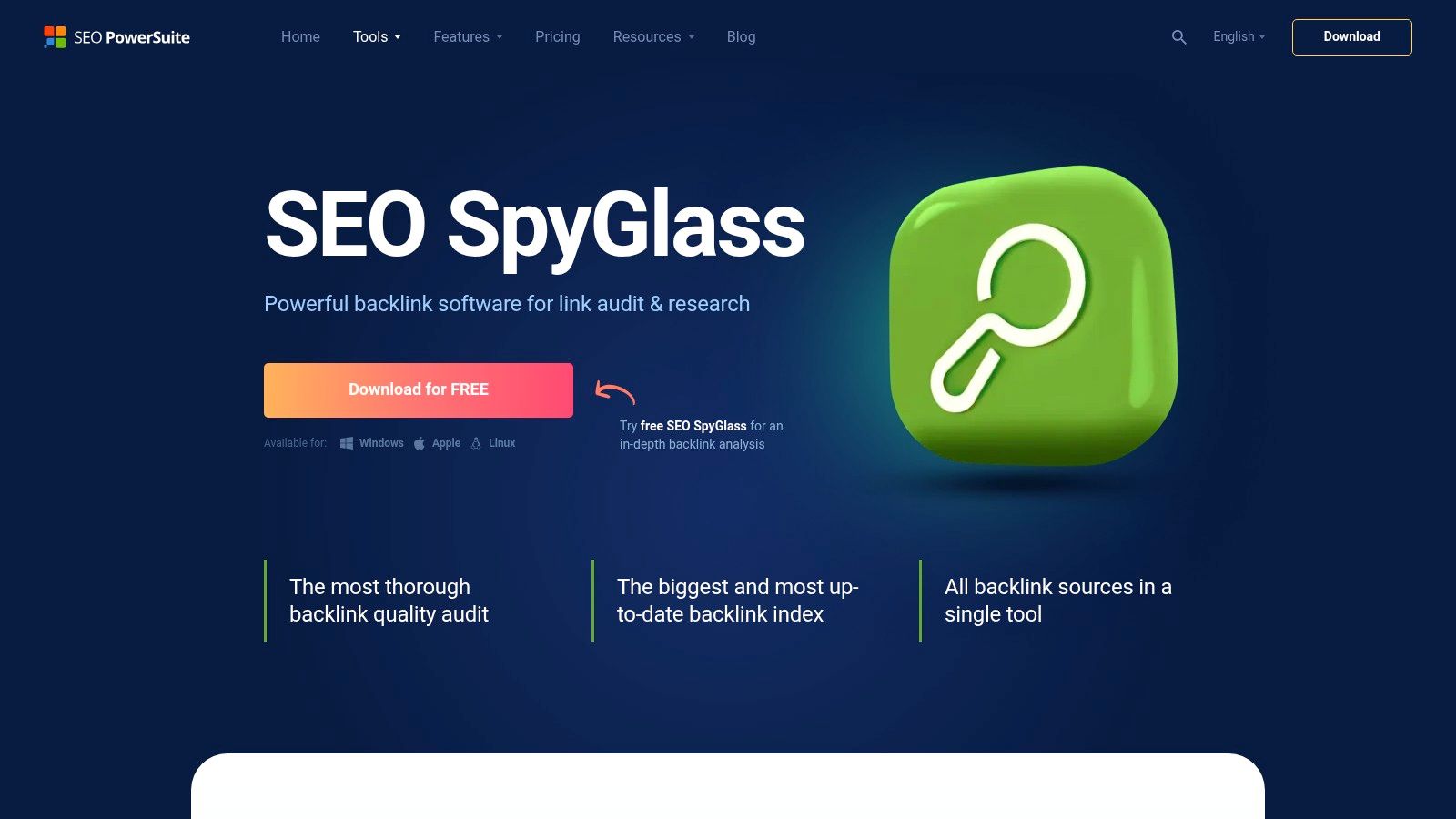
SEO SpyGlass is different from most tools on this list because it’s built around a desktop workflow. That won’t appeal to everyone, but for some teams it’s exactly the point.
If you prefer local control, detailed exports, and report-heavy processes, the desktop model still has value. You can combine its own data with imports from sources like Google Search Console, audit backlink risk, deduplicate datasets, and prepare disavow files without relying entirely on a cloud dashboard.
Best use case for SEO SpyGlass
This tool works best for analysts who like to dig. It’s strong for cleanup projects, penalty reviews, and offline reporting where you want granular control over exports and processing.
That also makes it practical for consultants who work on one-off backlink audits more than ongoing daily monitoring. The ability to merge in outside data is especially helpful when you want a wider picture than a single index provides.
Where the desktop model creates friction
The obvious downside is setup and maintenance. Desktop software brings local storage, updates, and machine dependency into the workflow. For distributed teams, that can be a nuisance.
Its index size and update cadence also won’t match the biggest web-first platforms. So while SEO SpyGlass can be cost-effective and thorough for certain audit jobs, it’s rarely the tool I’d choose for fast-moving competitive monitoring.
Website: SEO SpyGlass
9. Mangools LinkMiner
Mangools LinkMiner is one of the easiest backlink tools to use well on day one. That’s its edge.
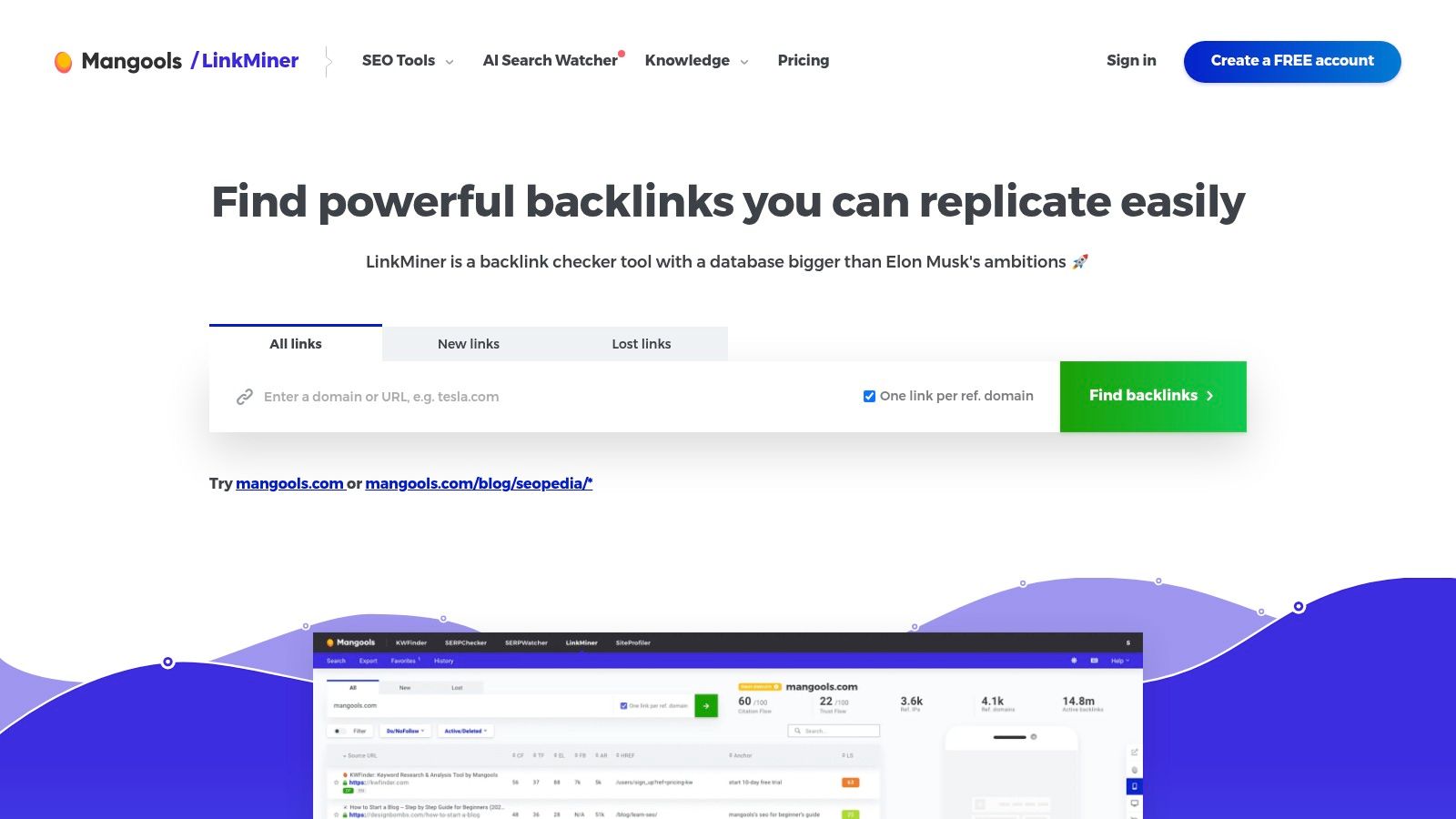
A lot of backlink platforms overwhelm content marketers with too much link graph detail too early. LinkMiner keeps the workflow lighter. Visual link placement previews, anchor highlighting, filtering, and favorites make it easy to vet prospects quickly.
Why LinkMiner is good for content teams
If your backlink process is tied closely to content production, LinkMiner is a nice fit. Writers, editors, and content leads can evaluate link opportunities without becoming full-time technical SEOs.
The rest of the Mangools suite helps too. When keyword context, SERP checks, and backlink research all live in the same ecosystem, small teams can move faster.
If your team says “we just need something simple enough that people will use it,” LinkMiner deserves a look.
Its limits are clear
LinkMiner isn’t trying to beat Ahrefs or Majestic on raw link graph breadth. It’s built for usability.
That means enterprise reporting, large exports, and deep competitive forensics are limited compared with bigger suites. But for content-led teams doing lighter prospecting and quick checks, it’s often enough.
Website: Mangools LinkMiner
10. Ubersuggest
A common agency scenario looks like this: a client asks for backlink reporting, but the account does not justify Ahrefs or Semrush yet. Ubersuggest exists for that gap.
It covers the basics well enough for lighter workflows. You can review referring domains, anchor text, new and lost links, and get a quick read on a competitor’s profile without handing a junior marketer a tool that needs a week of onboarding.
When Ubersuggest fits the workflow
Ubersuggest makes sense for small businesses, freelancers, and in-house generalists who need backlink visibility inside a broader SEO routine. If backlink analysis is one task among many, not a specialist function, the simpler interface is a real advantage.
I would also treat it as a second layer beside Google Search Console, not a replacement for it. Search Console gives you Google’s view of your links. Ubersuggest adds a cleaner research interface and easier competitor checks. That setup works when the goal is monitoring and prioritization, not forensic link analysis.
For teams adjusting to AI-driven search, that distinction matters. If your reporting workflow now includes brand mentions, citation consistency, and link quality checks across multiple channels, Ubersuggest can support the basic backlink part of that process. It does not give the depth needed for serious link audits or larger-scale competitive modeling.
- Use it for: Budget-conscious backlink monitoring, quick competitor reviews, and simple reporting workflows
- Avoid it for: Large link cleanup projects, historical link analysis, or decisions where you need high confidence in coverage
The trade-off
A significant limitation is trust in the dataset for high-stakes work. Experienced SEOs usually verify important findings in another platform before acting on them, especially for outreach targeting, recovery work, or competitive gap analysis.
That does not make Ubersuggest a weak choice. It makes it a practical one for the right stage of growth. If your team needs a low-friction way to add backlink checks into weekly SEO operations, Ubersuggest is a reasonable starting point.
Website: Ubersuggest
Top 10 Backlink Analysis Tools: Feature Comparison
| Product | Core features | UX & Quality | Value & Pricing | Target audience | Unique strengths |
|---|---|---|---|---|---|
| Surnex 🏆 | AI visibility + SEO (rankings, backlinks, audits, CWV), multi-LLM monitoring | ★★★★☆ API-first dashboard & client reports | 💰 Four plans $49–$399/mo; free trial (no card) | 👥 Agencies, in-house teams, developers | ✨ Citation-gap analysis, LLM benchmarking, full REST API |
| Ahrefs | Massive backlink index, Site Explorer, rank tracking, audits | ★★★★★ Industry-leading backlink coverage | 💰 Premium; usage/credit limits | 👥 Link builders, agencies, enterprise | ✨ Live/historical link graphs, Link Intersect |
| Semrush | Full marketing stack: Backlink Analytics, audits, Link Building tool | ★★★★☆ Strong dashboards & reporting | 💰 Mid–high; add-ons increase cost | 👥 Agencies, marketing teams | ✨ Integrates backlinks with PPC/marketing workflows |
| Majestic | Link graph exploration, Trust Flow & Citation Flow, fresh vs historic | ★★★★☆ Link-first, technical focus | 💰 Mid; specialist pricing | 👥 Technical SEOs, link analysts | ✨ Topical trust metrics (Trust/Citation Flow) |
| Moz Pro (Link Explorer) | DA/PA, Spam Score, link health checks, competitor comparisons | ★★★☆☆ Simple UI; recognizable metrics | 💰 Mid; limited free queries | 👥 Small teams, consultants | ✨ Widely recognized authority & spam signals |
| SE Ranking | Backlink monitoring, toxicity, rank tracking, white-label reporting | ★★★★☆ Strong UX; white-label options | 💰 High price-to-value for agencies/SMBs | 👥 Agencies, SMBs | ✨ Scalable limits + white-label reporting |
| Serpstat | Backlink dashboard, batch analysis, audits, API/export options | ★★★☆☆ Broad feature set | 💰 Competitive pricing; frequent promos | 👥 Teams wanting broad SEO features on budget | ✨ Batch/domain gap analysis at lower cost |
| SEO SpyGlass | Desktop backlink audits, combine external sources, disavow prep | ★★★☆☆ Desktop app; offline/report focus | 💰 Perpetual license option (one-time) | 👥 Teams preferring local tools & reports | ✨ Local consolidation + disavow file exports |
| Mangools LinkMiner | Visual link previews, anchors, historic/fresh link data | ★★★★☆ Very user-friendly; quick prospecting | 💰 Affordable suite pricing | 👥 Content teams, beginners | ✨ Visual placement previews & simple vetting |
| Ubersuggest | Basic backlink discovery (ref domains, anchors, new/lost), GSC/GA sync | ★★★☆☆ Simple, beginner-friendly | 💰 Budget; monthly & lifetime options | 👥 Solopreneurs, small teams | ✨ Low cost with easy onboarding |
From Data Points to Strategic Advantage
The best backlink analysis tools don’t win on feature count alone. They win when the data fits the way your team works.
That’s the part many comparison posts miss. A junior SEO might care about backlink volume and authority metrics. A marketing lead cares about whether the tool helps the team find opportunities faster, explain priorities clearly, and report progress without wasting half the month in exports. An agency owner cares about whether the workflow scales across clients. A developer cares about whether the data is accessible through an API and structured well enough to automate.
That’s why the right tool often depends less on who has the flashiest dashboard and more on what happens after the report loads.
If you need deep competitor backlink research, Ahrefs remains one of the strongest choices. It’s especially good when the work starts with reverse engineering what competitors are doing and turning that into outreach targets. If your team spends most of its time inside backlink analysis, that depth is worth paying for.
If your team wants backlinks inside a broader SEO and marketing stack, Semrush is usually easier to justify. It connects link data with audits, reporting, and campaign execution in a way that’s practical for agencies and in-house teams that don’t want separate tools for every task.
If you want specialist link intelligence, Majestic still has a place. It’s narrower, but that focus is useful. Moz stays relevant because it’s approachable. SE Ranking and Serpstat are both sensible for teams that want balanced functionality without committing to a premium platform right away. SEO SpyGlass serves teams that still prefer local, report-heavy workflows. LinkMiner and Ubersuggest work when simplicity and affordability matter more than exhaustive data depth.
Surnex deserves special attention because it addresses a workflow gap that older backlink platforms still leave open. Backlink authority no longer lives only inside classic search rankings. Teams increasingly need to understand how authority and citations affect visibility across AI-driven search experiences too. If your reporting already includes questions about Google AI Overviews, ChatGPT discovery, or where competitors are getting cited in AI answers, using one platform for traditional SEO and another for AI monitoring creates friction fast. Surnex is built to reduce that friction.
The practical way to choose is simple. Take your three most common backlink tasks and test them in each tool you shortlist.
Maybe that’s:
- finding competitor backlink gaps
- reviewing lost links
- preparing a client-ready report
- checking whether backlink gains align with broader visibility trends
- exporting data into another system
Run the same tasks in a trial. See which platform gets your team from question to decision with the least cleanup.
The right platform should make your next action obvious. It should help you decide what to reclaim, what to disavow, what to pitch, what content to build, and what to explain to stakeholders. If a tool gives you more data but more confusion, it’s not the right tool.
Choose the platform that helps your team move from counting backlinks to using them strategically. That’s where the key advantage is.
If you need one platform that connects backlink analysis with rank tracking, audits, and AI search visibility, Surnex is worth testing. It’s built for agencies, in-house teams, and developers who want to cut tool sprawl, spot citation gaps, and turn modern search data into workflows they can use.