Everyone talks about backlinks like they're optional polish. They're not. A 13-month Semrush study found that 92.3% of the 100 top-ranking domains had at least one backlink, and more than 50% of qualified sites without any backlinks never reached the first page. That doesn't mean any link will do. It means a site with no link equity starts with a real visibility handicap.
That's where most advice on the best backlinks for SEO goes wrong. It treats all links as interchangeable, chases raw authority metrics, and recycles tactics that either don't scale or create junk profiles. In practice, the links that move rankings tend to share a few traits. They're relevant, placed where people read, and earned on sites that make sense for your niche.
Moz's backlink guidance says link quality comes down to authority, relevance, and placement, not just volume, and it specifically points to tactics like original research, guides, broken-link replacement, digital PR, partnerships, and resource-page placements as dependable paths to stronger links. Uberall adds an operational filter: prioritize links that are relevant, follow, visible on the page, and pointed at the page you want to rank, while remembering that repeated links from the same site lose value over time, so new referring domains matter more (Moz backlink guidance).
This guide keeps it practical. You'll get the backlink types I'd prioritize, how I'd score them for impact and effort, where they tend to work best, and how teams can scale the workflow with modern platforms such as Surnex. No prestige rankings. No fantasy outreach playbook. Just the backlink types that still earn their keep.
1. Guest Posting and Content Placement
Guest posting still works, but only when you treat it like publishing, not link dumping. The strongest placements come from niche publications, trade blogs, software partner blogs, and industry sites with real editorial standards. If the site accepts anything from anyone, the link usually isn't worth the writing time.

A good guest post gives you three things at once. You get a contextual backlink, brand exposure to an audience that already cares about the topic, and a relationship with an editor who may publish you again. That last part matters more than is frequently underestimated. Repeat access to the right publications beats constantly prospecting from scratch.
How to make guest posting pay off
Most failed guest posting campaigns miss on fit. The pitch is generic, the topic doesn't match the publication, or the link target is wrong. Send a category-specific idea, reference articles they already publish, and point your link to a page that deserves to rank, not always the homepage.
A few practical rules help:
- Target niche overlap: Pitch sites whose readers would realistically click through to your content or product.
- Match the editorial voice: If the blog publishes tactical how-to content, don't pitch a thought-leadership essay.
- Send the right page: Product pages can work, but detailed guides, studies, templates, and tools usually fit better.
- Vet trust signals first: Before you pitch, review the site's backlink quality and overall credibility with a process like this domain trust check workflow.
Practical rule: If you wouldn't proudly show the placement to a client, don't build the link.
Examples are easy to spot across SaaS and marketing. HubSpot appears on industry blogs, Moz has published beyond its own domain, and many respected operators place bylined content on trusted publications where the audience fit is obvious. That's the model to copy. Not bulk outreach to “write for us” pages with no editorial filter.
2. Resource Page Link Building
Resource pages are one of the cleanest backlink types because the intent is transparent. The site is already curating useful tools, guides, templates, vendors, or references. You're not trying to force a link into an unrelated article. You're trying to earn inclusion in a list that exists for that exact purpose.
This works best when your asset is useful on its own. Think calculators, glossaries, step-by-step guides, statistics pages, templates, original tutorials, or curated learning hubs. A sales page usually won't survive review unless the page is explicitly a tools roundup or vendor list.
Where the best opportunities hide
The easy mistake is chasing only “best tools” pages with obvious SEO value. Those are crowded. Better opportunities often sit on association sites, university resource hubs, nonprofit guides, local business support pages, software integration pages, and niche blog roundups that haven't been heavily pitched.
Search operators still help, but judgment matters more than the query. If a resource page hasn't been updated in years, the owner may never reply. If it's active and clearly maintained, your chances improve fast.
Use outreach that sounds like a helpful suggestion, not a demand for coverage.
- Lead with relevance: Explain why your page fills a gap in their existing list.
- Reference a specific section: Suggest where your resource belongs.
- Use a page built for linking: Dense educational pages get picked more often than commercial landing pages.
- Track link health: Resource links can disappear when pages get refreshed, so keep them monitored in your SEO workflow, whether that's inside Surnex or your existing stack.
Resource page links rarely look glamorous, but they're often among the best backlinks for SEO because they're topically aligned, editorially sensible, and easier to sustain than vanity placements.
3. Broken Link Building
Broken link building works because it solves a real problem for the site owner. You're not asking them to add something extra. You're helping them fix a dead reference that hurts usability and weakens the page.
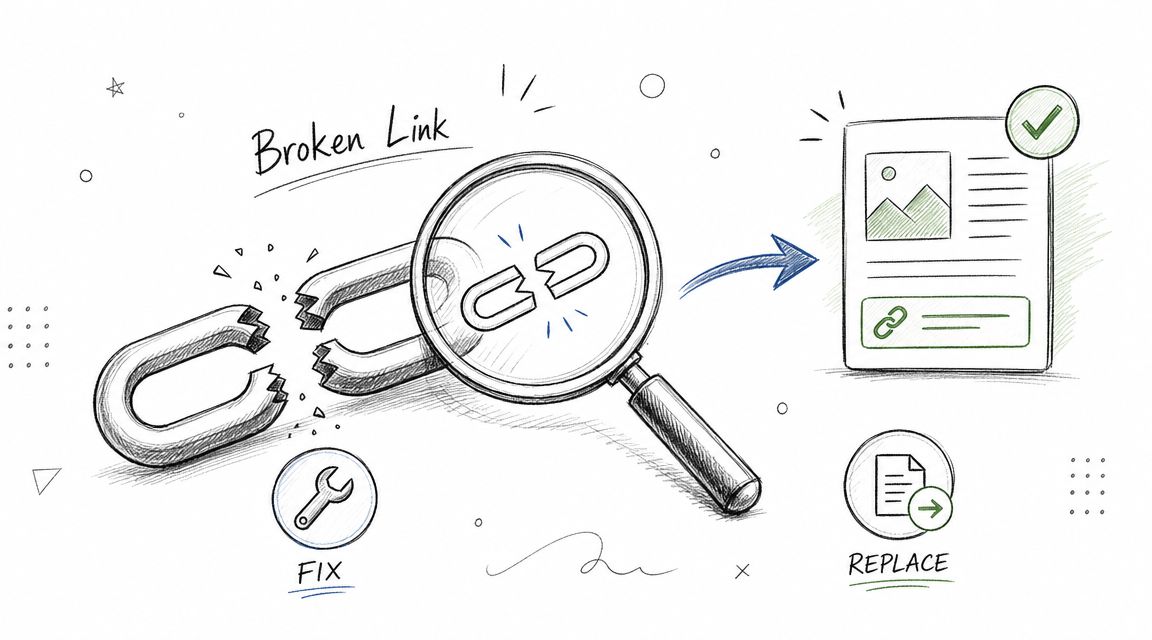
The tactic is straightforward. Find a broken outbound link on a relevant page, create or map a suitable replacement, then send a short email that identifies the issue and offers the fix. The strength of the play is context. The page already linked to this kind of resource before, so the editorial hurdle is lower than cold outreach.
What separates good campaigns from wasted effort
Stopping at merely identifying a “broken” link often leads to failure. A dead link alone isn't an opportunity unless the surrounding page is relevant and your replacement is comparable or better. If the original page was a research guide and you send a product pitch, the outreach dies there.
The best process is usually:
- Start with pages already linking in your niche: Resource pages, glossary pages, best-of lists, and tutorials are fertile ground.
- Inspect the original intent: Use archive snapshots when needed to understand what used to live there.
- Build the right replacement: Match the missing asset's purpose before outreach.
- Prospect at scale carefully: A link-finding workflow like finding pages that link to a page helps uncover clusters of sites that referenced the same dead asset.
Fixing a broken link is a maintenance win for the publisher. Your pitch should read like support, not promotion.
Real-world examples show up constantly in software and marketing niches. An outdated SEO tool roundup links to a dead tool. A compliance guide references a removed government explainer. A blog cites a retired statistics page. If you can replace the missing asset with something current and useful, the conversion rate is usually better than standard cold link asks.
4. Skyscraper Technique and Content Excellence
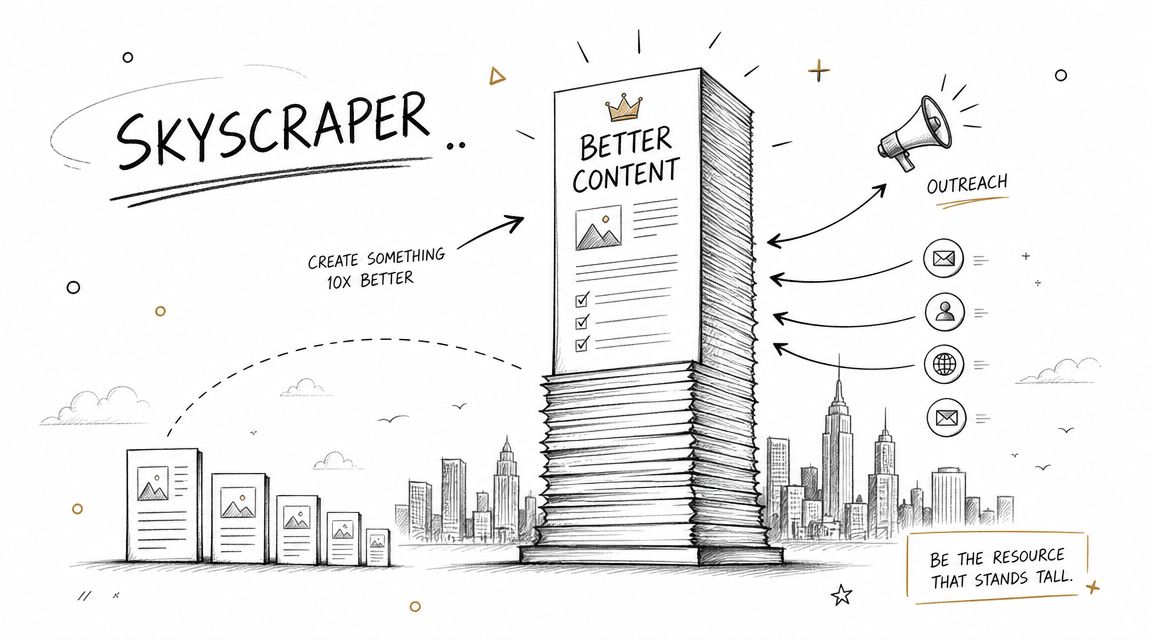
The skyscraper technique still deserves a place on the list, but not in its old, overhyped form. Publishing a “better version” of an existing article isn't enough anymore. Better usually means more useful, more current, easier to follow, and more specific to the searcher's actual problem.
The version that still works starts with topics that already attract links. If publishers have linked to an article format before, the topic has link potential. Then you improve the asset in ways that matter. Add clearer examples, sharper structure, fresher screenshots, stronger expert input, and a better page experience.
When it works, and when it doesn't
This tactic works best in evergreen informational spaces where existing linked content is outdated, shallow, or hard to use. It works poorly when the incumbent page already dominates because it has exclusive access, unique data, or a strong brand moat you can't reproduce.
The outreach side should be selective. Don't mass-email every domain linking to an older page. Contact the sites where your improved asset clearly adds value.
A strong skyscraper page often includes:
- A tighter angle: Narrow enough to be clearly useful.
- A superior structure: Better headings, examples, and scannability.
- Actual originality: Fresh commentary, examples, templates, or visual assets.
- Maintenance discipline: If the page ages badly, the links slow down.
For agencies, this is one of the better ways to create reusable client assets. Build one standout page in a category competitors have covered weakly, then support it with internal links, outreach, and steady updates. AI discovery tools can help identify content gaps, but the page still has to earn the link on merit.
5. Digital PR and Earned Media Outreach
Digital PR produces some of the hardest links to get and some of the most durable ones to keep. You're earning coverage because a journalist, editor, or industry writer thinks your story belongs in front of readers. That changes the value of the backlink and the brand signal around it.
Many backlink campaigns either level up or waste budget at this stage. Sending generic “please cover us” emails doesn't work. Creating a newsworthy angle does. That angle might come from original research, a trend analysis, a contrarian expert comment, a useful dataset, a strong founder perspective, or a timely industry response.
The stories that attract links
The strongest PR hooks usually have one of three traits. They reveal something, explain something, or respond to something already in the news cycle. Product launch emails and puff pieces rarely travel far unless the brand already has media gravity.
Good digital PR execution looks like this:
- Build a journalist-ready asset: Short summary, clear angle, supporting material, and a usable quote.
- Pitch the right desk: A trade reporter, vertical editor, or niche publication often outperforms a broad national list.
- Package the evidence: Charts, screenshots, expert analysis, and original observations help writers move faster.
- Follow up once, maybe twice: Persistence helps. Pestering kills.
Editorial reality: Journalists link when your material saves them time or strengthens their story.
In SaaS, fintech, health, legal, and e-commerce, PR backlinks often come from commentary-led outreach tied to trends already unfolding. If your company has internal expertise, this channel is often more realistic than trying to manufacture a viral campaign. It also supports branded search, trust, and off-site visibility in ways a simple placement never will.
6. Competitor Backlink Analysis and Replication
Competitor backlink analysis is where strategy replaces guesswork. Instead of asking, “Who might link to us?” you start with sites that already link to businesses like yours. That cuts out a lot of dead-end outreach.
The biggest mistake here is copying competitor links one by one without judging quality. Not every link a competitor has is worth replicating. Some are old, some are weak, and some only happened because of a specific relationship or event.
A smarter process prioritizes overlap and niche fit. CXL and seoClarity stress that quality backlink opportunities aren't just about authority scores. Relevance, gradual referring-domain growth, and links from domains that overlap across multiple competitors are better signals of opportunity than a raw metric chase (CXL on backlink gap analysis).
What to copy, and what to skip
The links worth chasing usually fall into recognizable patterns. Industry publications, software directories with editorial review, partner pages, event sites, association listings, expert contributions, resource hubs, and topical blogs are all fair game if they fit your market.
Use replication as a filter, not a script.
- Prioritize overlap domains: If several competitors earned links from the same relevant site, that's a strong lead.
- Check why they got the link: Guest article, quote, resource mention, integration page, sponsorship, or data citation.
- Create a matching asset: Replication often fails because your site has no equivalent page.
- Benchmark the competitive environment: Tools help here, and teams comparing options often start with guides to best backlink analysis tools and broader frameworks for understanding competitive analysis.
This tactic scales well for agencies. Pull patterns across several competitors, classify the source types, then turn that into an acquisition roadmap instead of a spreadsheet graveyard.
7. Industry Partnerships and Co-Marketing
Some of the best backlinks for SEO don't come from outreach campaigns at all. They come from business relationships that naturally produce linkable assets. Partnerships tend to create stronger links because the connection already makes sense to both audiences.
That could be a software integration page, a joint webinar, a co-written guide, a vendor spotlight, an event page, a shared customer resource, or a joint research piece. The common thread is that the backlink sits inside a real business context, not a manufactured one.
Why partnership links hold up well
Partnership links are usually topically aligned and harder for competitors to copy. If your CRM integrates with a reporting platform, both sites have a reason to mention each other. If two service providers target the same buyer from different angles, a co-authored guide often fits naturally on both domains.
This approach also reduces outreach friction. You're not convincing a stranger to care. You're building with someone who already benefits from the collaboration.
A few strong formats:
- Integration pages: Common in SaaS, especially for app ecosystems.
- Co-branded guides: Useful in B2B where one buyer uses multiple tools or services.
- Joint webinars and event pages: Strong for demand generation and branded links.
- Partner directories: Valuable when the relationship is real and the page is maintained.
Examples show up across software and professional services all the time. HubSpot and Salesforce-style ecosystem thinking works because the audience overlap is real. Agencies can use the same model by pairing complementary clients for webinars, guides, or marketplace-style pages that create contextual mentions and long-term link opportunities.
8. Unlinked Brand Mentions and Citation Conversion
Unlinked mentions are one of the fastest wins in link building because the hard part is already done. Someone already knows your brand, referenced it, and decided it belonged in the article. You're not starting from zero awareness.
This tactic is especially useful for brands with steady PR, active founders, product visibility, podcast appearances, or frequent inclusion in roundups. The warmer the mention, the easier the ask. A short note often beats a polished outreach sequence.
Search Engine Land's gap analysis guidance highlights unlinked brand mentions and outdated resource replacement as practical opportunities that many backlink guides underrate, especially compared with overused guest posting lists (Search Engine Land on gap analysis).
How to convert more mentions into links
Keep the outreach simple. Point to the article, thank the author for the mention, and ask whether they'd be open to linking the brand name or referenced page so readers can find the source more easily. That framing works because it improves the article, not just your SEO.
This is one of the easiest workflows to automate and review at scale.
- Monitor branded mentions regularly: Brand names, product names, founder names, and unique frameworks all count.
- Match the link target to the context: If they mention a tool, link the tool page. If they cite a study, link the study.
- Check the mention manually: Automated alerts surface junk. Human review catches valuable opportunities.
- Use search-driven discovery: A practical starting point is this guide on how to find backlinks in Google Search.
A polite email that fixes attribution often outperforms a clever pitch trying to manufacture interest.
For mature brands, this often becomes a recurring monthly workflow. For younger brands, it's a strong reason to invest in thought leadership and public-facing assets that make mentions more likely in the first place.
9. Infographics and Data Visualization Link Building
Visual assets still attract links when they do more than decorate a page. A good infographic, chart pack, map, or interactive visual makes complex information easier to cite, embed, and explain. A bad one is just design-heavy fluff with no original value.
The strongest visual link assets are tied to information people already discuss. Industry comparisons, process diagrams, benchmark visuals, geographic maps, category breakdowns, and decision frameworks all work better than generic “top trends” graphics.
Here's a useful example format in action.
What makes a visual asset link-worthy
A visual earns links when the underlying idea is strong. Design helps distribution, but substance drives citations. If you have no new information, create a visual that organizes an existing messy topic better than anyone else.
For agencies and in-house teams, this tactic also benefits from scalable production. One strong visual can support blog outreach, newsletter inclusion, social posts, decks, and journalist responses.
Use a simple production standard:
- Start with a clear claim or framework: The visual should answer a real question.
- Create an embed-friendly asset: Make it easy for publishers to use with attribution.
- Write supporting copy: Many sites prefer citing a page, not just an image.
- Outreach by topic fit: Send it to writers and editors already covering the subject.
One technical advantage here is better research coverage. At enterprise scale, backlink discovery and competitor comparison benefit from larger indexes. DataForSEO says its Backlinks API operates on roughly 2 trillion live backlinks and includes link history back to 2019, which is useful when you're auditing who linked to comparable visual assets, which referring domains are new, and where link history has changed over time.
10. Expert Roundups and Interview-Based Content
Expert roundups can be lazy content, or they can be excellent link assets. The difference is curation. If you ask a vague question and paste together shallow answers, most contributors won't link to it. If you build a sharp topic with informed responses and a strong editorial throughline, contributors often share it because it reflects well on them.
This works especially well in niches where practitioners want visibility but don't always have time to write full guest posts. You give them a low-friction way to contribute. In return, you publish something with broader perspective than a single-author article can offer.
How to avoid weak roundup content
Most roundups collapse because the topic is too broad. “What's your best SEO tip?” won't stand out. A question like “What changed your link evaluation process most in the last year?” has a much better chance of producing specific, quotable answers.
Interviews go deeper and often generate stronger secondary links because the featured expert has more reason to promote a dedicated piece.
Useful formats include:
- Single-question expert roundup: Fast to produce, but only if the prompt is specific.
- Multi-expert comparison: Best when evaluating tools, workflows, or strategic trade-offs.
- Founder or practitioner interviews: Better for depth and brand association.
- Podcast-to-article repurposing: Strong if you already run interviews elsewhere.
If you're building contributor lists, outreach infrastructure matters. For podcast and interview-led workflows, directories and contact-research tactics such as identify podcast guest contact details can help you build a cleaner prospect pipeline.
Top 10 Backlink Strategies Comparison
| Method | 🔄 Implementation Complexity | ⚡ Resource Intensity | ⭐ Expected Outcomes | 📊 Ideal Use Cases | 💡 Key Advantage / Tip |
|---|---|---|---|---|---|
| Guest Posting and Content Placement | 🔄🔄🔄, high vetting & editorial standards | ⚡⚡, content + outreach time | ⭐⭐⭐, contextual, high-quality backlinks & authority | Brand building, niche audience reach, agency scale | 💡 Personalize pitches; target high-DA sites and nurture editor relationships |
| Resource Page Link Building | 🔄🔄, straightforward outreach to page owners | ⚡, low–moderate time to identify pages | ⭐⭐, topical, persistent links (sometimes no-follow) | Niche authority and resource lists | 💡 Use search operators; prioritize recently updated resource pages |
| Broken Link Building | 🔄🔄, verification and outreach steps | ⚡⚡, tools + replacement content required | ⭐⭐⭐, high conversion when relevant replacements exist | Replacing outdated resources on authoritative sites | 💡 Use Ahrefs/SEMrush; point to a specific broken URL and offer better content |
| Skyscraper Technique and Content Excellence | 🔄🔄🔄, heavy research + outreach | ⚡⚡⚡, significant content investment | ⭐⭐⭐, strong potential for many high-quality links | Competitive topics, thought leadership, pillar content | 💡 Create 10x content with original data and ongoing updates |
| Digital PR and Earned Media Outreach | 🔄🔄🔄, relationship-driven and creative | ⚡⚡⚡, budget, research, and outreach resources | ⭐⭐⭐, high-authority pickups but less predictable | Major announcements, brand visibility, data-driven stories | 💡 Produce newsworthy research and build journalist relationships |
| Competitor Backlink Analysis and Replication | 🔄🔄, analytical work with SEO tools | ⚡, tool access and analysis time | ⭐⭐⭐, validated opportunity roadmap when replicable | Strategy planning, gap analysis, prioritized outreach | 💡 Focus on high-authority replicable links; use competitive benchmarks |
| Industry Partnerships and Co-Marketing | 🔄🔄🔄, negotiation and coordination | ⚡⚡, shared resources reduce cost per partner | ⭐⭐⭐, contextual, often high-value reciprocal links | Long-term growth, audience sharing, co-branded assets | 💡 Choose complementary, non-competing partners and define mutual value |
| Unlinked Brand Mentions and Citation Conversion | 🔄, simple outreach to warm prospects | ⚡, low effort with monitoring tools | ⭐⭐⭐, high conversion potential and quick wins | Brands with existing mentions needing link conversion | 💡 Monitor mentions; send polite, specific link requests to publishers |
| Infographics and Data Visualization Link Building | 🔄🔄, design + data sourcing | ⚡⚡, design resources and promotion | ⭐⭐⭐, highly shareable and embeddable links | Visual/data-heavy topics and evergreen resources | 💡 Base on unique data; provide embed codes with attribution |
| Expert Roundups and Interview-Based Content | 🔄🔄, outreach and content compilation | ⚡⚡, coordination and formatting effort | ⭐⭐⭐, multiple shares and expert network links | Authority building, leveraging expert audiences | 💡 Make contributions easy; include bios and clear linking incentives |
From Plan to Profile Building Your Backlink Strategy
The best backlinks for SEO don't come from chasing prestige. They come from building a profile that makes sense. That means relevant links from credible sites, spread across multiple source types, earned with assets that merit citations.
If you're starting from a weak profile, don't try to run all ten tactics at once. Pick one fast-win channel and one compounding channel. Unlinked mentions and resource pages are often the easiest place to start because the ask is straightforward and the editorial fit is easy to validate. Pair that with a longer-term play such as digital PR, partnerships, or a standout content asset, and you'll build both momentum and durability.
The trade-off is always the same. Lower-effort tactics tend to have a smaller ceiling. Higher-impact tactics usually need stronger content, cleaner outreach, and more operational discipline. That's why random link orders and mass email blasts almost always disappoint. They produce activity, not a strategy.
The most reliable approach is to score opportunities before you pursue them. I'd look at four things first: topical relevance, likelihood of a follow link, placement quality, and whether the domain is a new referring source. If a prospect looks authoritative but the topic fit is weak, I'd usually pass. If a smaller site is strongly aligned and the link will sit inside the main body of a strong page, I'd often take that meeting first.
This is also where modern tooling matters. Teams need a clean way to monitor links gained, links lost, competitor patterns, and how off-site visibility connects to rankings and AI surfaces. Surnex is one option because it combines backlink tracking with broader SEO and AI visibility workflows in one platform, which is useful for agencies and in-house teams trying to reduce tool sprawl. If your workflow already spans several systems, the point is the same. Keep one clear source of truth for link acquisition, page targets, and post-placement tracking.
One more point matters. Diversity beats dependency. A profile made entirely of guest posts, or entirely of directory-style links, usually plateaus. A profile built from resource links, earned mentions, partnerships, media citations, expert contributions, and selective placements is harder to copy and easier to defend.
If you want a broader view of platform selection while building your stack, this guide on SEO tools for bloggers is a useful companion read.
Build slowly enough to stay deliberate, but consistently enough to matter. That's how backlink strategy turns into a stronger backlink profile.
If you want one place to track backlinks, rankings, audits, and AI visibility without bouncing between separate tools, Surnex is worth a look. It's built for agencies, in-house teams, and developers who need a clearer picture of how brands appear across traditional search and emerging AI discovery.