Is your agency still publishing blog posts for a version of SEO that clients have already outgrown?
Generic SEO content rarely helps an agency win serious buyers now. Prospects want evidence that your team understands how visibility works across Google's AI Overviews, ChatGPT, Perplexity, Claude, and traditional search. They also want a reporting model that connects those shifts to pipeline, brand exposure, and client decisions.
That changes what makes strong blog post ideas. A post about keywords or backlinks can still work, but only if it explains how those inputs affect citation rates, AI summaries, and cross-platform brand presence. Agencies that keep publishing recycled advice tend to attract lower-intent leads because their content does not reflect the questions better clients are already asking.
I see the same pattern across agency blogs. The posts are usually accurate, but too shallow to prove real operating expertise. They explain SEO tactics without showing how an agency should track prompts, monitor citations, compare competitors, or explain AI visibility changes to clients who do not care about ranking reports in isolation.
This list is built to fix that.
Each idea below is a usable strategy brief for SEO agencies that want to show thought leadership on AI search and modern SEO, not just fill a calendar. Several of these topics pair naturally with a practical workflow and tools such as an AI Overview tracking process for SEO teams, which helps turn abstract AI-search discussion into reporting, monitoring, and client-facing proof.
1. How to Track Your Brand in Google's AI Overviews A Complete Guide for SEO Teams
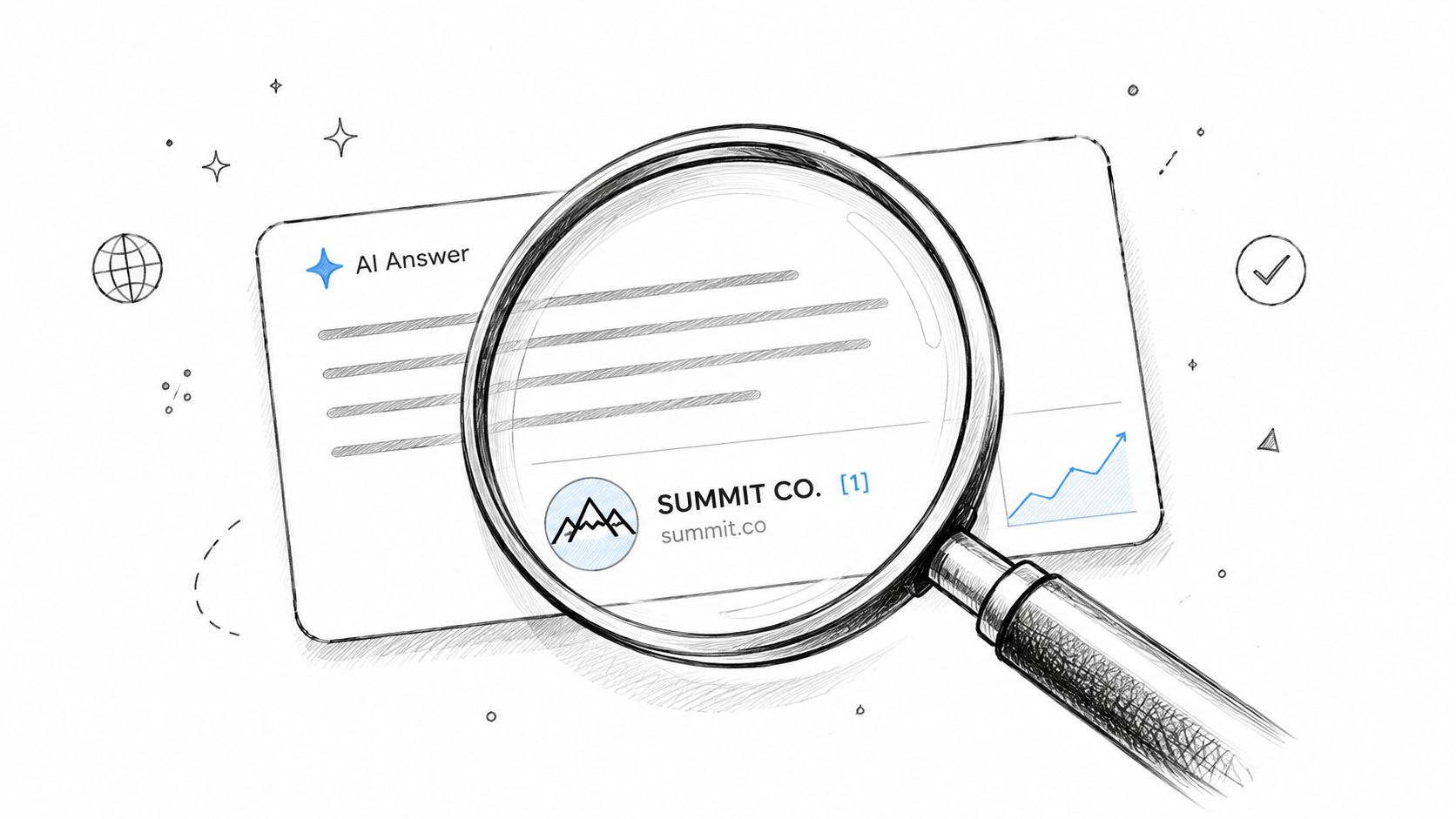
Most agencies still report rankings as if that's the whole picture. It isn't. A brand can miss the top organic results and still appear inside an AI Overview, or rank well organically and get ignored by the summary that many users see first.
That tension makes this one of the strongest blog post ideas for agencies serving ecommerce, finance, legal, and publisher clients. Write it like an operations guide, not a trend piece. Show teams how to log prompts, record citations, segment by search intent, and compare AI Overview appearances against traditional rankings.
What to include
Use a simple tracking framework your readers can steal.
- Baseline coverage: Capture visibility before broad site changes, content pruning, or major search volatility.
- Citation source mapping: Note which pages get cited most often and what content format they follow.
- Context tagging: Record whether the brand appears in comparisons, definitions, recommendations, or transactional summaries.
- Topic cluster review: Group prompts by product, service, problem, and competitor terms.
An ecommerce example works well here. A retailer might discover its category pages barely rank, but its buying guide keeps appearing in AI summaries for high-intent queries. A law firm might learn that its glossary content is cited more often than its service pages, which signals a trust and clarity issue, not just a keyword issue.
Practical rule: If you don't know which pages get cited, you can't explain why visibility rose or fell.
For implementation details, point readers to a dedicated workflow like Surnex's AI Overview tracker guide. That gives the post a concrete next step instead of ending in theory.
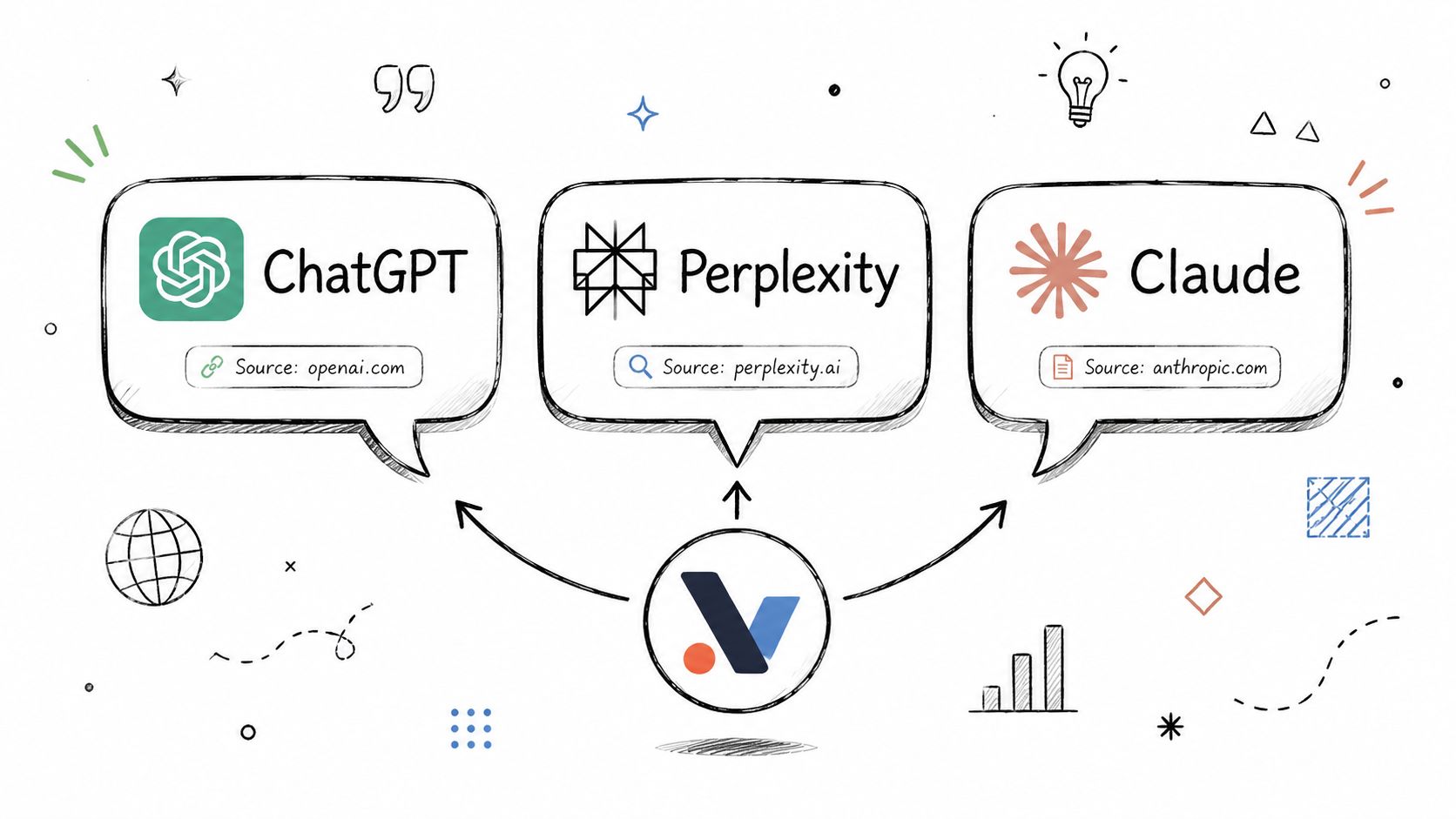
2. ChatGPT, Perplexity, and Claude Tracking Brand Presence Across Multiple LLM Platforms
Why do agencies still report AI visibility as if Google is the only surface that matters?
Buyers do not behave that way. They ask ChatGPT for shortlists, use Perplexity to verify sources, and turn to Claude to condense options and compare claims. For SEO agencies, that creates a real reporting problem. A brand can look healthy in one assistant and nearly invisible in another, even when the underlying site has not changed much.
That tension makes this one of the stronger blog post ideas for agencies that want to show authority on AI search, not just comment on it. The useful version of this article is a strategy brief with a repeatable monitoring model. It should explain how to track brand mentions, citations, inclusion in recommendations, and competitor displacement across multiple LLMs, then tie those findings back to content decisions.
What agencies should measure across platforms
Each platform has different retrieval habits and answer formats, so the audit needs more than a few branded prompts and screenshots.
- Prompt sets by intent: Track branded, category, comparison, use-case, and "best" queries separately.
- Presence type: Record whether the brand is cited, summarized, recommended, or left out entirely.
- Source pattern: Note whether the model pulls from your site, third-party reviews, documentation, marketplaces, or publisher coverage.
- Competitor overlap: Flag prompts where rivals appear repeatedly and your client does not.
- Answer volatility: Re-run prompts on a schedule so teams can spot shifts instead of treating one result as truth.
A B2B SaaS client might appear often in Perplexity because the platform surfaces documentation and external citations. The same client may struggle in ChatGPT for commercial comparisons if review sites and list posts define the category better than the brand does. Claude may summarize the market accurately but omit the client altogether if its source base lacks clear entity signals or strong third-party validation.
That is the trade-off agencies need to explain to clients. Strong technical SEO and rank tracking still matter, but they do not guarantee cross-platform visibility.
For teams building a more formal workflow, LLM brand visibility tracking across AI platforms is the right internal reference to include. It gives this post a concrete next step and reinforces the article's core point: AI search monitoring has to be platform-specific, structured, and recurring.
This section is also a natural place to mention adjacent discovery tools that influence how people evaluate vendors, including AI Assistant. Keep the framing practical. Agencies need an operating system for observation and reporting, not a one-time experiment.
The angle that makes this post stronger than a generic "blog ideas" list is specificity. Do not tell readers to write about ChatGPT. Tell them how an SEO agency can build a cross-LLM monitoring framework, what fields to track, how to interpret conflicting visibility signals, and how to turn those findings into content, digital PR, and authority-building work. That is the level of detail that earns trust.
3. The AI Visibility Gap Why Traditional SEO Metrics No Longer Tell the Complete Story
This post should challenge a belief many clients still hold: if rankings are stable, everything is fine. That's no longer reliable. A brand can hold strong positions and still lose attention when AI-generated answers reduce clicks or route discovery elsewhere.
Frame this article around mismatched signals. For example, an ecommerce brand ranks for product-led queries but never gets mentioned when users ask ChatGPT for “best tools for” recommendations. Or a services company has clean technical SEO and decent links, but AI interfaces keep naming publishers, review sites, and competitors instead.
A smarter reporting model
The most useful version of this article gives agencies a replacement model for old KPI thinking.
- Separate presence from traffic: Visibility and visits now diverge more often.
- Track citations alongside rankings: A page that gets cited may influence the journey even if it doesn't win the click.
- Audit content shape: Pages built to rank aren't always built to be summarized or cited.
- Explain channel overlap: Traditional search and AI discovery influence each other, but they aren't interchangeable.
A strong angle here is the market gap itself. Creators keep asking how to find blog post ideas that perform in both traditional search and AI assistants, yet most guidance still doesn't unify the two. That disconnect creates a cross-platform viability gap, and only a small share of blog idea guides address the dual-channel approach, according to Passive Income Pathways on blog content ideas.
That fact gives the post urgency. Your agency isn't just reporting new metrics. It's helping clients understand why the old dashboard stopped answering the full business question.
4. Building an AI-Ready SEO Strategy From Optimization to Authority
This is one of the best blog post ideas if you want to attract better-fit clients. It signals that your agency thinks beyond on-page tweaks and monthly keyword movement. The core argument is simple: optimization still matters, but authority now has to be visible across more than one discovery environment.
Write this piece around strategic trade-offs. Keyword-specific pages can still work. But if the site lacks topical depth, named expertise, source clarity, and fresh supporting content, it may struggle to earn consistent citations in AI-driven search experiences.
What an AI-ready strategy looks like
A useful version of this article should move from isolated pages to topic systems.
- Topic clusters over single pages: Build around core entities, buyer problems, and adjacent questions.
- Content hubs over scattered posts: Connect guides, comparisons, FAQs, use cases, and supporting assets.
- Authority proof over generic copy: Add expert bios, first-party insight, and clear sourcing.
- Update discipline over one-time publishing: Refresh aging content before accuracy and relevance decay.
This article also gives you room to discuss workflow. Many teams publish disconnected posts because it's easier to hit the calendar that way. It rarely builds durable authority. Businesses that publish blog posts attract 55% more visitors than those that don't, according to SEOProfy's content marketing statistics, but publishing volume alone isn't the strategy. The structure behind the content is what determines whether it becomes a discoverability asset or just another URL.
For a direct next step, link readers to using AI in SEO, especially if your agency wants to connect strategy with execution.
5. API-Driven SEO How Developers Can Automate AI Visibility Monitoring at Scale
Most agency blogs avoid technical posts because they assume only engineers care. That's a mistake. Technical buyers, product teams, enterprise marketers, and operations leads all pay attention when an agency can explain automation clearly.
This topic should read like a systems brief. Show how a team can pull AI visibility data into internal dashboards, trigger alerts when brand mentions disappear, and combine citation monitoring with ranking, backlink, and audit data in one workflow.
Start with the narrowest useful use case. Automated reporting is usually the best one. Agencies often overbuild too early, then abandon the integration because no one owns maintenance.
Build this post around one scalable workflow
- Daily collection: Pull prompt-level visibility data into a warehouse or dashboard.
- Change detection: Flag missing citations, new competitors, or drops in coverage.
- Client reporting: Push summaries into slides, dashboards, or account notes.
- Operational reliability: Add retries, logging, and documentation before expanding scope.
A strong real-world scenario is an enterprise brand that wants AI Overview tracking and internal SEO data in the same environment. Another is an agency that needs account managers to see visibility shifts without asking analysts for manual exports.
If you want to make the post feel more grounded, introduce the technical conversation with a demo.
One practical point makes this article timely. Current tools still lack enough agent-ready API support for real-time LLM visibility in many workflows, which is one reason agencies struggle to unify SEO and AI discovery monitoring in practice. That makes developer-focused blog post ideas especially valuable.
6. Client Reporting Reimagined Communicating AI Search Changes to Non-Technical Stakeholders
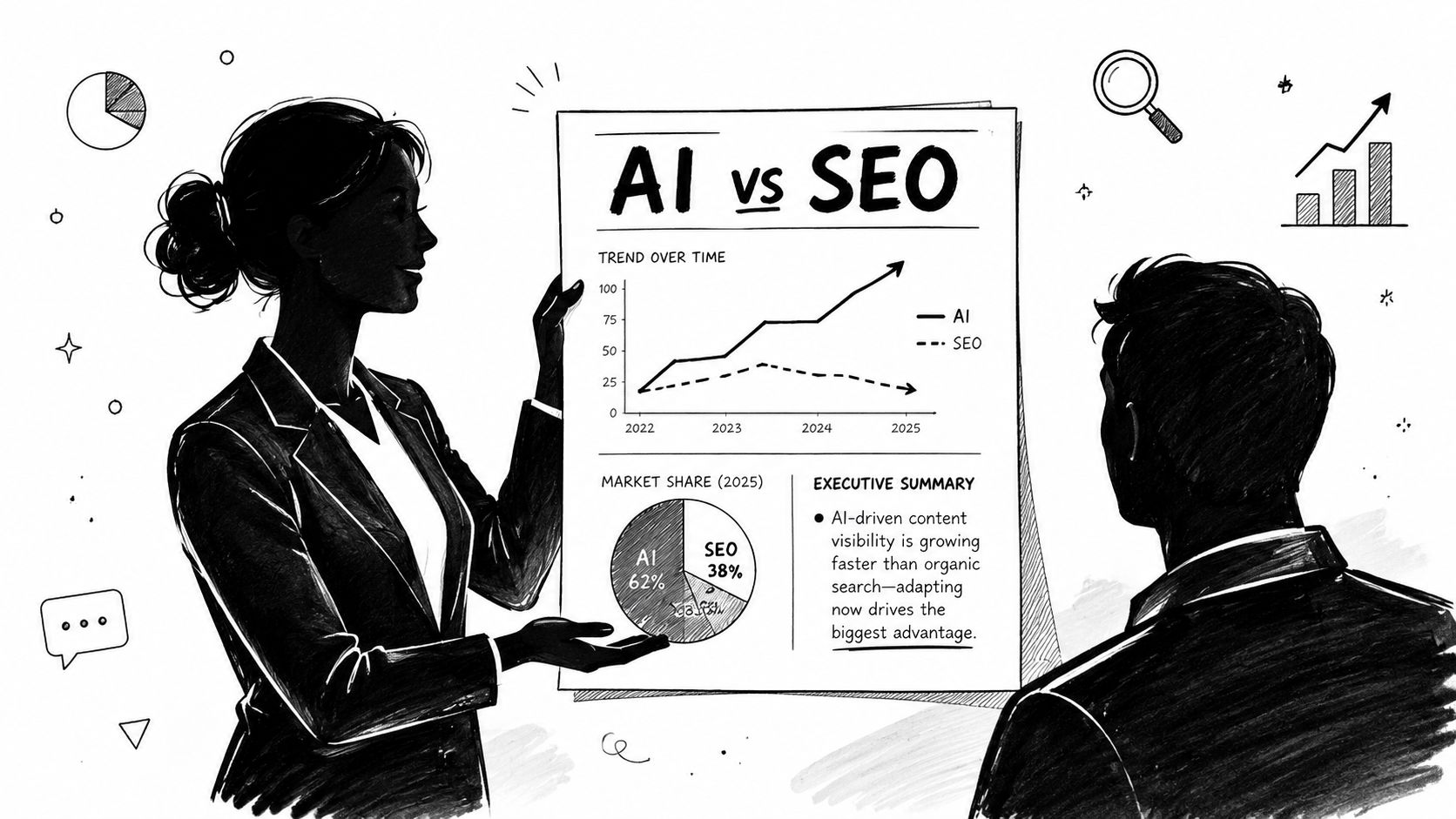
Plenty of agencies understand the AI shift internally but fail when they explain it to clients. They dump screenshots into a deck, add jargon, and leave the room with more confusion than confidence.
This blog post should solve that. Write it for account managers, SEO leads, and agency founders who need cleaner narratives for CMOs, directors, and owners. The best reports don't start with mechanics. They start with what changed, why it matters, and what action the client should fund next.
Reporting language that actually works
Use examples that connect search change to business decisions.
- For executives: Focus on visibility, demand capture, competitive position, and risk.
- For marketing leads: Show where AI surfaces reduce click share or change content priorities.
- For practitioners: Include prompt sets, page-level citations, and content recommendations.
- For sales-minded stakeholders: Tie visibility shifts to lead quality and consideration-stage presence.
A good article here also contrasts weak and strong reporting. Weak reporting says, “AI Overviews are volatile.” Strong reporting says, “Your brand appears in educational summaries but not in comparison-style prompts, so competitors are entering the evaluation stage before you do.”
Clients don't need every metric. They need a clear explanation of what changed and what you'll do next.
If you want an external reference point for how technical data collection can support client-ready reporting, a guide to web scraping API technology can help frame the operational side without turning your article into a dev manual.
7. Competitive Benchmarking in the Age of AI Search Finding Your Visibility Gaps
Competitive analysis used to be simpler. You checked who outranked the client, reviewed backlinks, and mapped content gaps. That still matters, but AI search introduces a second competitor set: brands that may not beat you organically yet still get cited, recommended, or summarized ahead of you.
That's why this topic works. It helps agencies show they understand the broader visibility battlefield, not just the ranking one. A travel brand may dominate classic destination pages while a publisher or marketplace keeps showing up in AI-generated planning answers. A SaaS company may own branded queries but lose discovery-stage prompts to review sites and competitor comparison content.
What to benchmark now
This article should give readers a usable benchmark model.
- Direct competitors: Brands selling the same service or product.
- AI-native competitors: Publishers, aggregators, reviewers, and marketplaces winning citations.
- Prompt-level performance: Which brands show up by query type and intent.
- Cluster-level weakness: Topics where your client disappears from the conversation.
This is also a good place to discuss prioritization. Don't chase every missing mention. Fix gaps where the client already has strong expertise, useful content, and a realistic path to better visibility.
For agencies that want a cleaner framework, competitive intelligence for SEO is the right internal destination. It keeps the post practical and tied to service delivery.
8. Content Optimization for AI Search Structures, Formats, and Signals That Get Cited
Most content optimization posts say the same things: add keywords, improve headings, tighten internal links. That advice isn't wrong. It's just incomplete for AI search.
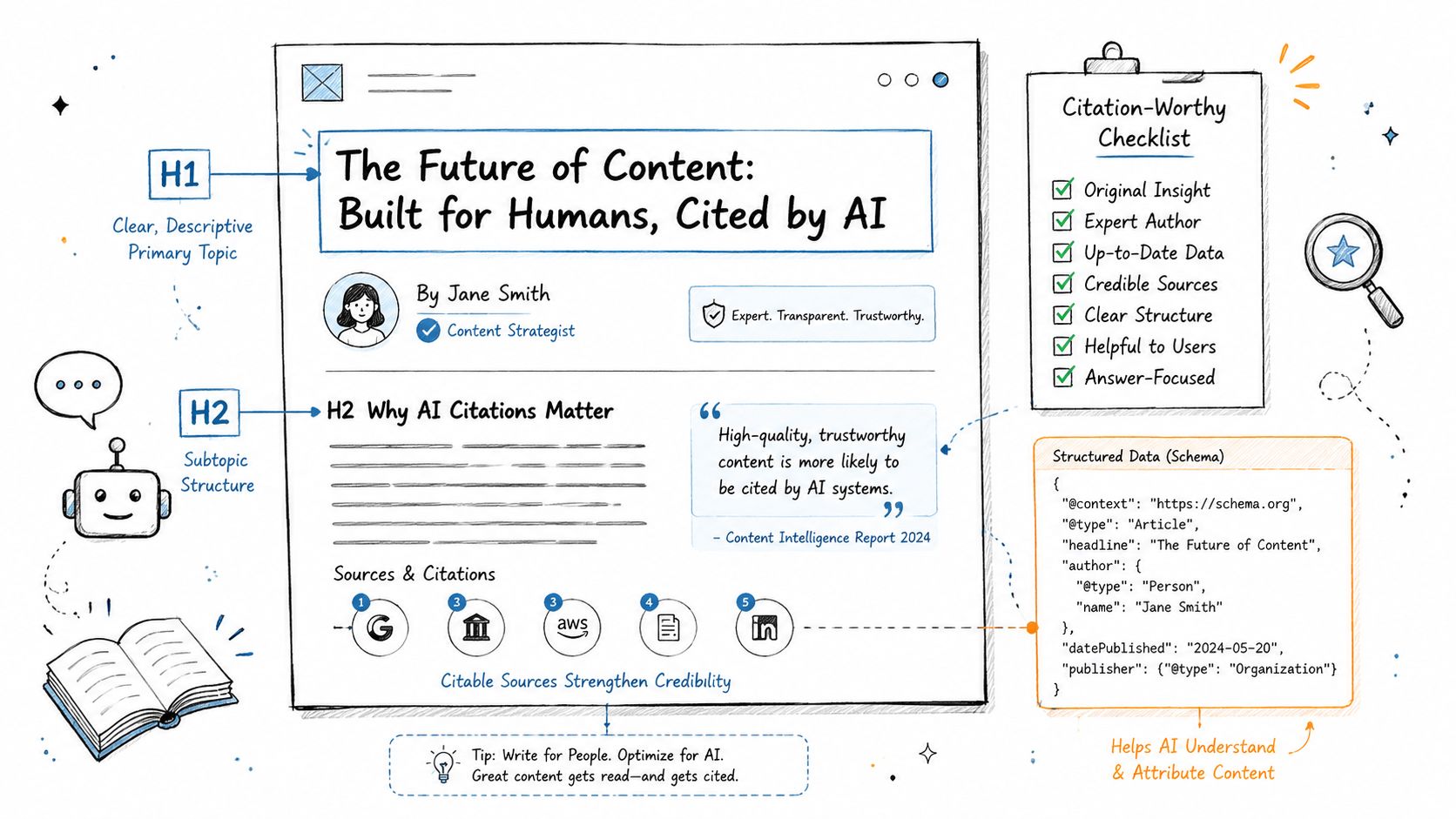
A stronger article focuses on content shapes that help machines parse, summarize, and cite information accurately. Clear heading hierarchy, explicit authorship, first-party insight, comparison tables, concise definitions, and clean topical scope all matter here. So does freshness. If your article reads like an unmaintained archive page, it's harder to trust as a source.
What content teams should change
Use this section to be specific.
- Heading structure: Make sections easy to interpret and extract.
- Entity clarity: State who the article is about, what it covers, and where the boundaries are.
- Attribution: Show expert authorship and cite credible sources where appropriate.
- Originality: Add first-party observations, examples, or data the web doesn't already repeat.
There's a major quality gap you can highlight. The average blog post length has grown to 1,427 words, yet only 3% of brands consistently publish content over 2,000 words, according to Digitaloft's content marketing statistics. That doesn't mean every post should be long. It does mean many competitors still stop short of the depth needed to become the page people cite, reference, and share.
The page that ranks isn't always the page an AI system trusts enough to summarize.
A health publisher, financial advisor, or product review site can all use this framework. The winning pattern is the same: write for clarity first, then make that clarity machine-readable.
9. Winning the Citation Game Building Link Equity That Works Across Traditional and AI Search
What makes one brand the source that gets cited while another brand with similar content gets ignored?
For SEO agencies, that question turns a standard link building post into a stronger strategy brief. The article should make a clear case that link equity still matters, but the goal is broader now. Strong mentions, relevant links, and repeat references across trusted sites help pages compete in traditional rankings and improve the odds that a brand is treated as a credible source in AI-driven search experiences.
That does not mean agencies should promise a direct line from one backlink to one AI citation. The relationship is messier than that. What agencies can say with confidence is that authority compounds when a brand is consistently referenced by sources that already carry trust in a given topic. That is the story this post should tell, especially if you want to connect classic SEO work to modern search visibility in a way clients can understand.
What good link strategy looks like now
A useful framework for this piece is to separate link acquisition from authority design. Agencies are not just chasing placements. They are building a citation footprint that search engines and AI systems can both interpret.
- Topical relevance: A link from an industry publisher usually carries more value than a mention on a broad, low-context site.
- Source quality: Trusted domains with editorial standards tend to send stronger authority signals than easy-win placements.
- Citation adjacency: Mentions alongside recognized experts, vendors, or publications can strengthen brand association within a topic cluster.
- Internal distribution: Internal links should route earned authority into service pages, research assets, and supporting content hubs.
- Asset selection: Original research, expert commentary, proprietary data, and practical frameworks attract stronger links than generic opinion posts.
The best version of this article should also explain a real trade-off. High-volume digital PR can increase raw link counts, but agencies that care about AI visibility should often prefer fewer placements with tighter topical alignment. A cybersecurity client cited by security reporters, analysts, and technical blogs is building the kind of authority graph that matters. Fifty weak lifestyle placements will not do the same job.
Surnex fits naturally into that argument. Agencies can use unified monitoring to compare link growth with actual brand appearance across AI search surfaces. That helps separate links that look good in a monthly report from links that correlate with stronger citation visibility. Few generic "blog post ideas" lists get that specific. This one should.
A practical example makes the angle stronger. A B2B software company might publish an implementation guide with original screenshots, failure points, timeline estimates, and commentary from its solutions team. That asset gives partners, consultants, and reviewers something concrete to reference. The result is not just another traffic page. It becomes a source document that can earn links, support rankings, and improve the brand's odds of being cited when AI systems summarize the category.
10. The Future of Search Intelligence How Unified Monitoring Prepares Agencies for What's Next
What will agencies sell when rankings are only one layer of search visibility?
The strongest answer is search intelligence. Agencies need a flagship post that explains one operating model for tracking how brands appear in organic results, AI Overviews, and LLM-driven discovery. That framing matters because buyers are no longer discovering brands through a single interface, and reporting built around ten blue links no longer reflects the full picture.
I have seen this shift change sales conversations fast. Prospects respond better when the offer is framed as ongoing visibility analysis and interpretation across platforms, not another version of rank tracking with AI added to the pitch. The agency sounds closer to the buying journey, and the service feels harder to replace.
That creates a practical content angle for this article. It should show agency leaders how unified monitoring supports a stronger service model, and why that model is better aligned with where search is heading.
Why unified monitoring matters
The business case is straightforward, but the trade-offs are real.
- Reporting gets clearer: Teams stop stitching together partial views from separate SEO, AI, and brand-monitoring tools.
- Prioritization improves: Analysts can tell whether a drop is a rankings problem, a citation problem, or a broader authority issue.
- Client retention gets easier: Reporting matches the questions clients are already asking about AI search visibility.
- Service packaging expands: Agencies can combine monitoring, strategic analysis, executive reporting, and API workflows into one offer.
There is also an operational trade-off that weaker articles miss. A single unified view can reduce confusion, but it also forces agencies to define shared metrics and ownership. That takes work. SEO teams, analysts, and client leads need one language for visibility, or the dashboard becomes another source of disagreement. Agencies that handle that alignment early build a stronger delivery model. Agencies that avoid it keep producing fragmented reports that are harder to defend in QBRs.
Surnex is useful here because it supports the exact argument this post should make. Agencies need one view of brand presence across traditional search and AI surfaces so they can connect performance shifts to actual market visibility, not just isolated channel metrics. That is a stronger thought leadership angle than generic blog post ideas because it turns the article into a service blueprint.
A concrete example helps. An agency managing a SaaS client may see stable rankings for key commercial pages while brand mentions in AI-generated answers decline. In a traditional SEO report, that account can look healthy. In a unified monitoring model, the team sees a more accurate story, investigates whether competitors are earning stronger citations, and adjusts content, digital PR, or expert-led assets before the client feels the impact in pipeline quality.
End this piece with a clear position. Agencies that treat SEO reporting and AI visibility tracking as separate functions will struggle to explain what is changing and what clients should do next. Agencies that unify both under search intelligence will look more credible, more strategic, and better prepared for the next phase of search.
10 AI Search Blog Ideas Comparison
| Title | Implementation complexity 🔄 | Resource requirements ⚡ | Expected outcomes 📊 | Ideal use cases 💡 | Key advantages ⭐ |
|---|---|---|---|---|---|
| How to Track Your Brand in Google's AI Overviews: A Complete Guide for SEO Teams | Medium, new tracking workflows, evolving signals | Moderate, AI-monitoring tools, analyst time | Better visibility on AI Overviews; citation trend insights | Brands wanting Google-specific AI visibility | Early mover advantage in Google AI citations |
| ChatGPT, Perplexity, and Claude: Tracking Brand Presence Across Multiple LLM Platforms | High, multiple platform integrations and normalization | High, platform connectors, comparative analytics | Cross-LLM visibility map; platform-specific gaps | Enterprises targeting multi-LLM presence | Broad coverage and competitive benchmarking |
| The AI Visibility Gap: Why Traditional SEO Metrics No Longer Tell the Complete Story | Medium, conceptual integration of metrics | Low–Moderate, reporting changes and dashboards | Unified visibility score; client-ready narratives | Agencies reframing KPIs for clients | Clarifies gaps between rankings and AI visibility |
| Building an AI-Ready SEO Strategy: From Optimization to Authority | Medium, strategic redesign and content planning | Moderate, content investment, editorial resources | Stronger topical authority; sustainable AI citations | Brands pursuing long-term authority building | Durable cross-channel authority and credibility |
| API-Driven SEO: How Developers Can Automate AI Visibility Monitoring at Scale | High, engineering, API design, reliability | High, developer time, infrastructure, maintenance | Scalable, real-time monitoring and alerts | Enterprises and data teams needing automation | Full automation, custom integrations, scale |
| Client Reporting Reimagined: Communicating AI Search Changes to Non-Technical Stakeholders | Low, template creation and data translation | Low, design time, reporting tools | Clear business-focused reports; better retention | Client-facing teams and account managers | Improves client understanding and justification |
| Competitive Benchmarking in the Age of AI Search: Finding Your Visibility Gaps | Medium, multi-dimensional analysis setup | Moderate, competitive datasets and tooling | Prioritized opportunity list; gap closure roadmap | Teams prioritizing tactical wins vs competitors | Actionable prioritization and early threat detection |
| Content Optimization for AI Search: Structures, Formats, and Signals That Get Cited | Medium, content reformatting and schema work | Moderate, editorial effort, schema implementation | Higher citation likelihood across LLMs | Publishers and content-heavy brands | Improves citation probability and content quality |
| Winning the Citation Game: Building Link Equity That Works Across Traditional and AI Search | High, sustained link strategy and measurement | High, outreach, partnerships, long-term investment | Stronger citation authority; compounded gains | Brands seeking durable authority and links | Long-term cross-channel link equity benefits |
| The Future of Search Intelligence: How Unified Monitoring Prepares Agencies for What's Next | High, platform-level adoption and training | High, tooling, team training, strategic investment | Future-proofed services; new revenue tiers | Agency leadership and product teams | Positions agency as forward-thinking leader |
From Idea to Impact Your Next Steps
What should your agency publish first if the goal is not traffic alone, but stronger positioning, better sales conversations, and clearer proof that you understand AI search better than the average SEO firm?
Start with the topic your team can explain from direct experience. Agencies with strong technical depth should publish the API and monitoring piece first. Agencies that win on strategy and communication should lead with reporting, benchmarking, or the AI visibility gap. If the goal is category positioning, publish the search intelligence article and treat it like a flagship point-of-view asset.
These are not generic blog post ideas. They are content strategy briefs built for SEO agencies that need to show clients how search has changed across Google AI Overviews, ChatGPT, Perplexity, Claude, and the reporting systems around them. That difference shows up in pipeline quality. Prospects do not just read the article. They assess whether your agency has a current operating model for modern search.
Generic SEO content rarely does that job well. Broad advice pieces can still pull in visits, but they often attract weak-fit readers and give buyers no clear reason to choose your team. A tightly framed article on AI brand visibility, citation patterns, unified monitoring, or developer workflows signals specialization. It gives account teams a sharper asset to send during sales cycles. It also gives existing clients evidence that your service model is keeping pace with the market.
I have seen the best agency content work like pre-sales enablement.
The format matters as much as the topic. Build each post like a practical service page with editorial depth. Show the actual workflow. Explain what gets measured, what breaks, where teams waste time, and which trade-offs matter between manual checks, platform data, and client-facing reports. If you use Surnex in your process, make that visible through realistic examples of AI Overview tracking, LLM brand monitoring, competitive gap analysis, or cross-channel reporting logic.
Quality also decides whether the piece becomes an asset or just another blog entry. As noted earlier, shallow posts rarely attract references or help sales. Strong posts earn attention because they give readers something they can apply immediately. Screenshots, reporting templates, prompt examples, sample dashboards, decision frameworks, and annotated client scenarios usually outperform abstract advice.
Keep the rollout focused. Publish one foundational article first. Then add one tactical piece and one client communication piece. That sequence usually gives agencies the best mix of search value, sales usefulness, and repurposing options for email, outbound, proposals, and client reviews.
Strong topics are easy to list. Strong agency content is harder because it requires specificity, a real point of view, and clear commercial relevance. That is the opportunity in this category.
If your agency needs a better way to track rankings, backlinks, AI Overviews, and LLM brand presence in one place, Surnex is built for exactly that shift. It gives agencies, in-house teams, and developers a unified view of modern search visibility, along with the workflows and APIs needed to report clearly, find gaps faster, and build stronger search services without juggling disconnected tools.