You're probably looking at a client report that feels safe on paper and weak in the room. The charts are clean, the numbers are there, and still the client asks the one question that matters, “So what changed, and what should we do next?” That gap is where agency client reporting either becomes a retention asset or turns into a monthly chore that erodes trust.
The agencies that keep accounts don't just show performance. They connect the work to business outcomes, set expectations early, and make the report part of the operating rhythm instead of a static PDF. That shift is reflected in current guidance that recommends a small set of 1 to 3 primary numeric goals set during the first two weeks of an engagement, plus recurring walkthroughs and a defined cadence so different stakeholders aren't left interpreting the data alone. Swydo's client reporting best practices make that expectation explicit, and it's the right place to start if your current reports still feel like data dumps.
Why Most Agency Reports Fail to Build Trust
The worst reporting meetings usually sound polished right up until the first hard question lands. The account manager opens with traffic, rankings, and a few colorful charts, but the client wants to know whether the work helped pipeline, revenue, or the next step in the customer journey. When the report can't answer that, the meeting turns into damage control, even if the campaign itself is moving in the right direction.
The trust problem is usually a framing problem
Most reports fail because they start with what the agency measured, not what the client hired the agency to change. Rankings, impressions, and clicks matter, but only when they're tied to a business decision. If the client can't connect the data to a next move, the report feels like proof of activity instead of proof of value.
That is also why static monthly PDFs keep underperforming. A document can store the numbers, but it cannot explain why the numbers changed or what the client should do with them. The stronger agencies pair the report with a live walkthrough, a clear cadence, and a small set of agreed outcomes, so stakeholders are not left to interpret the same chart in different ways. If you are reviewing your own format, what an SEO report should include is a useful baseline for deciding which sections deserve space and which ones are just noise.
Trust also breaks when the report ignores the metrics clients now expect to hear about. Traditional SEO still matters, but clients are starting to ask how visible they are inside AI Overviews and whether LLM citations are reinforcing or diluting their authority. A report that shows rankings without that context can feel dated fast, especially when the client is already hearing about AI-assisted search from their own leadership team. Good reporting keeps the core SEO story intact while adding those newer visibility signals in a way that does not bury the main takeaway. For teams trying to make that system reliable, how to implement data observability becomes part of the reporting conversation, because broken feeds and inconsistent definitions destroy confidence before the client even looks at the chart.
Practical rule: If a metric does not lead to a decision, it probably does not belong in the main report.
Audit the friction points before the next churn risk appears
A good report audit is simple. Look at the last three reports and ask where the client had to ask follow-up questions just to understand the basic story. Then check whether those questions came from unclear goals, too many metrics, or a lack of narrative.
The most common friction points are easy to spot once you look for them. The report may be technically correct but strategically empty. It may also be overloaded with channel data that never gets translated into one clear business takeaway, which is how a client ends up feeling informed and still unconvinced.
The fix is not more detail. It is better hierarchy. Lead with the few outcomes that matter, explain what changed, and keep the rest available for the people who need it. That is the difference between reporting that gets filed away and reporting that helps keep the account alive.
Defining Goals and Selecting the Right KPIs
A client can approve a dashboard and still walk away confused if the agency never settled the goal first. Once that happens, the report fills with easy-to-pull activity metrics, while the numbers that defend the work stay buried. That is how a clean-looking report still fails the account.
Start with a small set of primary goals
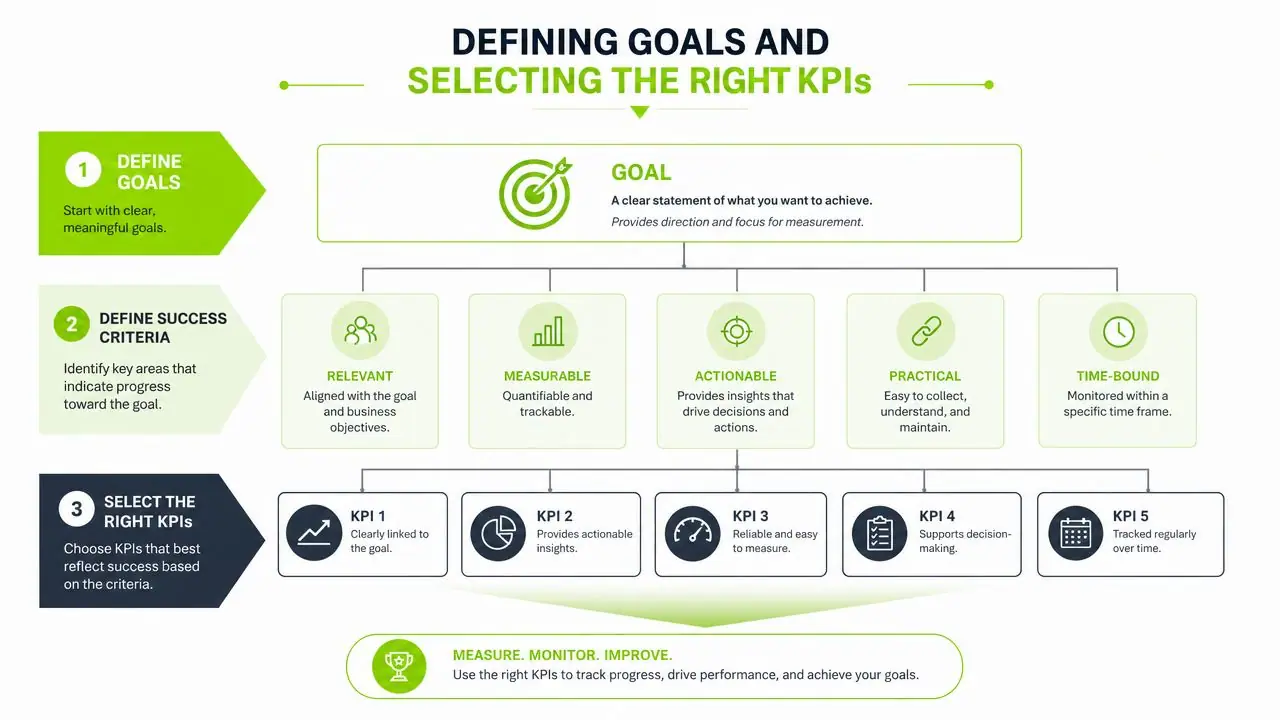
The cleanest reporting systems begin during onboarding, not at month-end. Agencies should agree on 1 to 3 primary numeric goals in the first two weeks of the engagement, then use those goals as the filter for every metric that follows. That discipline keeps the report tied to the business outcome instead of turning it into a list of everything the team can measure.
A brand-awareness client will not need the same KPI mix as an e-commerce client. If the business is still building recognition, the report should emphasize visibility and qualified engagement. If the business is trying to sell more efficiently, the report needs to stay close to conversion and revenue signals. The point is to match the measurement model to the business stage, not to force every account into the same template.
Blend classic SEO with AI visibility signals
Traditional SEO reporting still matters. Organic traffic, conversions, and authority signals remain useful because they show whether search is helping the business move forward. But that picture is incomplete if the report ignores how people now discover brands inside AI surfaces.
A modern KPI set should also account for brand mentions in AI Overviews and LLM citation frequency, because those signals show whether the brand is being surfaced when users ask discovery-oriented questions. That does not mean replacing the classic metrics. It means adding the new visibility layer so the client can see how often the brand appears across both traditional search and AI-led discovery.
Use a mapping model, not a metric pile
The easiest way to keep this sane is to map each KPI to a stage of the funnel or customer journey.
- Awareness stage: brand mentions, AI surface visibility, assisted traffic, non-branded reach
- Consideration stage: content engagement, click-through behavior, returning visits
- Conversion stage: leads, purchases, form fills, revenue-linked actions
If you need a tighter framework for organizing the measurement layer, the internal resource on SEO analytics dashboard design is a useful companion to your KPI planning.
For mixed-source reporting, pipeline reliability matters early. A practical reference on how to implement data observability can help your team catch broken feeds, inconsistent values, and blind spots before they reach a client deck.
Use one visual to anchor the conversation
The report works better when the client can see the logic behind the metric mix.
The right KPI set reduces debate. Everyone agrees on what success means before the numbers arrive, and the report becomes a decision tool instead of a retrospective.
Building Reusable Dashboards and Templates
Efficiency is where agency reporting either scales or collapses. Once you're managing multiple accounts, a custom-built deck for every client becomes a time sink, and the team starts making small formatting choices that slowly break consistency. A strong reporting system uses one master template, then adapts the narrative and a handful of panels per client.
Build the dashboard around decision order
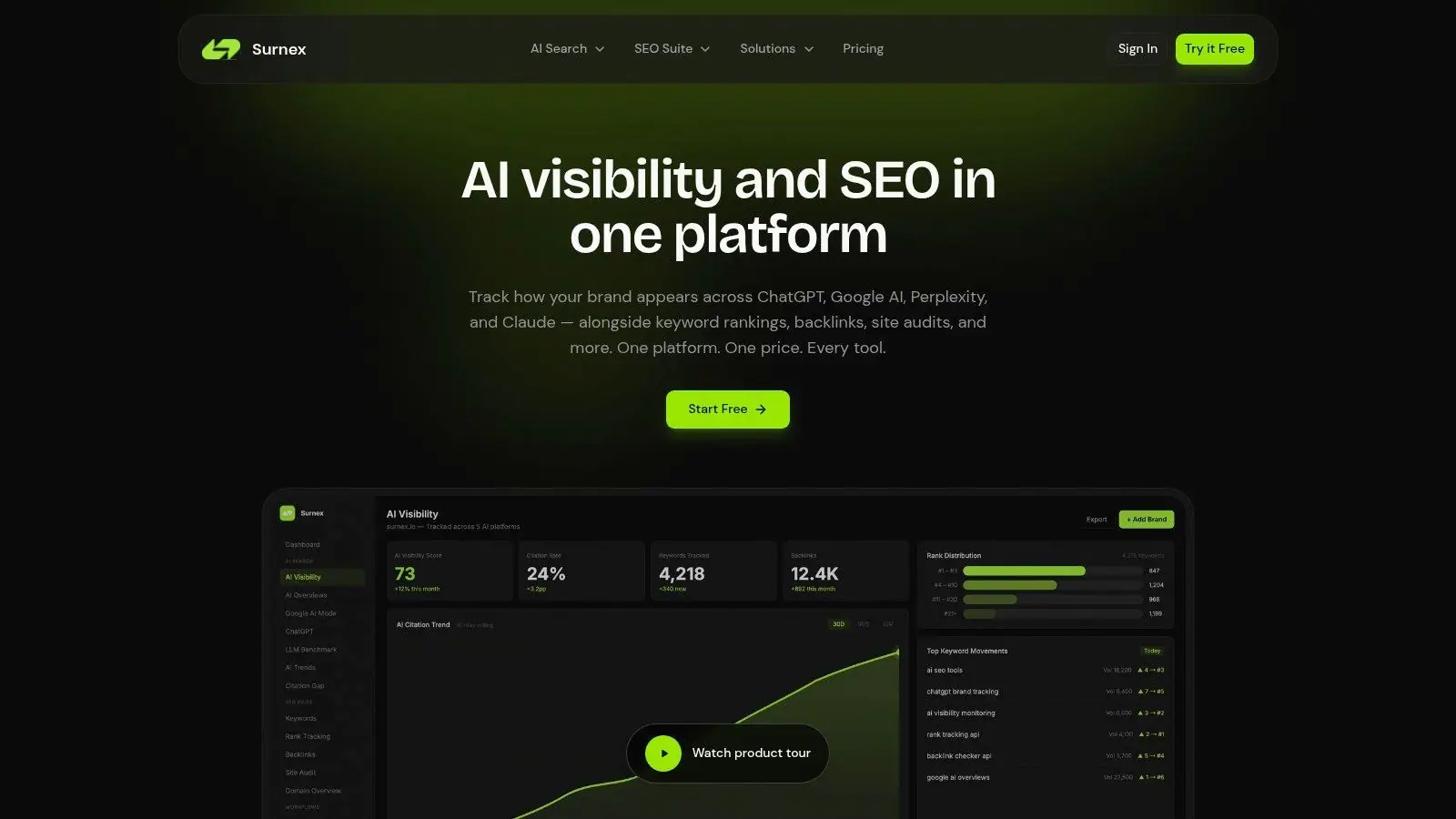
A reusable dashboard should guide the eye from the highest-level outcome down to the detail that explains it. Start with a summary block that shows whether the campaign is moving in the right direction, then group the supporting metrics by source and intent. That visual hierarchy matters more than stylistic polish, because clients scan dashboards before they read them.
A solid architecture usually pulls from Google Analytics 4, Google Search Console, paid media platforms, and AI visibility tooling in one place. If the team is still stitching exports together by hand, every month becomes a reconciliation exercise instead of an analysis exercise. The internal guide on SEO reporting dashboard structure is a helpful reference for teams that want a more disciplined layout.
Make the template reusable, not generic
The core mistake is building a template that looks flexible but still forces every account into the same story. The better approach is to lock the skeleton and customize the interpretation. The top row should always answer the same questions. The lower panels can vary by client objective, channel mix, and maturity.
A practical dashboard layout usually includes:
- Executive summary: one screen that says what changed and why it matters
- Goal tracker: the 1 to 3 agreed KPI targets
- Channel summary: SEO, paid, and AI visibility panels side by side
- Opportunity block: the next actions the account team should prioritize
A reusable dashboard shouldn't ask the client to infer the story. It should surface the story first, then show the evidence.
Where Surnex fits in a multi-source stack
For agencies that want one system for traditional SEO metrics and AI visibility tracking, Surnex is one option that combines rankings, audits, content opportunities, AI Overviews, and LLM presence in a single reporting view. That kind of consolidation reduces the amount of jumping between tools, which matters more than people admit when reporting for dozens of accounts.
The test of a template is whether an account manager can update it quickly without rebuilding the narrative from scratch. If the structure is stable, the team spends less time formatting and more time explaining what the client should do next.
The Art of Data Storytelling and Cadence
A report that only lists metrics creates work for the client. A report that turns those metrics into a clear business story saves everyone time. The difference is sequence, not style. Clients need to see what happened, why it matters, and what happens next in that order.
Use the What, So What, Now What frame
This is the simplest executive summary format that still holds up when the account is under pressure.
What happened. State the result plainly.
So what it means. Connect the result to the business objective.
Now what to do. End with the recommendation or next test.
That structure keeps the lead visible instead of burying it in a long narrative. It also prevents the report from becoming a pile of disconnected observations, which happens when account teams draft sections separately and never reconcile the story.
Practical rule: If the summary can't be read in under a minute, it usually needs a sharper order, not more polish.
Match cadence to the decision being made
Not every client needs the same reporting rhythm. A weekly pulse check works when the account is moving fast or the team needs quick reaction time. A monthly analysis works better when the goal is strategic interpretation, budget justification, and cross-channel review. The mistake is using a reporting frequency because it feels familiar, not because it matches how the client makes decisions.
The best agencies also stop treating reporting as a single deliverable. They build an ongoing cadence with short updates, a monthly narrative, and a periodic strategy review so the client gets the right level of attention at the right time. Recent agency guidance favors regular walkthroughs over static delivery alone, and it also supports scheduled PDF or email delivery paired with monthly narrative and quarterly strategy review. That approach gives the account team room to explain movement without flooding the client with noise.
Make anomalies part of the story, not an afterthought
When traffic jumps or drops, the client should not have to guess why. Annotate launches, content changes, technical fixes, and outside events directly in the report so the timeline explains the data. That practice matters even more when AI visibility shifts unexpectedly, because the client needs to know whether the movement came from a content change, a platform change, or simple volatility in the search environment.
Good storytelling does not hide the messy parts. It gives the mess a reason. For teams that are adding AI Overviews and LLM citations to their SEO reporting, that same discipline keeps traditional rankings, organic traffic, and AI visibility in one narrative instead of three competing ones. For a practical framework on structuring that data, see data for SEO reporting.
Automating Data Pulls and Delivery
Manual reporting is still one of the biggest hidden costs in agency operations. Every copy and paste step adds risk, every spreadsheet handoff adds delay, and every disconnected source makes it easier for mistakes to slip into the final deck. Once an agency is reporting across search, paid media, and AI visibility, automation stops being a convenience and becomes basic hygiene.
Build the stack around clean source connections
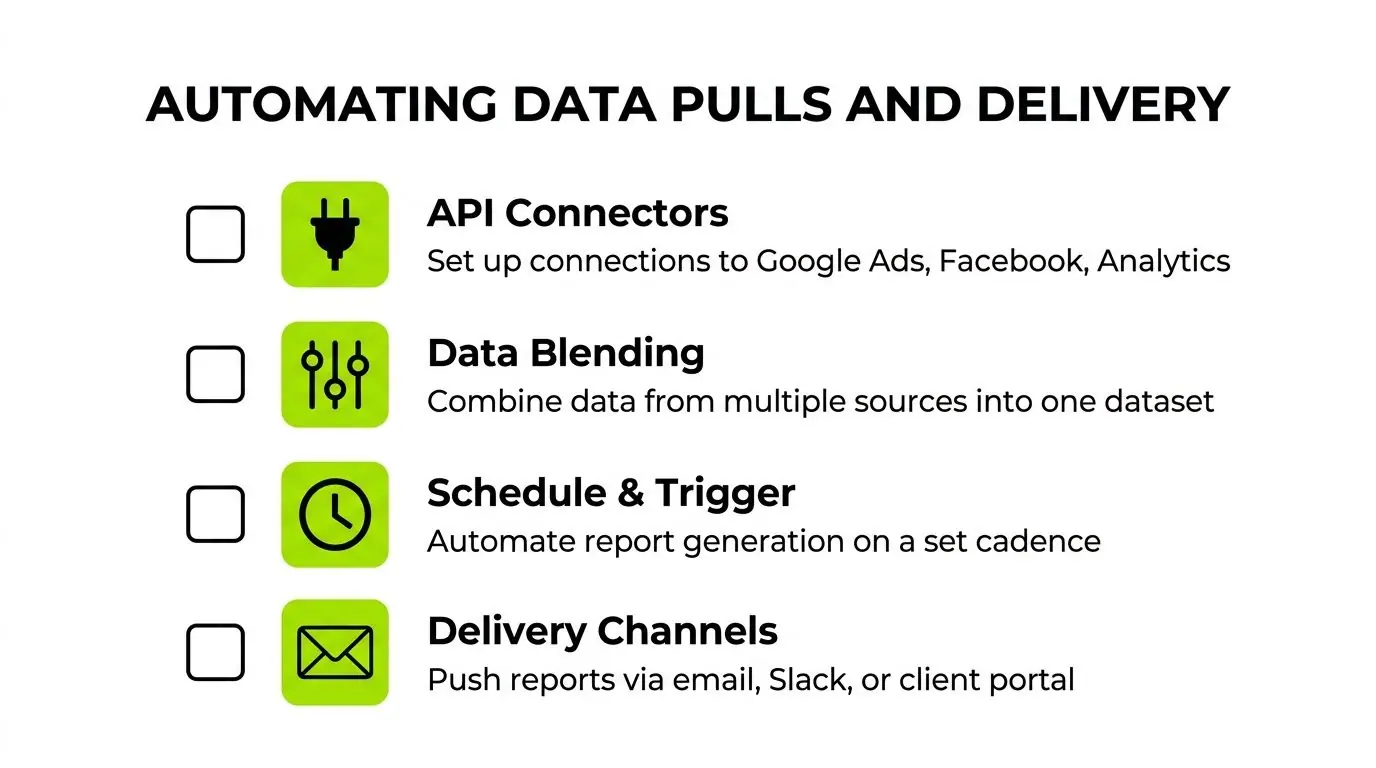
Start by defining the source set once, then keep it stable. Google Ads, Meta Ads, GA4, and Search Console should feed a single reporting system through automated collection and standardized templates, so the team is not rebuilding the same dataset every month. For teams building these pipelines, our guide on data for SEO workflows covers the integration layer.
That same logic applies to AI visibility signals. If the team is tracking brand presence across AI Overviews and LLM citations, those inputs need to sit in the same operating framework as the rest of the reporting stack. Otherwise, AI data becomes a sidecar that never gets used in the client narrative.
Use delivery as part of the workflow
A solid automation setup does more than extract data. It schedules delivery, sends the right format to the right audience, and triggers alerts when a KPI crosses a threshold that deserves attention. That way, the report arrives on the team's cadence, not when someone remembers to export it.
The practical benefit is consistency. Account managers stop spending half their time formatting slides and start spending that time on analysis, client prep, and proactive recommendations. If the report is generated the same way every cycle, methodology drift becomes less likely, and that is one of the easiest ways to preserve confidence in trend lines.
Keep the automation useful, not noisy
Automation can backfire when it floods the client with data they did not ask for. The goal is not more charts, it is faster decision-making. Set the alerts carefully, standardize the template, and keep the delivery path simple enough that everyone knows where to look. That approach supports the same kind of communication discipline reflected in the top SaaS client retention practices.
- API connectors: Connect the core platforms first so the monthly report does not depend on manual exports.
- Data blending: Combine sources into one dataset before the narrative starts.
- Scheduled delivery: Send the report on a fixed cadence so the client knows when to expect it.
- Alerting: Notify the team when a metric deserves an explanation before the client asks.
The agencies that get this right do not just save time. They build a reporting system that can grow with the account list without multiplying chaos.
Scripts for Client Conversations and Reviews
The report doesn't retain the client, the conversation does. A great deck can still fail if the review meeting is vague, defensive, or overloaded with jargon. That's why the best agency teams prepare the meeting the same way they prepare the report, with a clear sequence and language that different stakeholders can use.
Use different scripts for different rooms
The monthly client manager usually wants clarity, not a lecture. A good opening sounds like this. “Here's what moved, here's why it moved, and here's what we're changing next month.” That single sentence gives them the story fast enough to brief their internal team.
The quarterly stakeholder review needs more structure. Start with the business goal, then show the evidence, then isolate the strategic shift. If the client is skeptical about AI visibility, don't over-explain the tooling. Show how presence in AI-led surfaces fits into the broader discovery mix and how it complements the metrics they already trust.
Handle hard questions without getting defensive
When rankings dip, don't argue with the client's emotion. Acknowledge the movement, then explain the likely cause and the immediate response. A useful pattern is, “That drop is real, and we can trace it to the content and indexation changes we made last month. The next step is to isolate whether the decline came from page-level performance or from a wider visibility shift.”
That kind of answer works because it stays close to the evidence. It doesn't promise certainty where there isn't any, and it doesn't hide the work that still needs to happen. If you need more context on client communication habits that support retention, the discussion in top SaaS client retention practices translates well to agency account management because the underlying issue is the same, consistent communication builds confidence.
Make every review meeting end with ownership
If nobody leaves the meeting with a next step, the report didn't do its job.
The easiest way to prevent that is to close with three questions. What changed, what do we believe caused it, and what's the next action owned by the agency versus the client. That split matters because some decisions belong to your team, some belong to theirs, and the meeting should make that obvious.
This is also where the report can surface new service opportunities without sounding salesy. If the AI visibility signals are weak while SEO performance is healthy, that's a clue for a broader search intelligence conversation. If technical issues keep recurring, the client may need a stronger analytics or content governance layer. The data should lead the conversation, not the other way around.
Future-Proofing Your Reporting Strategy
The biggest reporting mistake right now is assuming the search environment will look stable enough next quarter to keep using the same deck. It won't. More discovery happens without a traditional click, more answers appear inside AI surfaces, and more brand exposure happens before a user ever reaches a site. If your report still treats traffic as the main story, it's already behind.
Stop reporting only on visits
Traffic will always matter, but it's no longer the only sign of influence. Agencies need to show where the brand appears, how often it gets cited, and whether it's shaping the conversation across search and AI surfaces. That's a different measurement mindset, and it requires the report to include both classical SEO outcomes and the newer visibility layer.
Client education matters. When you explain AI visibility as part of brand authority, the client understands why the report includes signals that don't always map cleanly to a last-click conversion. The point is to show the whole discovery path, not just the final click.
Audit the stack before the next quarter closes
A future-ready reporting stack should answer a few blunt questions.
- Can we see traditional SEO and AI visibility in one place?
- Are our goals limited to vanity metrics, or tied to business outcomes?
- Do we know when the data is fresh, broken, or incomplete?
- Can the client understand the report without a live decoder ring?
If the answer to any of those is no, the reporting system needs work.
The agencies that get ahead here won't be the ones sending more data. They'll be the ones making the new search environment legible to clients before the client asks the wrong question.
If you want a cleaner way to report on SEO performance and AI visibility together, take a look at Surnex. It gives agencies one view for rankings, audits, AI Overviews, and LLM presence, which makes client reporting easier to explain and much easier to keep consistent.