Most affiliates still approach keyword research like a lottery. They want a few big-volume terms, a couple of review posts, and traffic that magically turns into commissions.
That model breaks fast when you look at the actual shape of search demand. Ahrefs reports that 94.74% of keywords get 10 monthly searches or fewer, while only 0.0008% of keywords exceed 100,000 monthly searches in its SEO statistics roundup. For affiliate marketers, that changes the job. You are not hunting a handful of trophy keywords. You are building coverage across many narrow searches that reveal specific needs, comparisons, objections, and buying contexts.
That shift matters even more now because classic blue-link SEO is no longer the whole playing field. Google surfaces AI-generated answers. LLMs pull citations from pages they trust. Some searches still send clicks. Some mostly train the user to stay inside the result. If you still evaluate keywords on volume and CPC alone, you're missing the thing that now decides whether a page can win traffic at all.
Rethinking Your Keyword Strategy for 2026
Most affiliate sites don't fail because they publish too little content. They fail because they target the wrong kind of demand.
When nearly all search demand sits in tiny, fragmented queries, affiliate marketing keyword research becomes a mapping exercise. You map specific user problems to the exact content format that helps someone move forward. That usually means more pages around constrained intents like use cases, alternatives, troubleshooting, side-by-side comparisons, and audience-specific recommendations.
Broad terms still have value. They help define a category and can become authority pages later. But new affiliates usually waste time there. Head terms attract stronger domains, more feature-heavy SERPs, and less clear intent. A query like "web hosting" tells you almost nothing about what the searcher wants. A query with modifiers usually tells you far more.
Why long-tail thinking is now basic survival
The practical takeaway is simple:
- Specific intent beats broad curiosity. A narrow query gives you a clearer content brief and a cleaner affiliate angle.
- Clusters beat isolated articles. One "best" post rarely ranks on its own for long. Supporting pages build relevance around it.
- SERP ownership matters more than raw rankings. A ranking that sits under AI answers, shopping boxes, and forum modules may produce less value than a lower-volume query with a cleaner page.
Practical rule: If a keyword can't be tied to a concrete question, comparison, or job to be done, it's usually too broad for an affiliate site to prioritize early.
This is also why teams are starting to build an AI SEO agent into research workflows. Not to invent keywords, but to speed up clustering, intent labeling, and SERP pattern review across a large keyword set.
The old process asked, "How many people search this?" The modern process also asks, "Will Google answer this itself?" and "Is this query likely to reward original testing, first-hand evidence, or strong citations?" If you're new to that shift, Surnex has a useful primer on search generative experience that frames why click behavior is changing.
Building Your Initial Keyword Universe
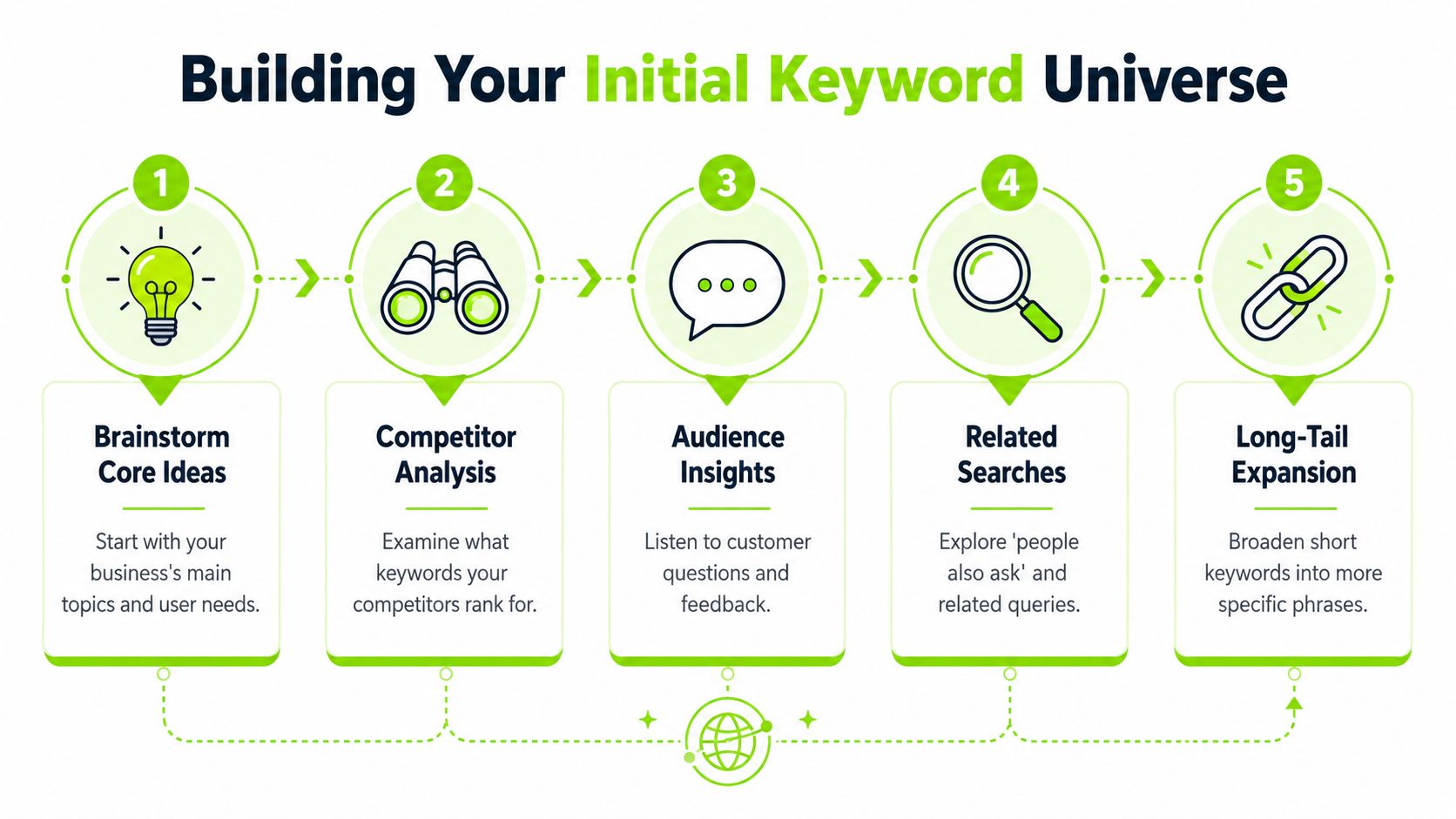
A strong keyword list doesn't start in Ahrefs or SEMrush. It starts with language. You need the phrases buyers use when they're confused, skeptical, comparing options, or ready to switch.
Modern affiliate guidance recommends starting with 5–10 seed keywords, mapping each page to one main keyword plus related terms, and refreshing the list quarterly, as outlined in this affiliate keyword research guide from MGID. That's a good framework, but the quality of those seed terms decides everything that follows.
Start without tools
Before you open a keyword platform, collect vocabulary from four places:
-
Competitor category pages
- Look at headings, comparison tables, and review summaries.
- Pay attention to repeated modifiers like "for beginners," "for travel," "for sensitive skin," or "for small teams."
-
Product reviews
- Read both positive and negative reviews on retailer sites, G2, Trustpilot, app stores, or niche forums.
- Buyers reveal selection criteria in plain language. That's where phrases like "battery drains fast," "hard to clean," or "not good for apartments" come from.
-
Communities
- Reddit, Quora, Facebook groups, and specialist forums show you the language people use before they know the keyword tools' preferred phrasing.
- This is especially useful in niches where people search around symptoms or frustrations, not product names.
-
Your offer and audience
- If you're still choosing a direction, this guide on niche selection for modern women is useful because it grounds niche choice in lived interests and buyer fit, not just trend chasing.
Turn seed terms into a usable universe
Once you have a short list of seed ideas, expand them deliberately. Don't dump everything into a spreadsheet and call it research. Build families of queries.
A simple structure works well:
| Seed topic | Expansion direction | Example pattern |
|---|---|---|
| VPN | Use case | VPN for streaming |
| VPN | Comparison | VPN vs proxy |
| VPN | Objection | Is VPN legal |
| VPN | Purchase intent | best VPN for travel |
| VPN | Brand-adjacent | NordVPN alternatives |
Use keyword tools after this stage, not before it. Google Keyword Planner, Ahrefs, SEMrush, and similar tools are good for expansion and validation. They are weak substitutes for buyer language discovery if you haven't done that first.
A practical build order
Use this order when building your universe:
- Seed terms first. Start with the category, use case, or problem.
- Modifiers second. Add patterns like best, review, vs, alternatives, for, with, without, under.
- Questions third. Pull recurring concerns from forums and support threads.
- Adjacent needs fourth. Include setup, maintenance, troubleshooting, compatibility, and migration searches.
The fastest way to ruin affiliate keyword research is to let the tool tell you what the niche is. The niche already tells you. The tool just helps you organize it.
Keep everything in one sheet and label each term by topic cluster. If you need a model for that structure, Surnex has a practical guide on how to build a keyword list.
Decoding Buyer Intent and Monetization Potential
A keyword isn't valuable because it has traffic. It's valuable because it brings the kind of visitor your page can convert.
New affiliates often sort keywords into informational and commercial. That's too shallow. You need to understand what job the searcher is trying to complete, because that decides both the content type and the monetization path.

Use a job-based intent model
This is the model I use with affiliate teams:
| Intent type | What the user is doing | Best content format | Monetization angle |
|---|---|---|---|
| Problem-aware | Naming the issue | Tutorial, explainer, troubleshooting guide | Soft recommendation inside the solution |
| Solution-comparison | Evaluating approaches | Best-of list, alternatives post, category comparison | Multiple affiliate options and decision support |
| Product-specific | Vetting one option | Dedicated review, pricing breakdown, pros and cons | Direct affiliate click on a narrowed choice |
| Decision-validation | Looking for reassurance | Versus pages, audience-fit pages, objection handling | Capture the final click before purchase |
A search like "why does my espresso machine leak" is not weak just because it isn't overtly commercial. It can monetize well if the content diagnoses common causes and recommends replacement parts, cleaning tools, or a more reliable model when repair isn't worth it.
A search like "best espresso machine under budget" signals comparison intent and usually deserves a different page entirely. If you combine both intents on one page, you often underperform on both.
What usually converts better
Three keyword shapes often produce the most direct affiliate revenue:
- Comparison language
- Queries with "best," "review," "vs," "alternatives," and audience modifiers often show active evaluation.
- Use-case framing
- "For travel," "for small apartments," "for beginners," and similar patterns narrow the buying context.
- Problem-solution bridging
- Queries that start informational but naturally lead to products can convert well when the content solves the issue first.
The mistake is assuming bottom-funnel pages are the only money pages. They aren't. Many affiliate sites make more from mid-funnel pages because those pages intercept the decision before the buyer has locked onto a single brand.
Score by revenue fit, not just by demand
I recommend scoring keywords on four questions:
- Does this query imply a product decision?
- Can I create a page that matches the expected format better than the current results?
- Is there a natural affiliate offer that solves the need?
- Can this page support or be supported by adjacent pages in a cluster?
A keyword with modest demand and clean product fit is usually worth more than a broader term that attracts mixed intent.
That is why affiliate marketing keyword research should end with a monetization note beside every target term. If you can't explain how the page will make money, the keyword probably belongs later in the plan, not at the top.
Analyzing SERPs for Competition and AI Visibility
Most affiliates still evaluate competition with one shortcut. They look at domain authority, domain rating, or the size of the brands ranking on page one.
That shortcut misses the thing that now matters most. The page itself.
A keyword can look attractive in a tool and still be a poor target if the SERP is crowded with AI answers, shopping modules, video packs, giant publishers, or forum results that satisfy the user before they click. Current affiliate guidance increasingly recommends zero-volume terms because competition can be low, but it often misses a major issue: AI-generated summaries may suppress click-through on those queries, as noted in this Gelato guide on affiliate keyword research.
What to inspect on the SERP
When reviewing a target keyword, check these things manually:
- Result type mix
- Are the top pages affiliates, ecommerce pages, forums, YouTube videos, or publisher listicles?
- SERP feature load
- Look for AI Overviews, People Also Ask, video carousels, shopping panels, and image-heavy layouts.
- Content angle consistency
- If every top result is a hands-on review, a generic summary article won't compete.
- Citation potential
- Ask whether your page could realistically be cited by AI systems. Original comparisons, firsthand testing, concise definitions, and structured answers help more than bloated intros.
Modern tooling matters. If you're comparing traditional SEO and AI-search exposure together, an AI SEO software workflow can help speed up review, but you still need human judgment on intent and page design.
Zero-volume doesn't mean zero value
Some zero-volume or near-zero-volume terms are excellent targets. They often reflect early demand, niche jargon, product-specific problems, or buyer questions that tools undercount.
They're usually worth targeting when:
- The intent is sharp. The query points to a clear problem or purchase context.
- The page can earn trust. You have experience, testing, or evidence that generic sites don't.
- The SERP is still light. Few quality pages are addressing it directly.
- It supports a bigger cluster. Even a small page can strengthen adjacent money pages.
They're less attractive when the SERP is dominated by direct answers and the user probably gets what they need without clicking.
If AI can answer the whole query in two sentences, the keyword needs a stronger angle than "write a better article."
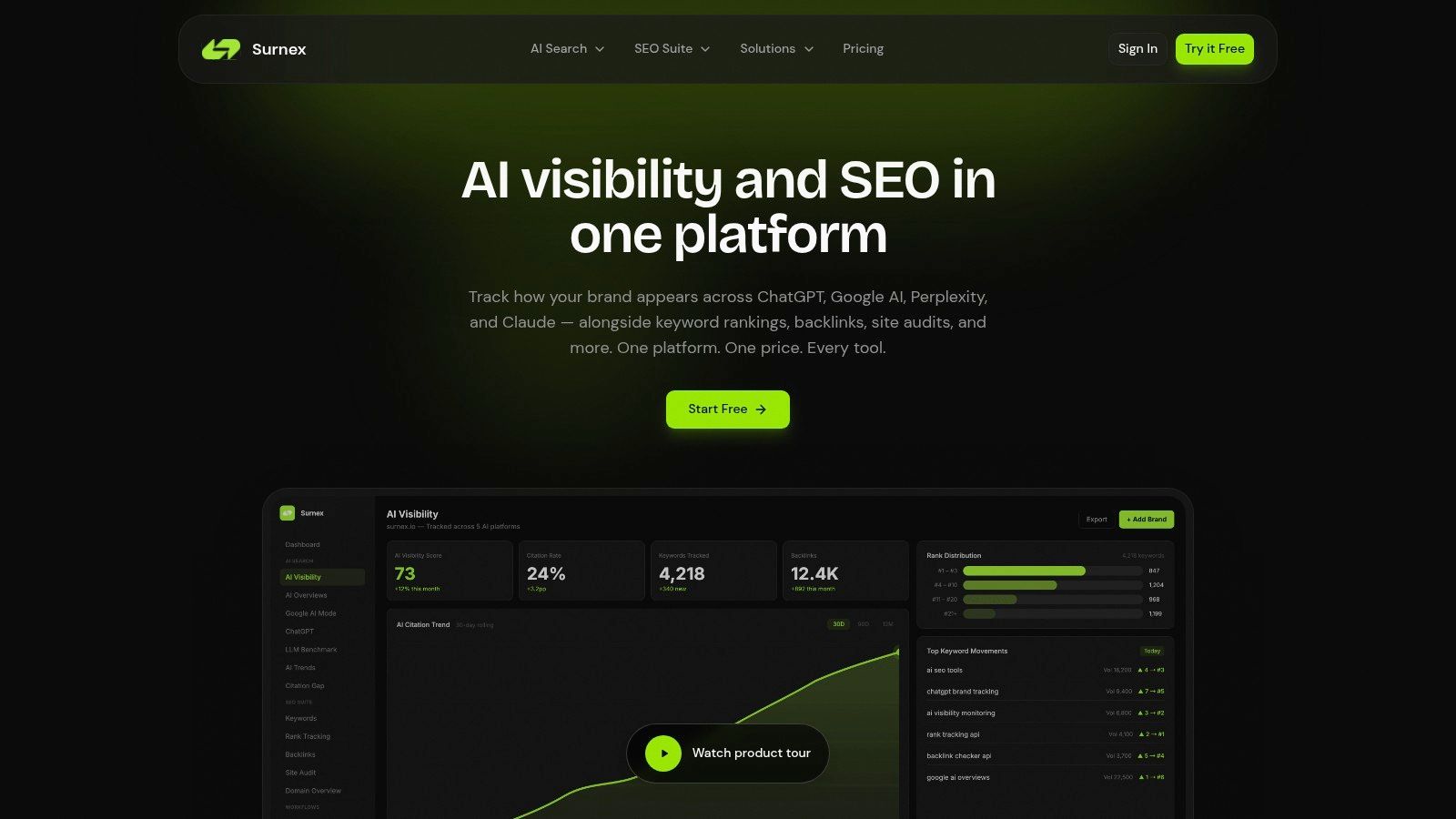
For tracking that kind of opportunity, Surnex is one option because it combines keyword and SERP analysis with AI visibility signals. Its guide on how to find SERP feature opportunities is useful if you want a framework for spotting where organic clicks are still available.
A video walkthrough helps make that review process concrete:
A better competition test
Instead of asking, "Can I outrank these domains?" ask:
- Can I match the dominant format on this SERP?
- Can I offer stronger evidence or clearer structure than current results?
- If I rank, will users still have a reason to click?
- Could this page also surface in AI-driven discovery or citation paths?
That last question is new, but it changes planning. Some pages won't win huge click volume and are still worth publishing because they increase your presence in AI summaries, comparison citations, and adjacent result sets.
Prioritizing and Mapping Keywords to Your Content Plan
A big keyword list is not a strategy. It's inventory.
Once you've evaluated intent and SERP reality, you need to choose what gets published first. Content strategies often over-prioritize search volume and under-prioritize commercial clarity. That leads to months of content production with weak affiliate returns.
The cleaner approach is to sort keywords by value and difficulty, then map them into clusters that support each other.
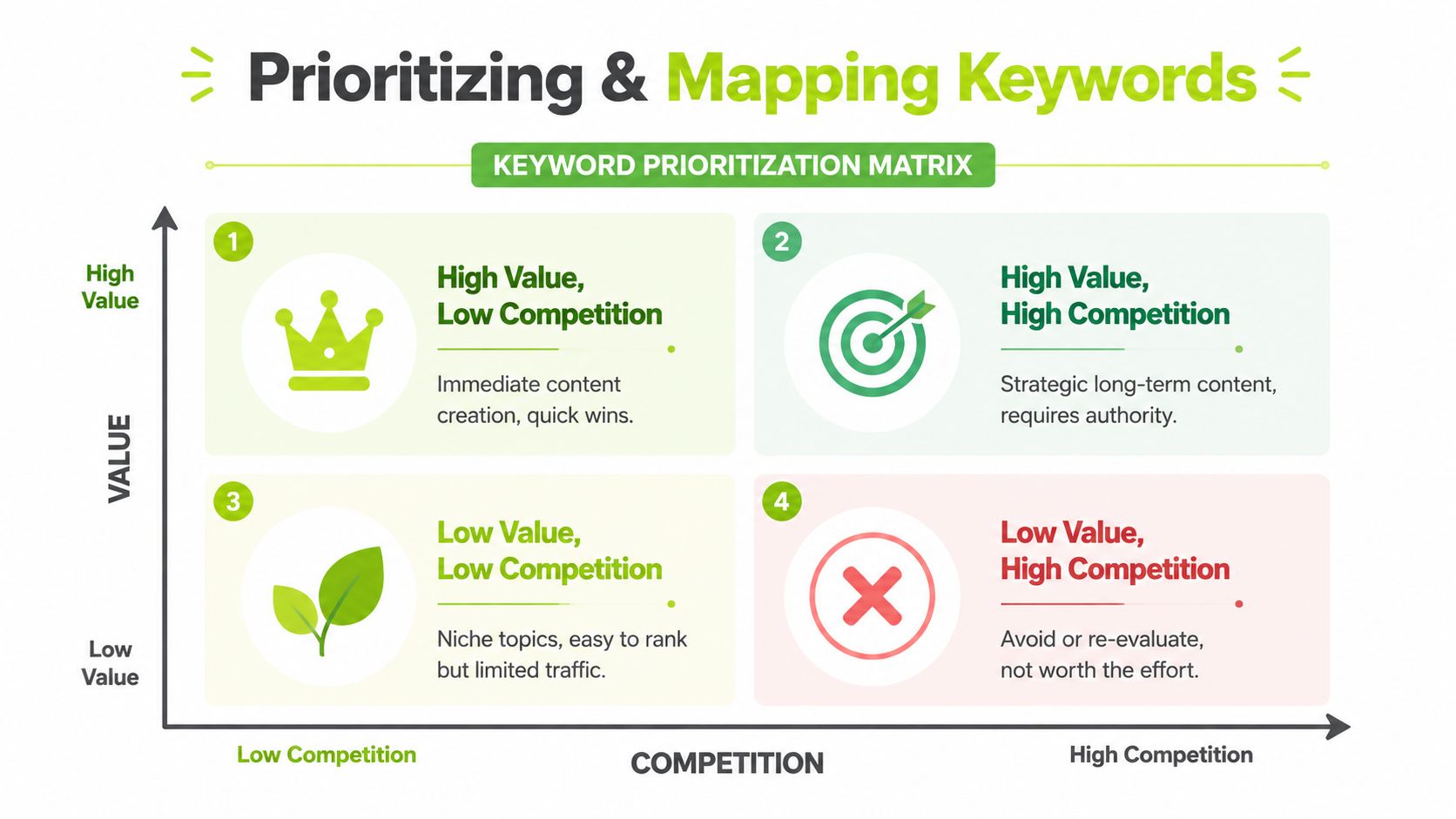
Use a simple prioritization matrix
This is enough for most affiliate teams:
| Priority band | What it looks like | Action |
|---|---|---|
| High value, low competition | Clear buyer intent and beatable SERP | Publish first |
| High value, high competition | Strong revenue potential but harder entry | Build cluster before attacking head page |
| Low value, low competition | Easy wins with narrow upside | Publish selectively if they support a cluster |
| Low value, high competition | Weak monetization and hard SERP | Skip |
This keeps you from wasting effort on impressive-looking keywords that don't help revenue.
How I map keywords to page types
The page type should fit the search job:
- Roundup reviews
- Best for "best X for Y" and audience-specific comparisons.
- Versus pages
- Best when users are narrowing between named options.
- Single-product reviews
- Best when the brand already has awareness and users want validation.
- Tutorials with product bridges
- Best for problem-aware keywords that naturally connect to a tool or product.
- Alternatives pages
- Best when buyers are dissatisfied, price-sensitive, or switching.
A good cluster might look like this in practice:
| Cluster theme | Core page | Supporting pages |
|---|---|---|
| Project management software | Best project management tools for agencies | Asana vs ClickUp, ClickUp review, project management software for client work |
| Home espresso machines | Best espresso machine for beginners | espresso machine vs coffee maker, how to clean an espresso machine, Breville review |
| VPNs for travel | Best VPN for travel | is VPN legal while traveling, NordVPN vs Surfshark for travel, VPN for hotel Wi-Fi |
A key opportunity also sits in non-branded, long-tail, and forum-based queries. One CJ article notes that Google's Hidden Gem update began prioritizing authentic discussions, and that nearly 70% of search queries are long-tail, which makes these surfaces more useful than many affiliates treat them in this non-branded keyword strategy piece.
What not to prioritize early
Don't lead with these unless you already have authority:
- Broad category terms with vague intent
- Branded terms where official sites dominate
- Generic informational topics that don't bridge to an offer
- Head keywords that require site-wide authority to compete
The fastest content calendar is rarely the most profitable one. Publish the pages that can rank, convert, and strengthen a cluster. In that order.
That discipline is where affiliate marketing keyword research stops being an SEO task and becomes a revenue system.
Creating an Ongoing Optimization Workflow
Keyword research isn't a setup task. It's an operating rhythm.
The best affiliates revisit their targets because rankings change, SERPs change, and AI layers change the value of positions that used to be reliable. Modern affiliate guidance already recommends refreshing keyword lists quarterly, and that's a useful baseline if you want your targeting to stay current.
A practical recurring workflow
Run this cycle every quarter:
-
Review page-level performance
- Check rankings, organic sessions, affiliate clicks, and conversions by page.
- Look for pages that rank but don't earn clicks, and pages that earn clicks but don't convert.
-
Recheck the SERP
- Search your important queries again.
- Note new AI Overviews, new forum results, new video packs, or a shift in page formats.
-
Update weak pages
- Tighten intros.
- Add comparisons, FAQs, first-hand details, screenshots, or clearer affiliate CTAs.
- Rework titles when the current angle doesn't match the SERP.
-
Expand from real query data
- Use Search Console, on-site search, comments, support questions, and sales objections to find new long-tail pages.
What to monitor beyond rankings
Classic rank tracking still matters, but it isn't enough on its own.
Track these signals too:
- Click quality
- Are visitors reaching comparison tables, outbound affiliate links, and money sections?
- SERP feature pressure
- Has the query become crowded with elements that reduce clicks?
- AI visibility
- Are your pages being cited, summarized, or displaced in AI-driven experiences?
- Cluster coverage
- Does the core page have enough supporting content around it?
Rankings tell you where you appear. Visibility tells you whether that appearance still matters.
If you're reporting this internally or to clients, a dedicated view helps. Surnex has a useful framework for keyword rankings and visibility reporting that reflects this broader view of performance.
The affiliates who keep winning are not the ones who found the perfect keyword once. They're the ones who keep adjusting their maps as search behavior shifts, page layouts change, and AI systems rewrite how users discover products.
Surnex helps agencies, in-house teams, and developers track both traditional SEO performance and emerging AI search visibility from one place. If you need a clearer way to monitor rankings, SERP features, AI Overviews, and brand presence across LLM-driven discovery, take a look at Surnex.