Google's AI Overviews now reach 2 billion monthly users across more than 200 countries, according to Semrush's AI SEO statistics roundup. That changes the conversation. This isn't an experimental SERP feature to watch from a distance. It's a search surface large enough to require its own workflow, reporting layer, and operating cadence.
The mistake I still see is treating AI Overview visibility like a separate channel with secret rules. It isn't. The teams that win here usually do the boring things well: they rank, they structure answers clearly, they stay crawlable, and they monitor what changed instead of guessing. This represents the proven playbook for SEO for AI Overviews.
The New Front Page Understanding AI Overviews
At this scale, agencies and in-house teams cannot rely on occasional manual checks for AI Overviews. They need an operating model for query selection, page prioritization, and change validation, because AI Overview visibility now affects which clients get seen before a click ever happens.
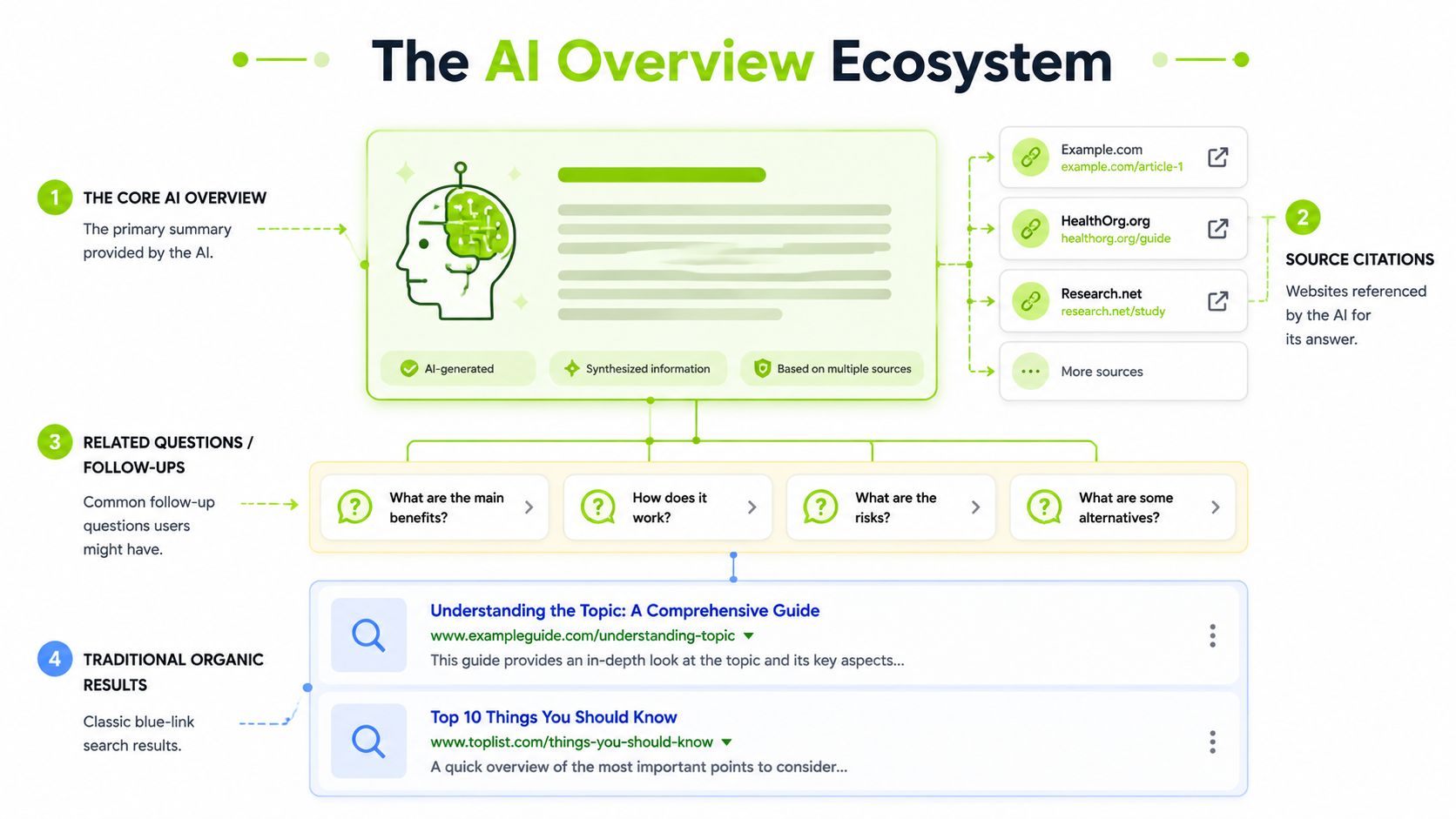
One pattern matters more than the rest. A 2025 industry analysis cited by Evergreen Media found that 99.5% of AI Overview sources come from the top 10 organic results, and that many AI Overviews pull from lists and bullet formats, as summarized in Evergreen Media's guide to Google AI Overviews. For execution, that means AI Overview work starts with the same question we ask in every serious SEO program: do we already have enough ranking strength to compete for inclusion?
What AI Overviews change and what they do not
AI Overviews add a synthesis layer above traditional blue links. They summarize a query, cite supporting sources, and create more zero-click behavior on some searches. They do not replace Google's underlying trust signals. Pages still need relevance, authority, crawlability, and a format that is easy to quote.
That changes the workflow more than the fundamentals.
The right question for a team is simple: which query clusters trigger AI Overviews often enough to matter, and which pages are close enough to page one that content and formatting changes can improve citation odds? That framing keeps the work operational. It also prevents a common waste of time, retrofitting weak pages with AI-friendly formatting when the underlying issue is that they are not competitive in search.
Practical rule: If a page struggles to rank, an AI Overview strategy won't rescue it. Fix ranking strength first, then improve extractability.
I recommend treating this as part of the same search program, not a side experiment. That is why many teams now fold AI search into broader Generative Engine Optimization efforts with shared briefs, shared reporting, and shared prioritization. If stakeholders still anchor on Google's earlier terminology, this overview of Search Generative Experience is a useful reference for explaining how the search interface evolved.
How to think about sourcing
Use this review sequence for any keyword you plan to target:
- Check the SERP pattern first. Confirm whether an AI Overview appears, how often it shows up, and whether it is tied to informational, comparative, or mixed intent.
- Review the cited URLs. Look at the page types Google is pulling from, including editorial articles, product pages, help content, and comparison pages.
- Inspect the answer format. Note whether the overview cites definitions, bullet lists, steps, short paragraphs, or tables.
- Compare your current organic position. If the page is not already competitive, solve that before you spend development or editorial time on extraction improvements.
This sequence matters because it gives teams a repeatable triage method. In practice, the mistake is usually order of operations. Teams add FAQs, summary boxes, and extra schema to pages sitting well outside the top results, then report no movement because the page was never a realistic citation candidate.
For agency teams, this is the shift to internalize. AI Overviews changed the surface area of SEO, but not the requirement to earn trust in the core results first.
Content Architecture for AI-Powered Answers
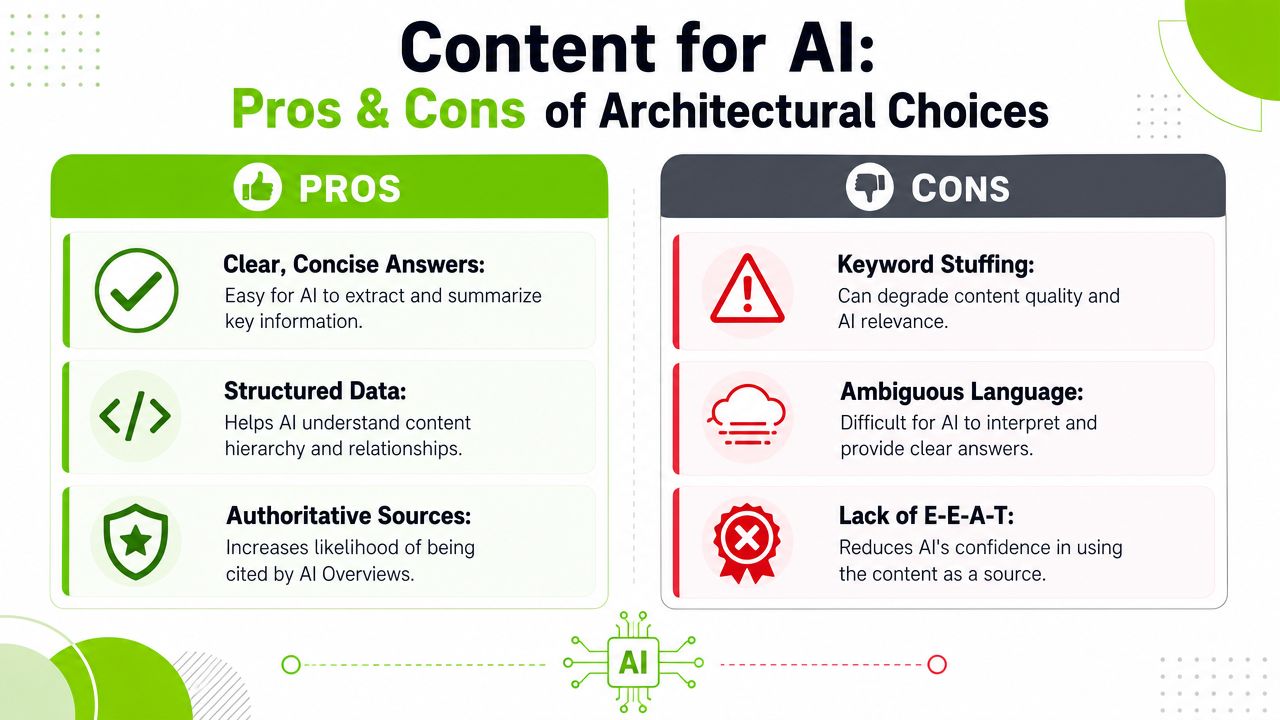
Most pages fail in AI Overviews for a simple reason. They bury the answer inside long, well-meaning prose.
Google's systems need content they can extract cleanly. Practitioners consistently find that pages built as answer units perform better for citation: question-based headings, concise paragraph blocks, lists, and tables, combined with topical depth and strong organic visibility, as described in Proofed's AI Overviews best practices guide.
Build pages in answer units
An answer unit is a block of content that can stand on its own without extra interpretation. It usually has three parts: a clear question, a direct answer, and structured support.
This format works well:
- Question heading
- Direct answer in one short paragraph
- Supporting bullets, steps, or a table
- Optional detail below for depth
That pattern is familiar to SEOs because it also overlaps with featured snippets. If your team needs a useful reference point, this featured snippet optimization guide is worth reviewing for structural ideas that often translate well.
For a broader framing of how these practices fit into modern AI discovery, this primer on Generative Engine Optimization helps explain the relationship between traditional rankings and AI-driven surfaces.
Before and after example
Here's the kind of paragraph many brands already have:
Our customer onboarding software helps businesses improve activation by guiding users through setup, reducing friction during implementation, and providing educational prompts across the product experience so teams can create a more efficient path to value for new users.
Nothing is technically wrong with that. But it is hard to extract.
Refactor it like this:
What is customer onboarding software
Customer onboarding software helps new users complete setup, learn the product, and reach first value faster.
What it usually includes
- Setup guidance: Checklists, walkthroughs, and progress indicators
- Education: Tooltips, tutorials, and help content inside the app
- Adoption support: Prompts that guide users toward key actions
- Team visibility: Reporting on where users stall or drop off
When teams use it
| Scenario | Why it matters |
|---|---|
| Complex product setup | Users need step-by-step guidance |
| Multi-seat adoption | Teams need consistency across users |
| Trial-to-paid journeys | Faster activation supports conversion |
The second version is easier for humans to scan and easier for Google to interpret. It states the definition cleanly, adds structured support, and expands the topic without hiding the main answer.
Refactoring rules that actually help
When editing existing pages, use a tight checklist:
- Lead with the answer. Don't make readers dig through context before they get the definition or recommendation.
- Write subheadings as questions. This mirrors the way people search and helps isolate extractable sections.
- Break long paragraphs. Dense text reduces scanability and makes answer extraction harder.
- Use lists when the SERP suggests lists. If the AI Overview for your query shows steps, comparisons, or grouped options, match that information shape.
- Add tables where choices matter. Comparison tables help when users need quick distinctions.
- Keep support aligned with the visible text. Don't let headings, schema, and body copy tell different stories.
Short answers don't mean shallow pages. The best pages answer fast, then expand with enough detail to satisfy the full query.
What doesn't work is padding pages with generic FAQs, repeating the keyword unnaturally, or stuffing every possible subtopic onto one URL. AI Overview optimization rewards clarity. It does not reward clutter.
Technical SEO and Authority in the AI Era
There is no secret AI Overview tag to install. Google says there are no additional technical requirements to be eligible as a supporting link in AI Overviews beyond being indexed and eligible for a normal Search snippet, and Google also notes that recrawl or processing of some changes can take days to months, according to Google's documentation for AI features in Search.
That gives teams a clean operational frame. Treat AI Overview eligibility as standard SEO eligibility, then tighten the pieces that affect extraction, trust, and consistency.
Foundational signals
Start with the pages you want cited. Check whether Google can crawl them, index them, and render the content you expect.
Your review should cover:
- Crawl access: Confirm robots rules and delivery layers aren't blocking important sections.
- Indexing status: Use URL Inspection to verify the page is indexed and eligible for snippets.
- Internal linking: Make sure target pages are reachable through contextual links, not buried deep in faceted navigation.
- Rendered HTML: Validate what Googlebot received, especially on JS-heavy templates.
A surprising amount of AI Overview work fails before content quality even becomes the issue. Teams optimize pages that Google hasn't processed the way they assume.
On-page clarity
Structured data still matters, but only when it reflects the visible page. FAQ, HowTo, and Article schema can reinforce intent and content type. They do not replace weak copy, and they shouldn't introduce claims or structures the page itself doesn't show clearly.
Technical SEO and content operations need to work together. If the page promises one thing in schema and another in body copy, trust drops.
If you need a current overview of tooling choices around AI visibility and LLM-facing optimization, this guide to LLM optimization options for AI visibility tools is a useful reference for workflow planning.
Authority and trust
Authority is harder to systematize, but it still shows up in the pages Google prefers to surface. The practical signals are familiar:
- Named authors and clear ownership
- Accurate sourcing where sourcing is appropriate
- Fresh maintenance on pages that can age quickly
- Original expertise instead of interchangeable summaries
- A site reputation that supports the topic
If a page reads like anyone could have written it, Google has little reason to cite it when better documents already exist.
The reporting implication matters too. When you deploy technical fixes, don't judge impact after a few days and declare success or failure. Some changes move fast. Others sit in queue while Google recrawls and reprocesses. Your team should set that expectation early, especially with clients who want instant attribution for every update.
Validating Your Strategy A Hypothesis-Driven Approach
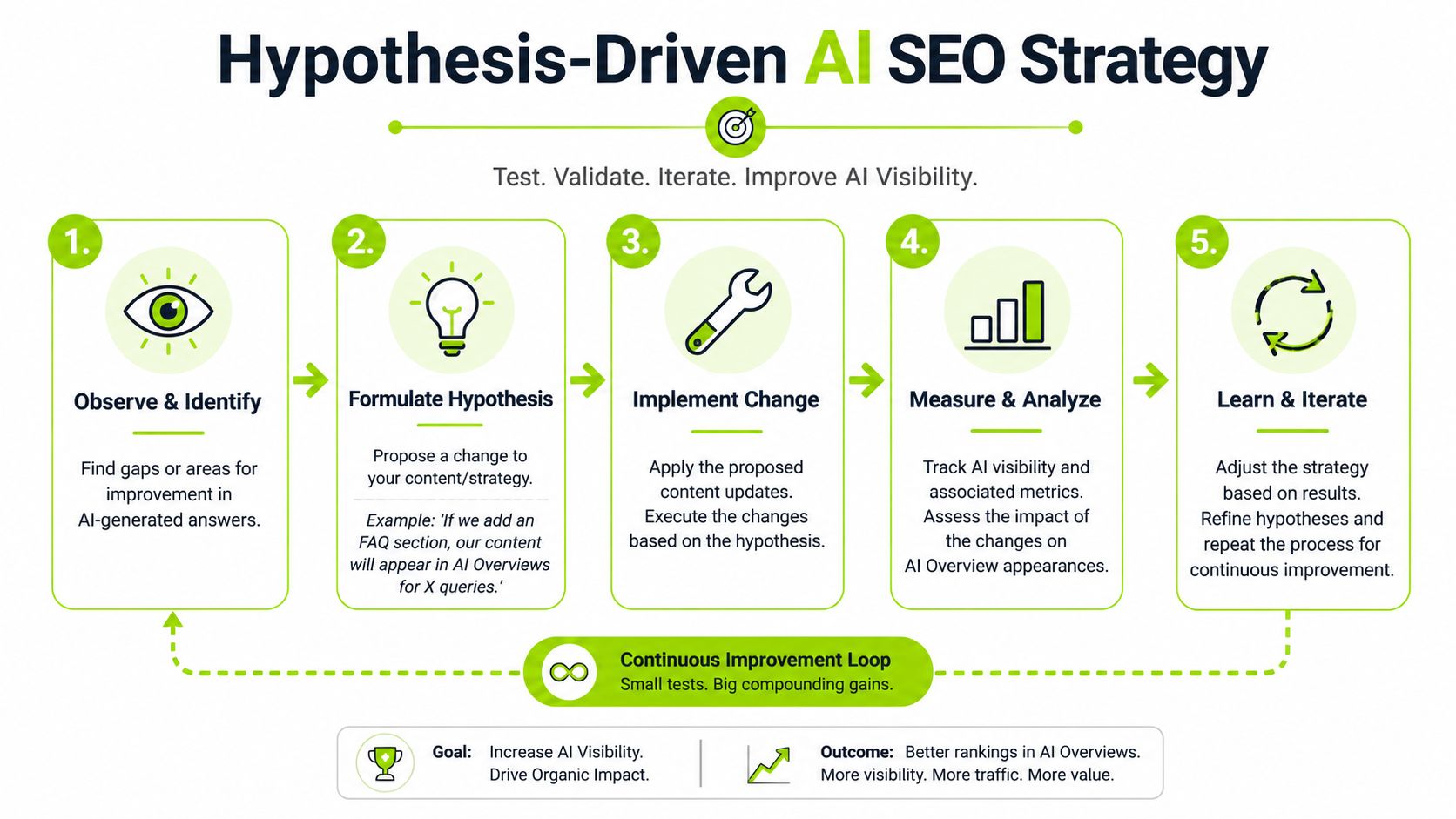
Most AI Overview work fails because teams change too many variables at once. They rewrite headings, add schema, shorten intros, move internal links, and adjust templates in one release. Then they can't tell what mattered.
Use a hypothesis-driven loop instead. It keeps testing disciplined and makes reporting credible.
The four-step loop
Start simple. Every test should have one page set, one query cluster, one change pattern, and one measurement window.
-
Form the hypothesis Example: adding a concise definition under the H1 may improve citation potential for a query that currently triggers a definition-style AI Overview.
-
Implement a controlled change Update only the relevant block. Don't redesign the whole page if you're testing answer formatting.
-
Measure the outcome Review Search Console, live SERP checks, and your AI Overview monitoring tool for citation presence, source URL changes, and ranking movement.
-
Interpret and iterate If citation improves but ranking stays flat, your structure may have improved extractability. If ranking improves but citation doesn't, the SERP may prefer another format. Adjust one variable next.
Good hypotheses versus bad hypotheses
A useful hypothesis is specific and falsifiable.
| Weak hypothesis | Strong hypothesis |
|---|---|
| Improving content will help AI visibility | Adding a comparison table may improve citation for comparison-style queries |
| More schema should help | Aligning FAQ schema with visible question blocks may improve interpretation |
| We need fresher content | Updating outdated examples on this page may improve trust for time-sensitive queries |
The discipline here matters more than the wording. When teams write vague hypotheses, they usually produce vague updates and vague reporting.
What to log on every test
Keep a simple changelog for each experiment:
- Target query set
- Page URL
- Change shipped
- Date published
- SERP pattern before the change
- Observation window
- Outcome
- Next action
Treat AI Overview optimization like CRO for search. One input, one observation, one decision.
That mindset reduces internal noise. It also makes client communication easier because you can explain why a change was made, what signal you expected, and what happened after release.
Tracking and Reporting on AI Search Visibility
AI Overviews now show up often enough that they need a separate reporting layer. Standard rank tracking still matters, but it does not answer the questions clients ask in review calls: did we appear in the overview, which page got cited, how often did this topic trigger an AI answer, and did visibility improve after the last release?
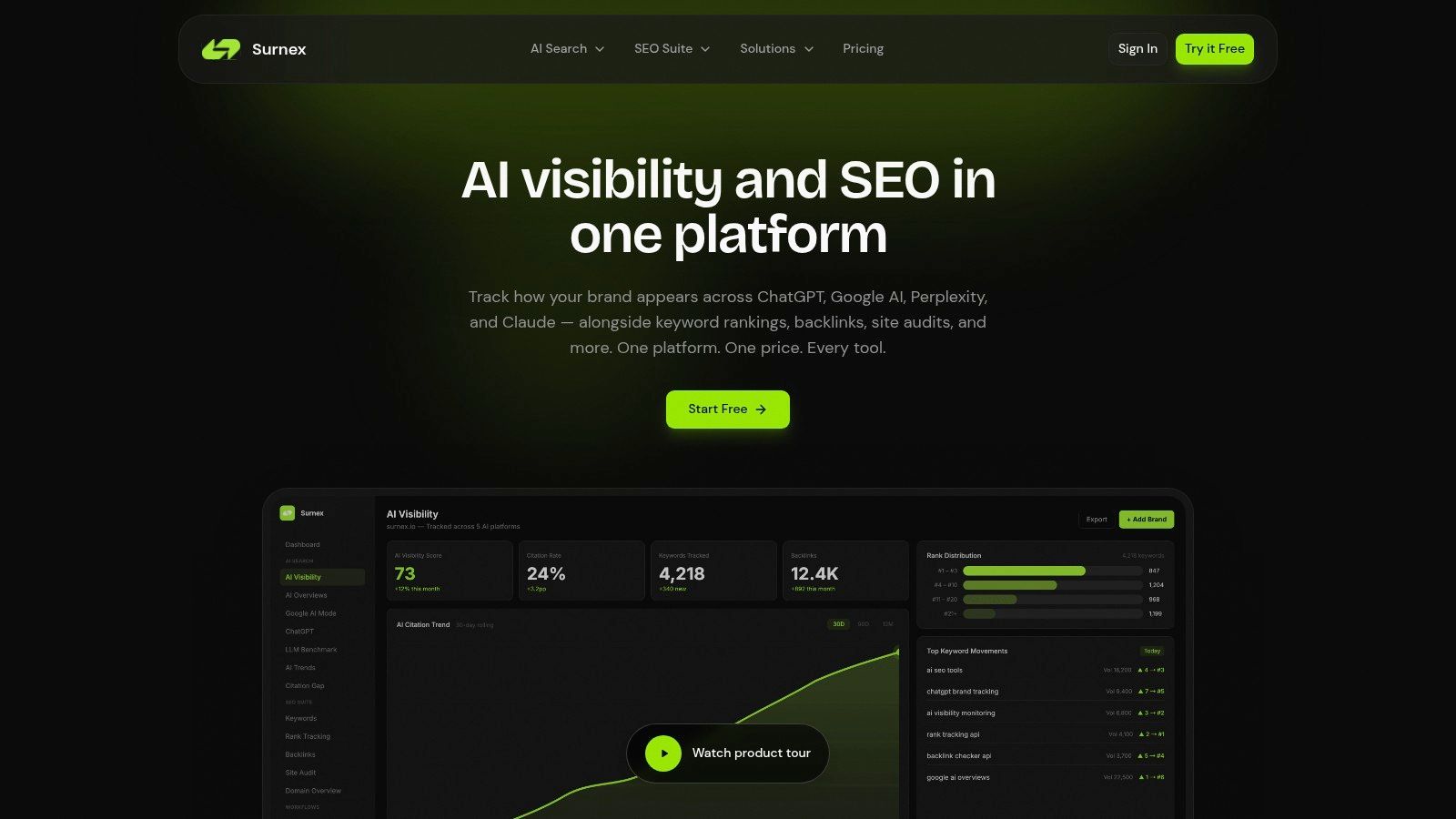
For agencies and in-house teams, this is an operations problem as much as an SEO problem. If the workflow depends on screenshots, ad hoc searches, and analyst memory, reporting breaks the moment query sets get large. The fix is simple in principle. Track AI visibility as its own layer, then tie it back to rankings, page groups, and change history so the team can explain movement instead of just spotting it.
What a useful dashboard should show
A reporting setup that works at scale combines AI-specific fields with standard SEO context. At minimum, track:
- Query trigger status: Whether an AI Overview appears for the target keyword set
- Citation presence: Whether your brand or URL appears in the overview
- Cited landing page: Which page Google surfaced
- Organic rank context: Where that page ranks in classic results
- Topic-level coverage: Which clusters show repeated visibility and which stay absent
- Change history: What content or technical updates happened before movement
Those fields make reporting useful because they support decisions. If citation rate rises while rankings stay flat, the content may be easier for Google to extract. If rankings improve but citations do not, the issue may be page format, source competition, or query intent.
Teams building this process usually benefit from a dedicated AI Overview tracker. It gives analysts a clean way to monitor citation presence, cited URLs, and query-level trigger patterns outside the limits of a standard rank tracker.
Reporting formats that clients understand
Clients rarely need a folder full of SERP screenshots. They need a view of performance, causes, and next actions.
A monthly report is usually easier to defend when it is grouped into three views:
| View | What it answers |
|---|---|
| Executive summary | Are we appearing in AI Overviews for the topics that matter most |
| Topic cluster review | Which subjects gained or lost citation visibility |
| Action log | What we changed and what we plan to test next |
Tooling choices have implications for margin. If analysts have to pull rankings from one platform, citations from another, and notes from a spreadsheet, every monthly report becomes a manual assembly job. Many teams adopt platforms like Surnex because they bring AI visibility tracking, rankings, and reporting into one workflow, which is easier to manage across multiple clients and easier to explain in QBRs.
The same logic applies to delivery operations around reporting and recurring analysis. As workloads grow, some agencies also work with an AI automation agency to reduce manual reporting overhead and keep execution consistent without changing the SEO strategy.
Manual checks still have a role
Automation finds patterns. Human review explains them.
Use manual checks to answer questions like:
- Did Google cite the intended section of the page?
- Is the AI Overview framing the query as informational, comparative, or procedural?
- Did a competitor win because of authority, formatting, or page type?
- Are follow-up questions opening a second opportunity your content doesn't cover yet?
That combination is the playbook. Systems capture the trend. Analysts interpret the reason. When teams report both, AI Overview visibility becomes something they can test, monitor, and improve with the same discipline they already apply to rankings and conversion work.
Putting It All Together An Action Plan for Agencies
The teams that do well with SEO for AI Overviews don't chase mystery signals. They run a system.
That system looks like this:
- Pick the right query sets. Focus on terms that already trigger AI Overviews and matter to revenue, product education, or high-value awareness.
- Prioritize pages with ranking potential. If the page isn't competitive organically, don't expect formatting alone to fix it.
- Refactor content into answer units. Add direct definitions, question-led sections, tables, and lists where the SERP format supports them.
- Protect technical eligibility. Keep important pages crawlable, indexable, internally linked, and consistent between visible content and schema.
- Test with discipline. Change one thing, log it, and review outcomes against a defined hypothesis.
- Report AI visibility separately. Show citation presence, cited URLs, and topic-level trends alongside rankings.
Agency teams can also benefit from operational support outside pure SEO. When reporting, data collection, or content workflows start turning into repetitive manual tasks, working with an AI automation agency can help streamline the delivery side without changing the strategy itself.
The trade-off is straightforward. This work asks for more rigor than old-school rank reporting, but it also creates a clearer service model. You are no longer selling "SEO improvements" in the abstract. You are showing how the brand appears inside new search interfaces, what changed, and what the next test should be.
That is a stronger position for agencies and a healthier one for in-house teams. It shifts the conversation away from guesswork and toward operational control.
If you're building a reporting process for AI search and want one place to monitor rankings, citations, and visibility across emerging search surfaces, Surnex is built for that workflow. It helps agencies and in-house teams track how brands surface in Google AI Overviews and related AI search experiences without relying on scattered manual checks.