Unlock Rapid Growth with These SEO Quick Wins
The top organic result gets a disproportionate share of clicks. Small ranking and CTR gains can produce outsized traffic growth, which is why quick wins deserve attention before larger SEO projects soak up months of time and budget.
Often, the fastest gains come from fixing what is broken, under-optimized, or easy to improve. That usually means cleaning up crawl and indexation problems, tightening page-level signals, improving internal links, and revisiting pages that already sit close to page one. These are not headline-grabbing projects. They are often the changes that move performance first.
I use this framework when an agency needs early wins across several client accounts or when an in-house team needs proof that SEO is working before a broader roadmap gets approved. The order is deliberate. Each item is prioritized by likely impact versus implementation effort, not by how often it appears on generic SEO checklists.
You will also see the agency angle throughout. Some tasks are easy on a single site but messy across 20 accounts with different CMS setups, approval flows, and reporting expectations. Tracking matters too. A quick win only counts if the team can tie the fix to changes in impressions, clicks, rankings, and conversions. Tools such as a technical SEO site audit workflow in Surnex help teams log issues, monitor fixes, and keep short-term gains visible instead of buried in spreadsheets.
This list also covers newer opportunities that many quick-win roundups miss, including AI Overview visibility and LLM citation tracking. Search teams now need to measure more than blue-link rankings. The best quick wins still improve classic SEO performance, but the stronger ones also increase the odds that your brand appears in AI-generated answers.
1. Fix Crawlability & Indexation Issues
If Google cannot crawl a page, nothing else matters. You can have strong copy, good links, and clean design, but blocked pages do not compete.
Start with the basics. Open Google Search Console and look at indexing reports, crawl issues, and sitemap coverage. Then manually check robots.txt, important templates, canonical tags, and any recent redirects.
A common failure point is accidental blocking. A developer blocks a directory during a migration and forgets to remove it. A template ships with a noindex directive. A sitemap keeps listing deleted URLs. These are not glamorous fixes, but they often produce the fastest relief.
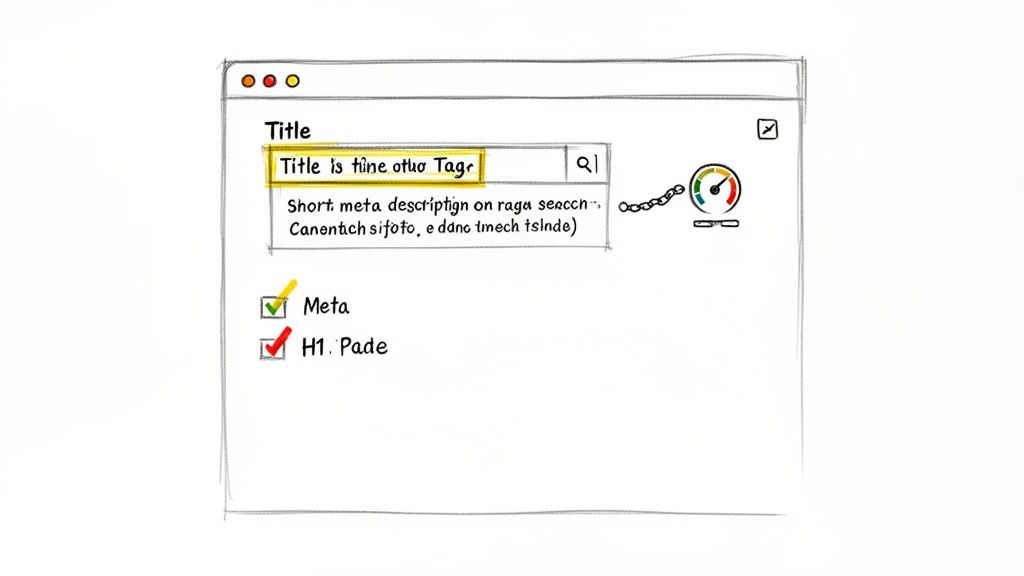
Here is a simple visual reminder of what search visibility starts with.
What to check first
- Robots rules: Confirm important sections are crawlable.
- Indexing directives: Look for accidental noindex tags on key pages.
- Redirect paths: Remove redirect chains where possible.
- Sitemaps: Keep only live, indexable, important URLs in XML sitemaps.
- Soft 404s: Find pages that return a normal status but offer no useful content.
On large sites, crawl waste becomes expensive. Faceted filters, duplicate URL patterns, and low-value archives can distract crawlers from pages that matter. Tightening that footprint is often a quicker win than publishing another article.
For teams managing many accounts, a central audit view helps. Surnex’s site audit workflow is useful when you need to spot recurring crawl and indexation issues across multiple client properties without running separate manual reviews.
Later in the process, I like to watch this kind of walkthrough before handing fixes to dev teams.
If rankings stall across an entire site, check crawlability before you touch content. Sitewide failure points beat page-level tweaks every time.
2. Fix Critical On-Page SEO Issues & Technical Errors
A small set of page-level errors can suppress results across dozens or hundreds of URLs at once. This work sits one layer below crawlability. Google can reach the page, but the page still sends mixed signals about relevance, hierarchy, or the preferred version to index.
The fastest wins usually come from issues created by templates, CMS defaults, or inconsistent publishing habits. I look first for missing or duplicated title tags, broken heading structure, canonicals pointing to the wrong URL, thin boilerplate copy on scaled pages, and pages where the main content is too weak to support the query. These are not glamorous fixes, but they often produce a better return than writing another net-new article.
Priority matters here.
Start with pages that already have impressions, pages tied to leads or sales, and pages sitting close to page one. A weak page with existing demand is a better candidate than a perfectly optimized page no one searches for. For agencies, this is also the cleanest way to show impact because you can tie each batch of fixes to a defined URL set and a date range.
What to prioritize first
Use this order if time is tight:
- Template-level issues: Fix the page elements your CMS repeats across large sections of the site.
- Heading logic: Keep one clear H1 and use H2s and H3s to reflect the page structure, not design styling.
- Canonical errors: Confirm primary pages use self-referencing canonicals and variant pages do not override them incorrectly.
- Thin or duplicate body copy: Expand pages that target valuable queries but say almost nothing unique.
- Metadata gaps on important URLs: Fill missing titles and descriptions on pages that already earn impressions.
The trade-off is simple. Template fixes scale well but can create sitewide problems if they are rolled out carelessly. Manual page edits are safer, but slower. On large accounts, I usually test template changes on a controlled section first, then expand once the output is clean.
One more point often gets missed. On-page cleanup is not just about rankings. It also improves extraction and summarization for AI-driven search features. Clear headings, consistent canonicals, and unique page copy make it easier for systems to identify the main entity, answer, or commercial page intent. That matters more now than it did a year ago.
For teams using Surnex or a similar AI/SEO platform, track these fixes as separate implementation batches rather than one catch-all "on-page optimization" task. Tag the affected templates or URL groups, log the publish date, and compare changes in impressions, CTR, rankings, and AI Overview visibility afterward. That gives agencies a cleaner story for reporting and a better basis for deciding which fixes deserve wider rollout.
3. Optimize Title Tags & Meta Descriptions for CTR Improvement
A large share of search impressions never turn into clicks. That is why title and meta updates stay near the top of my effort-versus-impact list. You can lift traffic from pages that already rank, without waiting for new links, new content, or a full technical sprint.
I prioritize this work on URLs with three signals: high impressions, lower-than-expected CTR for their average position, and commercial value. For agencies, that usually means category pages, service pages, and high-intent blog posts before anything informational with weak business upside.
How I handle title rewrites
I do not rewrite every page. I start with pages that already have search demand and give me room to improve the snippet.
My shortlist usually looks like this:
- high-impression pages with weak CTR
- pages ranking on page one with titles that read like internal labels
- priority URLs where the title misses the query intent
- pages where Google keeps rewriting the title because the original is too vague, too long, or off-topic
Then I rewrite for the SERP, not for the CMS. Put the main topic early. Cut filler words. Add a concrete reason to click if the query deserves it. Keep the title readable and specific enough that a searcher can tell what they will get before they land.
Meta descriptions support the click, but they are still secondary. Google often rewrites them. I still update them on important pages because a strong description improves snippet quality when Google chooses to use it, and it gives the engine better supporting language around the page topic.
What usually improves CTR fastest
Simple patterns tend to beat clever ones.
Good title structures include:
- keyword plus benefit
- keyword plus audience
- keyword plus outcome
- keyword plus format
- keyword plus modifier, such as pricing, comparison, location, or timeframe
What underperforms is predictable. Brand slogans. Generic category labels. Titles written to satisfy internal stakeholders instead of the person searching. Clarity usually wins.
One warning. If a page already ranks well because its title matches a broad parent query, do not over-optimize it into a narrower phrase just to force in an exact match. Higher relevance can raise CTR, but it can also reduce total impressions if you make the title too restrictive. That trade-off matters on larger sites.
A practical testing rule
Change one variable at a time on high-impression pages. If you change keyword order, value proposition, date modifiers, and branding in the same publish cycle, you lose the clean read on what moved CTR.
For agency teams, track title tests and meta description tests as separate actions in Surnex. Tag the affected URLs, note the publish date, and compare CTR, clicks, average position, and any change in AI Overview appearances after two to four weeks. That makes reporting cleaner and helps you spot whether the gain came from better snippet targeting or from a ranking shift.
Zero-click behavior also raises the bar here. Your snippet has to answer intent fast, signal relevance immediately, and still create a reason to visit. That same discipline helps with AI-driven search surfaces, where concise, well-aligned page metadata can improve how a result is interpreted and presented.
The best CTR work is relevance, compression, and intent matching.
4. Build High-Impact Internal Linking Strategy
Internal links are one of the few levers you fully control. No outreach. No approvals from other sites. No waiting for a journalist to reply.
That makes them perfect for quick wins.
Most sites already have pages with authority, whether from backlinks, brand searches, or age. The problem is that authority often pools in blog posts, old press mentions, or top-level pages while commercial pages stay underlinked.
What a strong internal link update looks like
Map three things:
- pages that already attract authority
- pages that need ranking support
- topic relationships that make the links natural
Then add contextual links from strong pages to target pages using sensible anchor text. Not the same exact phrase every time. Not “click here” everywhere either. Natural variation is better.
For content-heavy sites, I also like adding links during content refreshes rather than creating separate “internal linking projects.” It is faster and easier to get implemented.
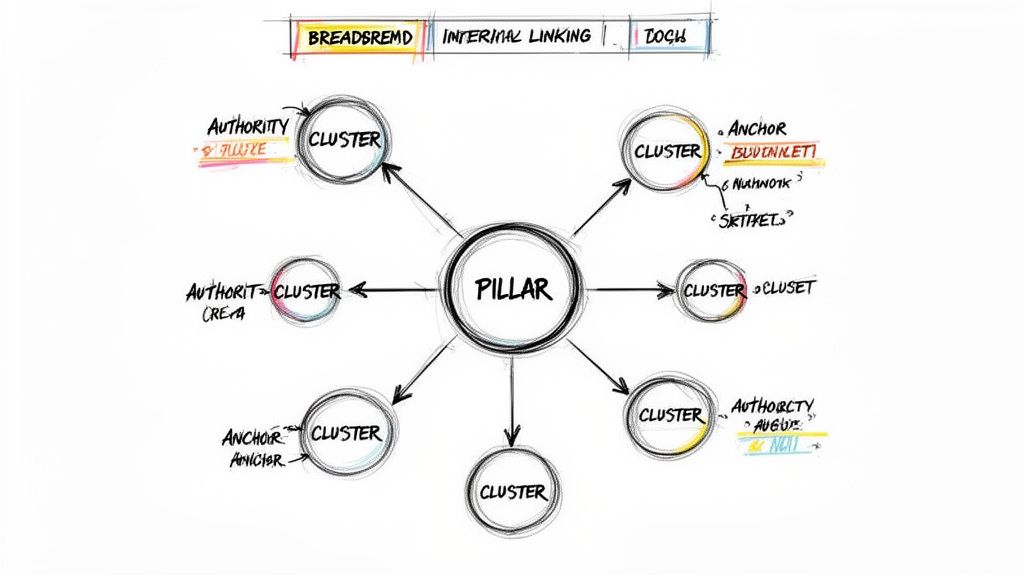
This visual captures the broader idea of connected topic coverage and AI-friendly structure.
What to avoid
- Footer stuffing: Sitewide links rarely solve relevance problems.
- Forced anchors: Exact-match anchors jammed into awkward sentences look poor and read worse.
- Orphan pages: Important pages should never rely only on sitemaps for discovery.
A good internal linking pass also helps AI Overviews because it clarifies page relationships and topic depth. Clean clusters make it easier for search systems to understand which page is the main source and which pages support it.
5. Identify & Target Low-Hanging Keyword Fruit
Pages sitting just off page one are often the fastest ranking gains on the board. If a URL is already in positions 11 to 30, Google has usually accepted the page as relevant. The job is to close the gap between "good enough to rank" and "good enough to win clicks." This is important since teams often spend months building new pages for broad terms while older URLs with clear ranking potential get ignored.
I prioritize this work in two buckets.
First, improve pages that already have impressions and mid-page rankings. Review the current SERP, compare the page against the top results, and fix what is missing. That usually means tighter intent match, better subtopic coverage, clearer headings, updated examples, stronger proof, and a sharper title and meta description.
Second, look for low-competition queries that fit the business and can be supported by existing pages or light expansions. Difficulty scores can help with sorting, but they are only a filter. I care more about whether the SERP is weak, whether the query shows buying or high-value research intent, and whether the client already has a page that can realistically compete.
For agencies, the practical workflow is simple. Pull all keywords in striking distance, group them by existing URL, then sort by potential business value first and estimated lift second. A page ranking #18 for a service term matters more than a page ranking #14 for an informational term that never assists pipeline.
Surnex’s keyword research workflow is useful when you need to review opportunity sets across several clients and decide which URLs deserve a refresh first. If the client also depends on local demand, tie those keyword targets back to local SEO tracking and location-level performance so the team can see whether updates improve visibility in the markets that drive leads.
What usually moves the page
- Intent alignment: Rewrite sections that target an outdated version of the query. Search intent shifts, especially on software, finance, health, and local service terms.
- Topical completeness: Add the supporting questions, entities, use cases, or comparisons that top-ranking pages consistently cover.
- Snippet strength: Improve the title tag and meta description so the result earns more clicks once rankings improve.
- Internal support: Add relevant links from nearby topic pages to reinforce the page's role in the cluster.
- AI Overview readiness: Use direct answers, strong section labels, and source-worthy statements so the page is easier to extract and cite.
One caution. Easy keywords are not automatically good keywords. Some have weak competition because the topic has little commercial value, poor conversion intent, or no real audience. Quick wins still need a business case.
I have seen this produce results with relatively small edits. A cleaner heading structure, a missing comparison table, better query matching, and a few well-placed internal links can be enough to push an established page into the top 10.
6. Claim & Optimize Google Business Profile Listings
For local businesses, this can be one of the highest-impact seo quick wins because the listing is often more visible than the website itself.
The work is straightforward. Claim the profile, verify ownership, clean up the business name, choose the right category, complete every field, add strong photos, and keep hours accurate. Then make review response and update posting part of the operating routine.
Why this still gets missed
Agencies often inherit messy local setups. Duplicate listings exist. Old phone numbers are still live. Franchise locations use different naming conventions. Categories are too broad. Nobody owns review responses. The profile exists, but it is not managed.
That is wasted visibility.
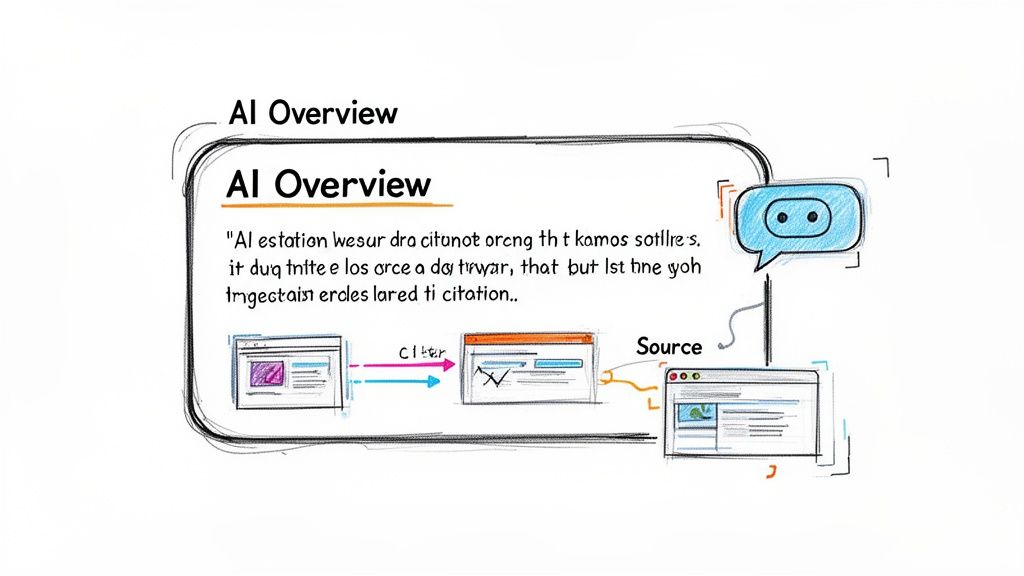
This simple content architecture also supports local landing pages that connect to GBP activity.
Agency implementation notes
For multi-location clients, standardize before you optimize:
- Naming rules: Keep brand and location formatting consistent.
- Category logic: Use the most precise primary category available.
- Review workflow: Assign owners and response guidelines.
- Landing page alignment: Make sure GBP links point to the right local pages.
Surnex’s local SEO tools are useful when you need one place to monitor local visibility alongside the rest of your search performance.
What does not work is treating Google Business Profile as a one-time setup. It is an asset that needs maintenance. Outdated hours and ignored reviews erode trust fast.
7. Reclaim Lost Rankings & Fix Ranking Volatility Issues
Some quick wins come from recovery, not expansion.
If rankings drop, do not assume you need a brand-new strategy. First find out what changed. A recovery project is often faster than trying to replace lost traffic with fresh content.
A simple diagnostic order
- Check whether the drop is page-specific or sitewide.
- Review technical changes around the same period.
- Compare the current SERP to the one you used to compete in.
- Audit the page for freshness, usefulness, and intent match.
The response depends on the cause. If a category page lost rankings after a template update, you need to inspect page output. If several guides slipped after competitors published stronger alternatives, content quality is the issue. If a whole section vanished, indexation may be involved.
I tell teams to keep a ranking history log tied to deployments, content edits, and site changes. Otherwise every drop feels mysterious, and recovery turns into guesswork.
What usually helps first
- Refresh aging pages: Add missing sections, examples, and clearer answers.
- Repair technical regressions: Canonicals, redirects, and indexing rules are common culprits.
- Rebuild support: Add internal links from related pages that still hold visibility.
What does not help is panic-editing everything at once. If you change the title, URL, structure, schema, and copy in one pass, you make diagnosis harder and sometimes make the loss worse.
8. Create Targeted Content for Competitor Keywords & Search Gaps
A competitor gap report usually looks bigger than it is. The quick win comes from filtering it hard.
If another site ranks for terms tied to your services, products, or sales conversations, treat that as proof of demand. Then cut the list down to topics you can realistically win with one strong page or a small cluster, not a six-month content calendar.
Prioritize by effort versus impact
Start with gaps that sit close to revenue and have beatable results. Good targets usually share a few traits:
- competitor pages are thin, outdated, or built around weak intent match
- the SERP includes forum threads, generic listicles, or low-quality programmatic pages
- your team can add original experience, examples, screenshots, pricing context, or implementation detail
- the topic can support a service page, category page, comparison page, or sales enablement asset
This tactic reflects a broader shift in the industry. Teams use AI tools to find opportunities faster, but the publish button is not the advantage. Judgment is. The best gap content is not just faster to produce. It is better aligned to what buyers need and what the SERP still lacks.
That also matters for AI Overviews. Pages with clear answers, strong structure, and specific evidence are easier for AI systems to extract and cite than vague copy padded to hit a word count.
How to ship gap content without wasting cycles
Agencies should group opportunities into three buckets: pages to create, pages to expand, and pages to consolidate. That keeps the scope honest. I have seen teams lose weeks drafting net-new articles when an existing page only needed a tighter angle, a better heading structure, and a few missing sections.
Build around one primary page first. Add supporting pages only when the topic is broad enough to justify them. Use concise answer blocks, descriptive subheads, and visible expertise signals such as real examples, author credibility, product details, or process notes.
Track the work like an experiment, not a publishing checklist. In Surnex, tag these pages as competitor-gap targets, monitor ranking movement against the specific rival URLs you want to displace, and watch whether the new page starts appearing in AI Overview citations or assisted query sets. That makes it easier to defend the work to clients and easier to stop if a topic shows low return.
A short list of high-intent gaps usually beats a giant export every time.
9. Launch Targeted Link Building Campaign for Money Keywords
Link building is not always a quick win, but targeted link support for a small set of high-value pages can still move faster than broad campaigns.
The mistake is spreading effort too thin. Teams chase links to the homepage, random blog posts, and low-priority pages because those are easier to pitch. Then they wonder why rankings for commercial pages do not improve.
Keep the campaign narrow
Pick a small number of money pages. Usually these are service pages, high-intent category pages, or comparison pages close to conversion. Build outreach around assets that deserve links, not generic “please add us” requests.
That may mean:
- publishing a better resource page
- creating a useful data roundup
- contributing expert commentary
- offering a complementary tool or template
The pitch needs relevance. A strong link from a site your audience reads is worth more than a pile of weak placements.
There is one data point worth remembering when you prioritize organic acquisition work. The AIOSEO roundup cites First Page Sage reporting 748% average returns for B2B organic search. Even if your exact result differs, the directional lesson is clear. Organic support for commercial pages can justify focused effort better than many channels.
What not to do
- Do not chase volume for its own sake: Low-quality links create reporting noise, not durable gains.
- Do not separate links from page quality: A weak page rarely holds improvements for long.
- Do not blast the same outreach email: Relevance and personalization still matter.
For agencies, batching outreach by industry is efficient. But the target page, reason for linking, and contact angle should still be specific.
10. Optimize for AI Overview Visibility & LLM Citation Tracking
Search behavior has already shifted from ten blue links to answer-first experiences. That changes what counts as a quick win.
Pages now need to do two jobs at once. They still need to rank, but they also need to supply clear, quotable information that AI Overviews and other LLM-driven results can cite. The trade-off is straightforward. You are no longer optimizing only for clicks. You are optimizing for visibility, citation, and assisted conversions that may start without a site visit.
Content that gets cited usually shares the same traits. It answers a specific question fast, uses descriptive subheadings, defines terms plainly, and backs up claims with visible trust signals. Schema can help machines interpret the page, but it does not fix weak writing or thin expertise.
The click challenge is another factor. As noted earlier, a large share of searches now end without a click, especially on mobile. That is why AI Overview visibility belongs on this list. For the right queries, earning a mention can protect brand presence even before organic CTR improves.
How to implement this now
- Write answer-first sections: Open important subsections with a direct 40 to 70 word answer, then add detail below it.
- Format for extraction: Use comparison tables, short process steps, definition blocks, and tight paragraphs that can be quoted cleanly.
- Add entity and trust signals: Show author expertise, update dates, citations, company details, and clear editorial ownership.
- Use structured data selectively: FAQ, HowTo, Product, Article, and Organization markup can support interpretation when the page already deserves to rank.
- Track citations and prompt-level visibility: Monitor which queries trigger AI summaries, which pages get cited, and which competitors appear instead of you.
For agencies, keep this process narrow at first. Start with high-intent pages that already rank on page one or high page two. Those URLs have the best effort-to-impact profile because they often need clearer formatting and stronger answer blocks, not a full rewrite.
For teams that want ongoing measurement, Surnex's AI Overview tracking for citations and visibility helps monitor brand mentions, competitor presence, and query patterns across emerging AI search experiences.
Avoid turning pages into robotic FAQ dumps. LLM-friendly formatting helps, but citation-worthy pages still need original insight, clear ownership, and information accurate enough to trust.
10 SEO Quick Wins Comparison
| Item | Implementation Complexity 🔄 | Resource Requirements ⚡ | Expected Outcomes 📊 | Ideal Use Cases 💡 | Key Advantages ⭐ |
|---|---|---|---|---|---|
| Fix Crawlability & Indexation Issues | High: technical fixes, dev coordination | Medium–High: dev time, crawl tools, GSC | High: removes blockers; 5–50%+ traffic recovery possible | Sites with indexation gaps, robots.txt/noindex errors, large sites | Foundational health; unlocks all other SEO efforts |
| Fix Critical On-Page SEO Issues & Technical Errors | Low–Medium: site-wide audits and edits | Low: SEO audits, minor dev/templating | Medium: CTR and visibility gains; measurable in weeks | Sites missing title/meta tags, H1 issues, canonical errors | Fast, low-cost wins with clear ROI |
| Optimize Title Tags & Meta Descriptions for CTR Improvement | Low: copy experiments and A/B testing | Low: editor time, GSC monitoring, testing framework | Medium: CTR lift typically 5–30%; visible in GSC | High-impression/low-CTR pages; agency portfolios | Immediate, measurable traffic gains without ranking change |
| Build High-Impact Internal Linking Strategy | Medium: content mapping and strategic linking | Low–Medium: content inventory, editor time, tracking | Medium: improved rankings and indexation; 5–25% uplift for targets | Sites with many orphan pages or pillar cluster opportunities | Fully controllable; immediate deployment and UX benefits |
| Identify & Target Low-Hanging Keyword Fruit (Position 11–30) | Medium: analytics + targeted on-page/backlinks | Medium: ranking tools, content updates, some link building | High: 15–40% lift per optimized keyword (fast wins) | Pages ranking on page 2–3 that need a boost | Fastest route to top-10 rankings; high success rate |
| Claim & Optimize Google Business Profile Listings | Low: verification and profile optimization | Low: content/photos, ongoing review management | High local impact: 20–50% visibility lift; more customer actions | Multi-location brands and local businesses | High local visibility; free to optimize; drives foot/phone actions |
| Reclaim Lost Rankings & Fix Ranking Volatility Issues | High: root-cause diagnosis across signals | High: monitoring, historical data, content/dev resources | Variable: can recover 30–100% of lost traffic depending on cause | Sites experiencing sudden drops or algorithmic volatility | Protects revenue; data-driven recovery and alerts |
| Create Targeted Content for Competitor Keywords & Search Gaps | Medium: research then content production | Medium–High: content creation, gap analysis, some links | Medium: steady traffic gains; variable by keyword (20–100+ visits) | Brands wanting to capture competitor traffic and gaps | Validated demand; scalable content roadmap with clear priorities |
| Launch Targeted Link Building Campaign for Money Keywords | High: outreach, negotiation, asset creation | High: outreach team, content assets, relationships | High (longer-term): 10–50% impact per keyword over time | Commercial/money keywords needing authority boost | Direct ranking impact; builds durable domain authority |
| Optimize for AI Overview Visibility & LLM Citation Tracking | Medium–High: structured data & content format changes | Medium: schema implementation, tracking across LLMs | Emerging: 5–20% incremental (variable; future-facing) | Brands pursuing AI/LLM presence and early advantage | First-mover differentiation; complements traditional SEO |
From Quick Wins to Sustainable Growth
The best SEO quick wins do two things at once. They create visible progress now, and they make future work easier.
Fixing crawlability helps every page you publish later. Cleaning up titles improves traffic from rankings you already earned. Better internal linking strengthens your commercial pages without waiting on outside sites. Local profile cleanup creates trust before a visitor even reaches the website. AI Overview optimization forces clearer structure and sharper answers, which also improves normal on-page SEO.
Quick wins should not live in a separate bucket from strategy. They are strategy, just at a smaller scope and a faster cycle.
The order matters. Start with blockers. A site with indexing problems does not need more content. A page with strong impressions and weak CTR does not need a rewrite from scratch. A local business with an incomplete profile does not need a brand campaign before fixing its listing. Agencies get the best results when they sequence work this way and explain that sequence clearly to clients.
There are trade-offs. Some fixes are easy to deploy but hard to attribute cleanly if you batch too many changes together. Some content updates look simple but become slow when legal, brand, or product approvals get involved. Some link opportunities are attractive on paper but distract from pages that drive revenue. Good SEO operators say no to work that looks busy but does not move the right metrics.
I also think teams need to update how they measure progress. Traditional rankings and organic sessions still matter. But they are no longer the whole picture. Search visibility now includes local pack presence, snippet performance, and appearance inside AI-generated experiences. If you do not track those surfaces, you will undercount wins and miss emerging losses.
A unified workflow helps in this situation. When audits, rankings, keyword opportunities, backlink signals, and AI search visibility live in the same place, teams move faster and report with more confidence. That matters for agencies managing many accounts, and it matters just as much for in-house teams trying to prove impact across departments.
Treat these quick wins as a repeating operating system, not a one-time cleanup. Run audits regularly. Review high-impression low-CTR pages often. Refresh internal links during every content update. Watch for ranking drops as soon as they happen. Build content around opportunity gaps instead of opinions. Track AI Overview visibility before competitors define that category for you.
Do that consistently, and small wins stop being small. They stack into durable search growth.
If you want one platform to track classic SEO performance and emerging AI search visibility together, take a look at Surnex. It helps agencies, in-house teams, and developers monitor rankings, audits, backlinks, content opportunities, AI Overviews, and brand presence across modern search experiences without juggling a pile of separate tools.