A client calls with a familiar question. They have a real location, a service team, decent reviews, and a website that looks fine. But when they search for their own category plus “near me,” they don't see themselves where they expect.
That question sounds simple. It isn't. Local business search now sits across Google Business Profile, Maps, local organic pages, directory listings, review platforms, and a growing answer layer shaped by AI. If an agency still treats local visibility as “rank for one city keyword,” it will miss both the problem and the opportunity.
Agencies that handle local accounts well tend to do two things differently. First, they build a repeatable operating system instead of relying on one-off optimizations. Second, they report visibility the way customers discover businesses now, not the way SEO dashboards looked a few years ago.
What Local Business Search Means for Agencies Today
Most agency teams meet local business search through a complaint. “We're not showing up in Google Maps.” “We rank organically, but calls are soft.” “Our competitor appears everywhere.” Those are valid symptoms, but they point to a larger system.
Local business search isn't one placement. It's the full path a person takes when they need something nearby and want an answer fast. That path can include the Local Pack, Google Maps, organic landing pages, reviews, business directories, and now AI-generated summaries that may mention a business before a user ever clicks through.
That matters because local intent is no longer edge-case behavior. 84% search online for local businesses every day, and 39% say at least 41% of their searches are focused on local businesses, according to Salesgenie's local SEO statistics roundup. For agencies, that changes the framing. Local visibility isn't a specialty task for a few brick-and-mortar clients. It's core search work for any brand with locations, service areas, or regional demand.
Why old reporting misses the real issue
A client may rank well for a tracked keyword and still lose local demand. That happens when:
- Maps visibility is weak even though organic pages perform reasonably well
- Business profile details are incomplete or mismatched across platforms
- Reviews answer buyer questions poorly, even if the average rating looks acceptable
- AI summaries skip the business entirely, so the brand never enters the shortlist
The hard part for a new SEO specialist is understanding that each of those issues comes from a different signal set. Google Business Profile affects one layer. On-page local pages affect another. Citations and reviews reinforce trust. AI discovery adds a separate visibility problem tied to whether the business is consistently described and cited across the web.
A local search strategy fails when the agency reports rankings but ignores where users actually make their decisions.
That's why agencies need a wider operating model than classic rank tracking. If you're building or refining your service stack, this is the same mindset shift required when learning how to start a SEO business. You don't sell isolated tasks. You sell reliable visibility across the channels that drive demand.
What agencies should optimize for now
The practical target is simple. Help the client appear, look trustworthy, and stay understandable across every local discovery surface that matters.
That means your team should think in terms of:
- Findability across Search, Maps, and directory ecosystems
- Clarity in categories, services, hours, areas served, and contact details
- Credibility through reviews, accurate citations, and useful location pages
- Citeability so AI systems can surface the brand inside summary-style answers
When a client says, “Why aren't we showing up?”, the answer usually lives somewhere inside those four buckets.
The Core Pillars of Local Search Visibility
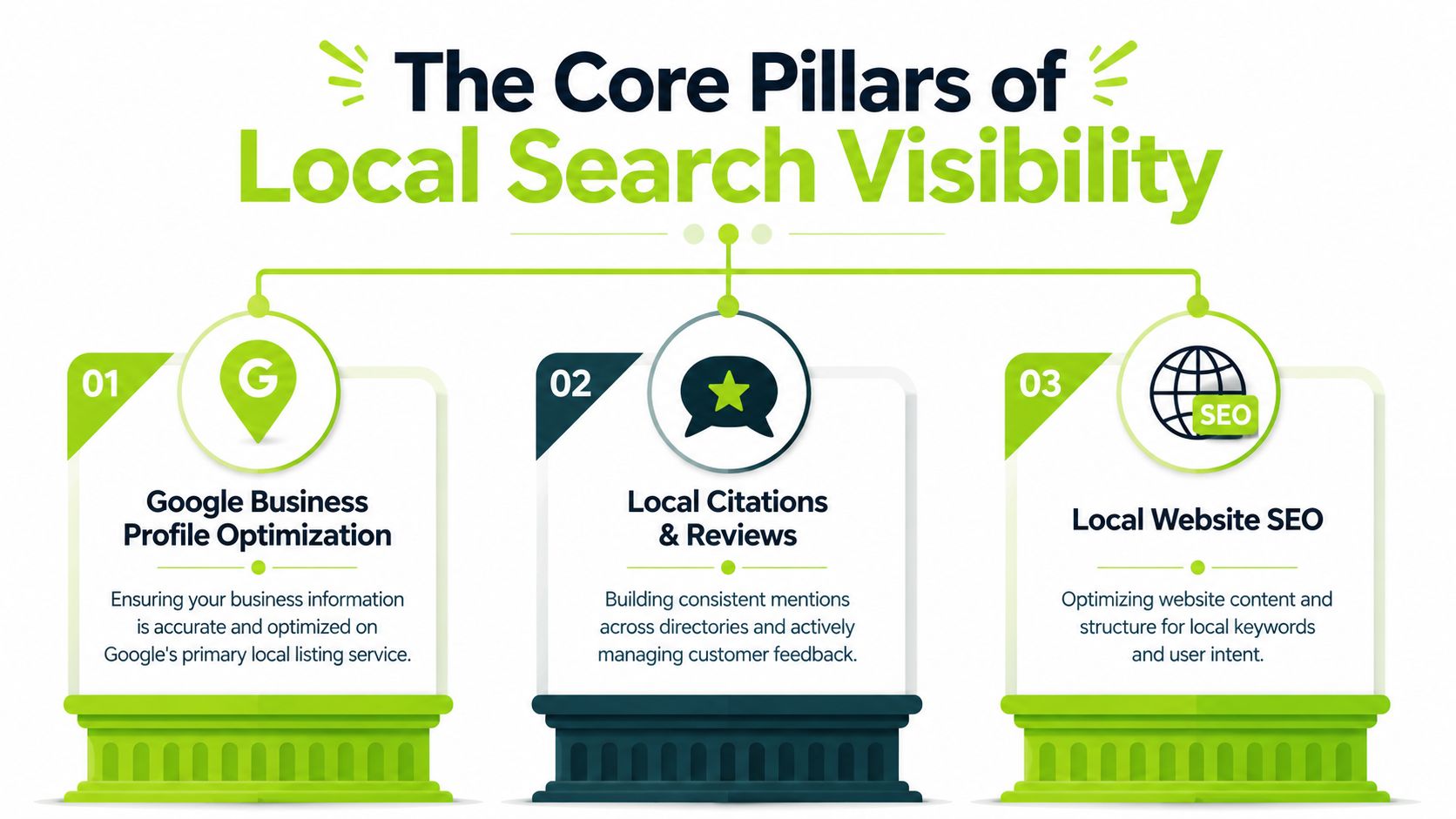
The cleanest way to train a new specialist is to reduce local work to a few pillars that support everything else. If one pillar is weak, the rest have to work harder.
Google Business Profile as the storefront
For most local accounts, Google Business Profile is the first thing to audit and the last thing to ignore. It's the storefront users meet before they visit the website. It often answers the immediate decision questions on its own: what the business does, whether it's open, where it is, how to contact it, and whether other people trust it.
A weak profile creates friction fast. Wrong categories, thin service details, weak photos, stale updates, or inconsistent hours can hurt both visibility and conversion. A strong profile does the opposite. It helps Google classify the business correctly and helps users decide without hesitation.
Local website SEO as the relevance layer
Your website still matters because it gives the search engine and the user structured context that a profile alone can't carry. Service pages, city pages, local FAQs, and location-specific proof all tell Google what the business is relevant for.
Many agencies often underbuild. They launch one generic services page and expect it to support every city and service combination. It usually won't. A local site needs pages that match how buyers search. For service businesses, the logic behind local SEO strategies for home service businesses applies broadly even outside contractor niches. You need content that aligns service intent with geography, not just polished design.
Citations and NAP consistency as the trust base
Citations don't feel glamorous, but they still carry operational weight. If the business name, address, phone number, categories, or service details vary across major directories, both search engines and users get mixed signals.
Think of citations as verification infrastructure. They support trust by confirming that the same business exists in the same place with the same details across the web. When they drift, local performance often gets muddy. Rankings wobble. Leads hit wrong numbers. Users lose confidence.
Practical rule: If a client's local presence looks inconsistent to you during an audit, it looks inconsistent to customers too.
Reviews as both proof and content
Reviews do more than reassure buyers. They also create recurring, user-generated detail around services, locations, and customer experience. Strong review management gives a business fresher trust signals and better context around what it delivers.
A review program works when it's operational, not occasional. Teams need a process for requesting reviews after completed jobs, responding to them, and feeding recurring themes back into service page copy and profile updates.
How the pillars work together
A new specialist should understand this dependency clearly:
| Pillar | What it mainly influences | What breaks when it's weak |
|---|---|---|
| Google Business Profile | Maps visibility and first-click trust | Low local exposure, poor profile engagement |
| Local website SEO | Relevance for service and location queries | Thin organic support, poor intent matching |
| Citations and NAP | Consistency and business validation | Confusion across platforms, trust erosion |
| Reviews | Conversion confidence and freshness | Weak social proof, fewer persuasive signals |
If you manage multi-location campaigns in regional markets, the same local consistency issues show up in projects like South Carolina SEO. The scale changes. The principles don't.
A Practical Optimization Workflow for Agencies
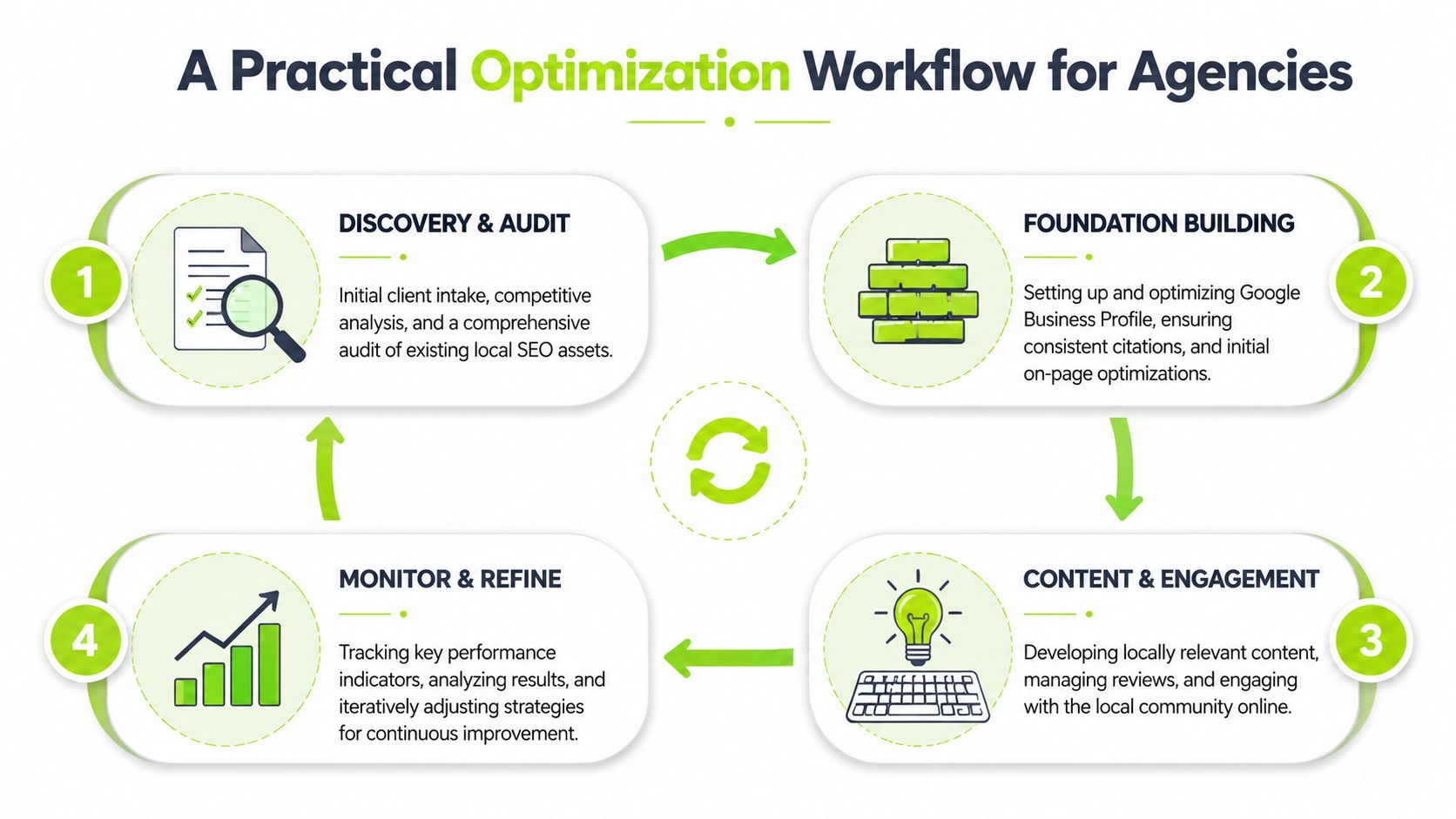
Most local campaigns become messy because teams jump into tactics before they establish a baseline. The right workflow starts with verification, then moves into structured improvements, then into maintenance.
Start with discovery and cleanup
Before changing categories, pages, or review flows, get the facts straight. Pull every core business detail into one working document and compare it against the live environment.
Your first-pass audit should check:
-
Business identity
- Legal and public naming: Confirm the exact business name used on the website, profile listings, invoices, and signage.
- Location data: Validate address format, suite details, phone number, and hours.
- Service area logic: Make sure location-based claims match where the business operates.
-
Google Business Profile
- Category choices: Review the primary category and any secondary categories.
- Completeness: Check services, description, photos, hours, attributes, and Q&A.
- Conversion friction: Test click-to-call, directions, and website links.
-
Citation footprint
- Consistency: Compare top directory listings against the canonical business details.
- Duplicates: Flag duplicates, old phone numbers, and outdated addresses.
- Category alignment: Check whether directory category choices match the business offering.
If you need a model for process discipline, use a documented framework like this SEO audit workflow. Local work gets easier when the audit isn't improvised.
Handle categories with platform awareness
Category work sounds simple until you manage multiple platforms. It isn't enough to choose one phrase and paste it everywhere.
A rigorous local workflow starts with platform-aware category selection. Google Business Profile uses one primary category, while Yelp allows three. A common pitfall is category mismatch across directories, which confuses search engines. Agencies should maintain a citation category map to ensure consistency and treat selection as an iterative process, as explained in this guide to business category selection.
That means your team should maintain a category map with:
- Canonical service definition: What the client is
- Primary Google category: The closest exact match for the main service
- Secondary Google categories: Supporting activities only when they reflect reality
- Directory-specific translations: Equivalent category choices for Yelp and other listings
- Revision history: What changed, when it changed, and what happened after
This is one of the most impactful local tasks because bad category choices distort everything downstream.
Don't treat categories as administrative settings. Treat them as relevance signals that need testing and governance.
Build location and service pages with intent in mind
Once the foundational data is clean, move to on-site relevance. Create or improve pages that combine service intent with place intent. The page should answer a local buyer's practical questions, not just repeat a keyword in several headings.
A strong local page usually includes:
- Clear service definition
- Location context
- Proof points such as reviews, examples, or photos
- Practical decision details like response area, service conditions, or booking steps
- Internal links to related services and nearby locations
Don't mass-produce thin city pages. If the business can't support unique value on a page, the page won't help much.
Turn review gathering into an operating habit
Agencies often talk about reviews as reputation management. That undersells them. Reviews support visibility, trust, and conversion. But they only work when the process is built into client operations.
Train clients to request reviews at the right moment. Completed job, delivered service, resolved issue, successful visit. Then make response handling part of the same weekly workflow.
A simple agency-owned review routine includes:
| Weekly task | Why it matters |
|---|---|
| Send review request prompts | Keeps review velocity active without big bursts |
| Respond to new reviews | Shows engagement and resolves objections publicly |
| Tag recurring themes | Feeds local copywriting and service messaging |
| Escalate negative patterns | Protects both rankings and lead conversion |
Maintain citations like infrastructure
Citation work shouldn't be a one-time sprint followed by neglect. New duplicates appear. Acquisitions create legacy listings. Front desk changes create alternate phone numbers. Small inconsistencies multiply fast.
Use a recurring maintenance list:
- Monthly spot checks: Review major listings for drift
- Change management: Update citations after moves, rebrands, or phone changes
- Directory triage: Prioritize the platforms users see and trust
- Documentation: Keep one source of truth for every field
The agencies that get steady local performance usually aren't doing secret tactics. They're doing ordinary work with unusual consistency.
Advanced Tactics to Outperform Local Competitors
Once the basics are stable, the edge comes from tactics that competitors delay, misunderstand, or never operationalize.
Use schema to make the site easier to interpret
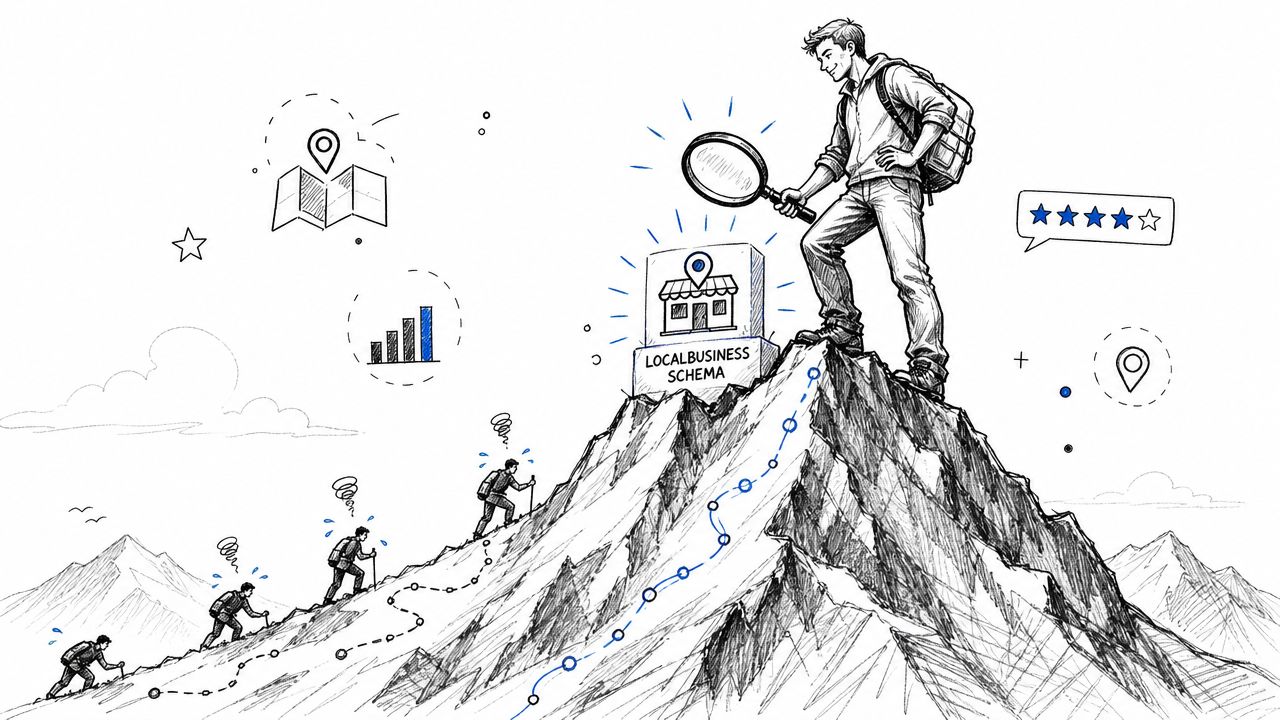
LocalBusiness schema won't rescue a weak campaign on its own, but it helps search engines interpret business details in a structured way. That's useful when the website, listings, and local landing pages all need to present a clean, machine-readable version of the same business.
Schema is worth prioritizing when:
- A client has multiple locations
- The site has location pages with unique details
- The business offers distinct services that need clear association
- You've cleaned citations and want the website to reinforce that consistency
The trade-off is straightforward. Schema only helps when the underlying information is accurate. If the source details are wrong, structured markup just scales the confusion.
Earn local links that prove place-based relevance
Many local campaigns hit a ceiling because the business looks technically sound but disconnected from its market. Local links help solve that. They show that real organizations in the area recognize the business.
Strong local link opportunities usually come from:
- Community sponsorships
- Local event participation
- Chamber or association listings
- Partnerships with complementary local businesses
- Regional publications and neighborhood resources
These links work best when they reflect actual business activity. Don't force them. If the client already participates in the local market, there's usually link equity hiding inside ordinary operations.
Use paid local placements selectively
Local Search Ads can support organic efforts when a category is crowded or when the client needs immediate coverage in high-intent searches. They're especially useful when organic improvements are still maturing.
But paid local visibility shouldn't cover up weak fundamentals. If the profile is inaccurate, reviews are unmanaged, or landing pages are poor, ads will amplify a broken experience.
A simple decision framework looks like this:
| Situation | Better move |
|---|---|
| New location with no local history | Use paid support while building organic assets |
| Strong organic footprint but weak peak-hour coverage | Layer paid local campaigns strategically |
| Inconsistent profile and directory data | Fix foundations before increasing spend |
Mine the low-web segment for opportunity
One of the most overlooked competitive research angles is the low-web segment. These are businesses that appear in Maps or directories but have little to no real website presence.
A practical guide on finding these businesses notes that Google Maps often returns a limited number of results per search, which means many businesses get missed by standard workflows. That makes this segment useful for both agency prospecting and market analysis, as outlined in this piece on finding businesses without a website for outreach.
What makes this useful in practice is the contrast:
- A business with no website may still compete locally through Maps and reviews
- A polished competitor may be underperforming because its local signals are weak
- A market may look saturated until you search it from multiple angles and map positions
That changes how you assess competition. You're not just benchmarking websites. You're benchmarking local discoverability.
The video below is useful if you want a visual walkthrough of broader local SEO mechanics before applying these advanced layers.
Some of the best local opportunities sit in plain sight. They just don't show up in the default workflow you use for national SEO.
Tracking Success in the New Era of AI Search
A lot of agency reporting still answers the wrong question. It shows whether the client improved in a few tracked positions, but not whether the client became easier to discover in the places customers now rely on.
Traditional local KPIs still matter
You still need the baseline metrics. For most local clients, that means tracking visibility in local packs, Google Business Profile activity, local organic landing page performance, branded versus non-branded query trends, and review movement. Those are still useful because they show whether the fundamentals are healthy.
But none of those metrics fully answer a newer visibility question. Is the business being surfaced inside AI-generated answers when users ask for recommendations, comparisons, or service options in a conversational way?
Why rankings alone no longer tell the whole story
This is the shift many agencies are late to explain. Strong classic local SEO does not guarantee discovery in AI-mediated search. If a business isn't cited or surfaced in the answer layer of an AI summary, it can remain functionally invisible even with good local listings. This makes tracking citation patterns and cross-platform presence a new, critical layer of local search optimization, as discussed in this analysis of overlooked local businesses in AI-driven discovery.
That creates a reporting gap. A client can look stable in traditional dashboards and still ask why lead quality feels uneven. One answer is that search behavior is fragmenting. Users are getting recommendations from answer layers, assistants, maps, and social or community platforms before they ever click a standard blue link.
What agencies should report now
A modern local report should combine old and new indicators. At minimum, track these categories:
-
Local presence metrics
- Maps and local pack appearance: Are priority terms producing visibility in local surfaces?
- Profile interaction signals: Are users calling, requesting directions, or visiting the site from the profile?
- Landing page relevance: Which service-location pages attract local demand?
-
AI discovery signals
- Citation presence: Does the brand appear in sources AI systems are likely to summarize?
- Answer-layer inclusion: Is the business named, cited, or implied in AI-generated recommendation paths?
- Cross-platform consistency: Do the business facts align across the website, profiles, directories, and third-party mentions?
-
Operational trust signals
- Review recency and themes
- Category consistency
- Listing completeness
The reporting goal is clarity, not volume. Clients don't need twenty disconnected charts. They need a visible line between local optimization work and discoverability outcomes.
Unify reporting before tool sprawl gets worse
Agencies often lose margin in this process. One tool tracks rankings. Another handles audits. Another monitors citations. AI visibility gets checked manually or not at all. The account manager then stitches everything into a slide deck.
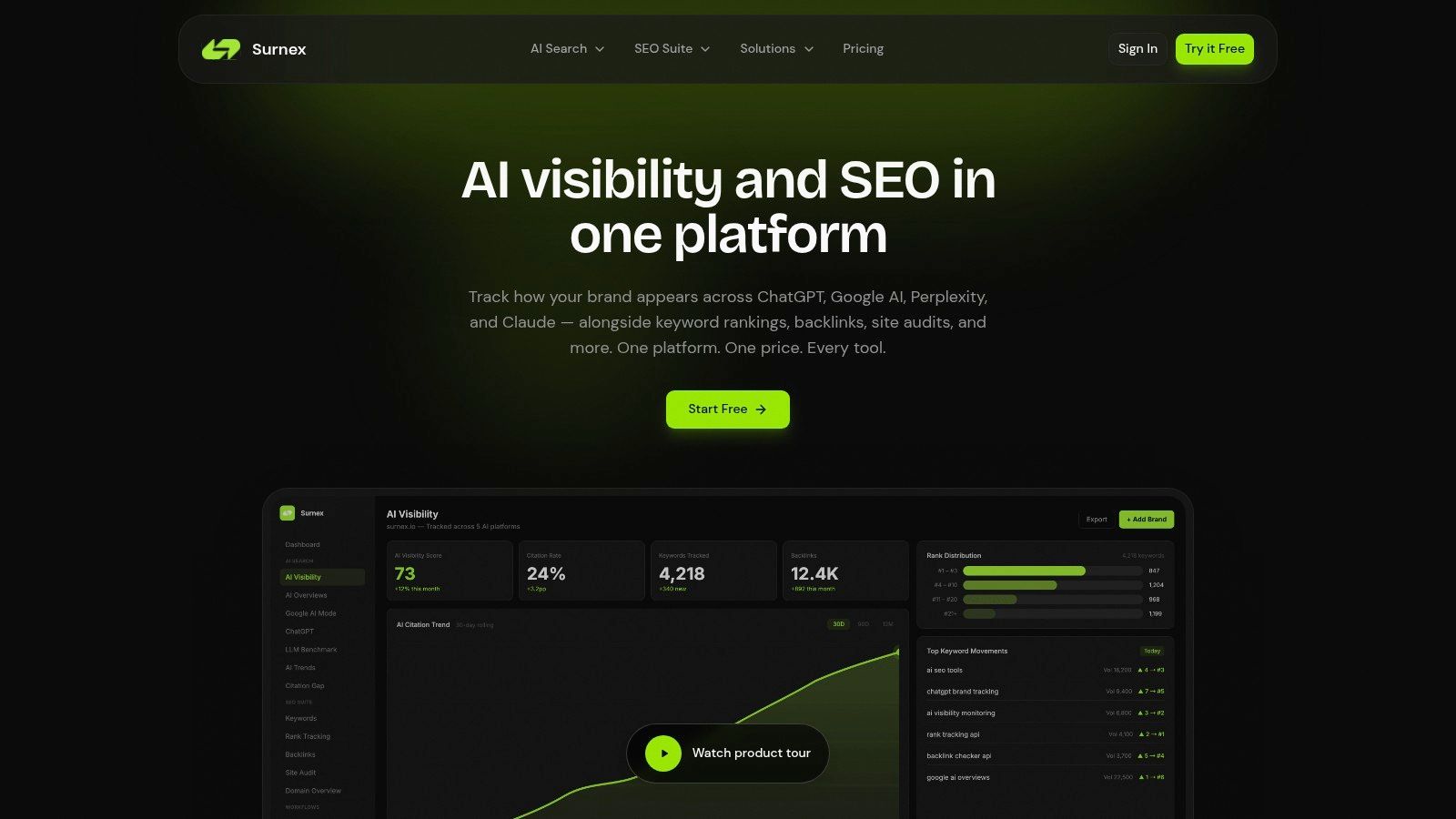
That process doesn't scale. A unified platform is more useful because it ties traditional SEO signals to AI visibility monitoring in one place. For example, AI Overview tracking for agencies is becoming part of the same reporting conversation as rankings and audits, not a separate experiment. Surnex is one platform built around that model, combining AI visibility tracking with core SEO data so teams can monitor local search performance and answer-layer presence without jumping between separate tools.
Clients don't care whether the lead came from a map result, a search result, or an AI summary. They care whether they were discovered.
Building Your Agency's Scalable Local Search Service
A scalable local service doesn't start with every tactic. It starts with priorities. Some clients need cleanup. Others need expansion. Others need reporting mature enough to explain why search behavior changed even though the website didn't.
A useful hierarchy looks like this:
-
Foundation first
- Fix Google Business Profile details
- Clean NAP inconsistencies
- resolve duplicate or outdated listings
- Align core categories and service information
-
Relevance next
- Build service and location pages that match intent
- Improve internal linking
- Add structured local proof to important pages
-
Trust and differentiation
- Create a review process the client can sustain
- Earn local links through real community activity
- Improve photos, FAQs, and profile completeness
-
Modern discovery
- Monitor where AI summaries do and don't surface the brand
- Track citation patterns across platforms
- Report local search visibility as a whole, not as isolated rankings
This structure also helps with packaging. A small local business may not need advanced content production first. It may need a better site foundation and listing accuracy. If the client doesn't yet have a usable website, guides that compare website builders for small business can help frame the conversation around practical setup choices before deeper local SEO work begins.
The agencies that win local business search over time do one thing well. They treat it like an operating system. Not a checklist. Not a one-time setup. Not a monthly report built around vanity rankings.
Surnex helps agencies track both traditional SEO performance and how brands surface in newer AI search experiences, including Google AI Overviews and related answer layers. If you need one system for local visibility, audits, rankings, and AI discovery reporting, Surnex is built for that workflow.