Your rank tracking setup probably still answers an older question: “What position am I in Google?” That still matters, but it’s no longer enough. In 2026, people don’t just click blue links. They get summaries in AI Overviews, ask ChatGPT for recommendations, compare sources in Perplexity, and increasingly discover brands without ever seeing a classic SERP the way they used to.
That creates a gap in a lot of reporting. A dashboard can say a page held steady, while your actual visibility changed because an AI answer started citing a competitor instead. Teams feel this mismatch every week. Rankings look fine, but discovery shifts. Clients ask why branded mentions are down. Product teams want data they can pipe into workflows, not another isolated SEO screen.
That’s why the best rank checker software now needs to do more than monitor positions. It needs to help you track visibility across traditional search and AI-driven search, support automation, and fit the way your team works. Agencies need reporting and segmentation. In-house teams need fewer tools and clearer prioritization. Developers need APIs that don’t fight them.
If you’re rethinking your stack, start with the bigger shift, not just another feature grid. This broader move toward AI-shaped discovery is already changing SEO operations, and AI Optimization Services' guide to the future of search engine optimization is a useful companion read.
Below are the tools I’d shortlist if I were choosing rank tracking software today, with the trade-offs that matter when you have to defend budget, automate reporting, and explain modern search visibility to stakeholders.
1. Surnex
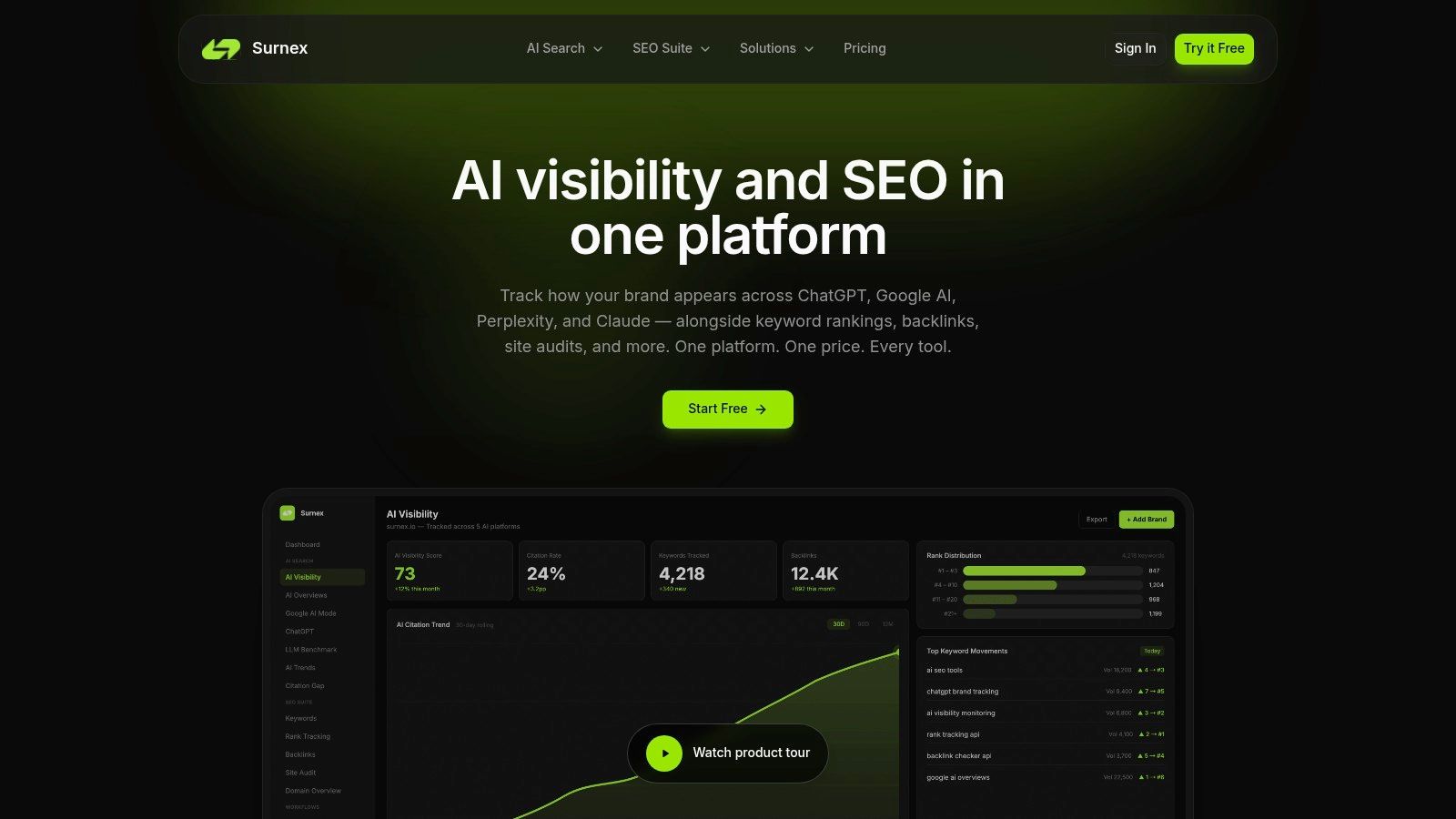
Surnex stands out because it treats rank tracking as part of a wider search intelligence workflow, not a separate utility. That matters now. If your team is tracking classic keyword movement in one tool, AI citations in another, backlinks somewhere else, and audits in a fourth place, the reporting burden gets ugly fast.
Surnex is built to unify that work. It tracks visibility across Google AI Overviews and AI Mode, ChatGPT, Perplexity, and Claude, while also covering the core SEO tasks still needed daily for effective SEO: keyword tracking, backlink analysis, site audits, Core Web Vitals, local SEO, and domain-level snapshots. If you want to see what that looks like in practice, the Surnex rank tracking workspace is the right starting point.
Where it fits best
This is the tool I’d look at first if your search reporting has outgrown simple position monitoring. Agencies can use it to explain why a client may be stable in classic rankings but less visible inside AI answers. In-house teams can cut tool sprawl and keep SEO, AI discovery, and technical visibility closer together. Developers get a REST API, which makes it practical to push search data into internal dashboards, agents, or customer-facing products.
The most useful differentiator is citation gap analysis. That’s the kind of feature that turns vague AI visibility talk into action. You can identify where competitors are being cited in model answers and use that to shape content updates, link acquisition, and entity coverage.
Practical rule: If your team is now asked to report on both rankings and AI discovery, a standalone rank checker will usually create more work than it saves.
Trade-offs to know
Surnex is strongest when you want one platform to connect traditional SEO work with AI search visibility. It’s less appealing if you only need a basic rank checker and don’t care about broader workflows. Public pricing detail is also limited compared with tools that show every tier upfront, though there is a free getting-started option and enterprise paths on the site.
Another reality check: AI search surfaces change quickly. No platform can freeze that environment. Teams using Surnex still need to validate important signals and adjust how they interpret citations and visibility over time. That’s not a flaw unique to Surnex. It’s the current state of AI search tracking.
2. Semrush Position Tracking
A common agency problem looks like this. You need one system that can track national terms, local packs, and competitor movement across dozens of client campaigns without forcing the team into three separate tools. Semrush usually makes the shortlist for that reason.
Position Tracking is strongest for teams that want rank monitoring tied to a broader search marketing stack. It covers desktop and mobile visibility, local and map tracking, and competitor comparisons inside the same platform. Semrush has also expanded into newer search surfaces, which matters if your reporting is starting to include AI-generated results and search visibility beyond the classic ten blue links.
What works in practice
The biggest advantage is operational efficiency. Teams already using Semrush for keyword research, site audits, content planning, or PPC can keep ranking data close to the rest of their workflow. That reduces context switching and makes it easier to move from “positions dropped” to “what changed on the page, in the SERP, or in the market?”
It also fits local reporting well. If your clients care about map visibility and location-level performance, compare Semrush’s setup with a dedicated local SEO tracking workflow to see whether you need a broader suite or a more focused system.
For agencies, familiarity matters too. New hires often know the interface already. Clients usually recognize the brand. That does not improve rankings by itself, but it does lower friction in onboarding and reporting.
Where the trade-offs show up
Semrush is less appealing if rank tracking is the only job. Broad suites tend to price around the value of the full platform, not just the tracker, so smaller teams can end up paying for modules they barely touch. HubSpot’s comparison places Semrush’s Pro plan at about $129 per month and notes support for up to 5,000 keywords, which is workable for one in-house team but can tighten quickly for agencies or multi-location brands.
There is also a workflow trade-off. Position Tracking gives you managed, scheduled ranking data, which is what many teams need for reporting and trend analysis. It will not always match a manual spot check you ran that morning on a volatile query. That gap is normal with large-scale tracking, but teams should set expectations correctly.
Semrush makes the most sense when you want one platform to cover rank monitoring, research, and stakeholder reporting. If you want the leanest path to high-volume tracking, developer-friendly automation, or deeper future-of-search reporting, it starts to look less efficient than a specialist tool.
3. Ahrefs Rank Tracker
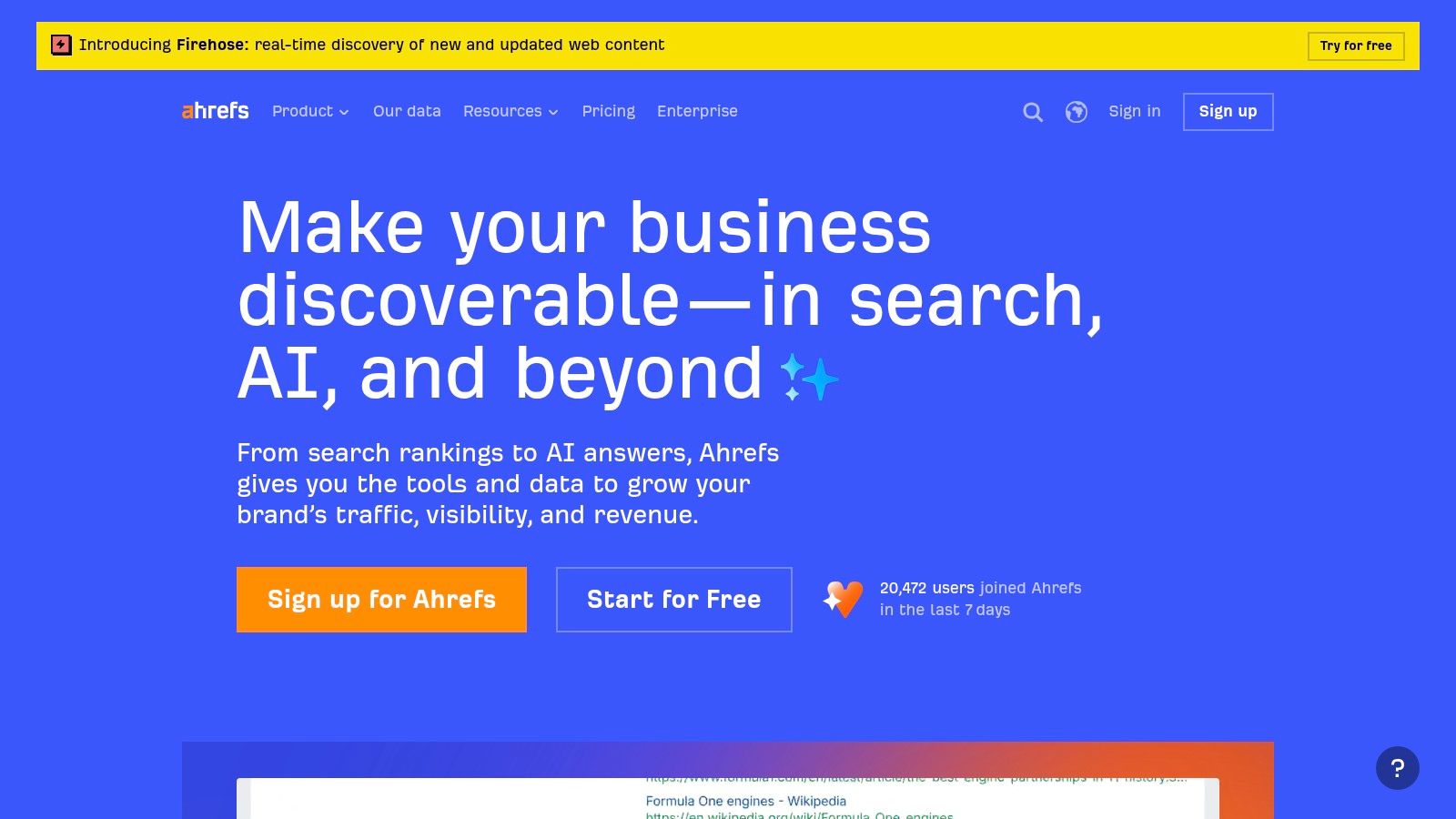
Ahrefs is the tool I’d pick when rank changes only make sense if you can immediately connect them to links, content, and competitor pages. Its Rank Tracker is solid, but its primary value comes from context. You’re never looking at rankings in isolation for long.
That’s why Ahrefs remains popular with experienced SEO teams. The rank tracker itself is mature and reporting is clean, but the surrounding backlink and keyword datasets are what make it useful in diagnosis. A movement in position is easier to interpret when your team can jump straight into link profile changes, competing pages, and SERP history.
Why practitioners still like it
Ahrefs works well for in-house SEO teams that already live in its broader stack. If your workflow begins with “what moved?” and quickly turns into “which page replaced us and why?”, Ahrefs keeps that chain tight.
Its Looker Studio connectors are also useful for teams building stakeholder dashboards outside the platform. And if your reporting often pivots from positions to authority and link acquisition, compare that with the backlink analysis side of Surnex, because that transition point is often where teams decide whether a suite feels connected or fragmented.
The main limitation
The biggest practical drawback is update cadence. Ahrefs Rank Tracker is commonly seen as less suited to teams that need very frequent checking, because the default update rhythm is weekly rather than daily. For trend monitoring that can be fine. For fast-moving campaigns, it can feel slow.
Pricing also climbs as your tracked keyword set grows. Ahrefs rarely feels like the “budget-safe” option once an agency or large in-house team starts scaling usage. Still, if your priority is data depth over speed, it remains one of the strongest options on this list.
4. AccuRanker
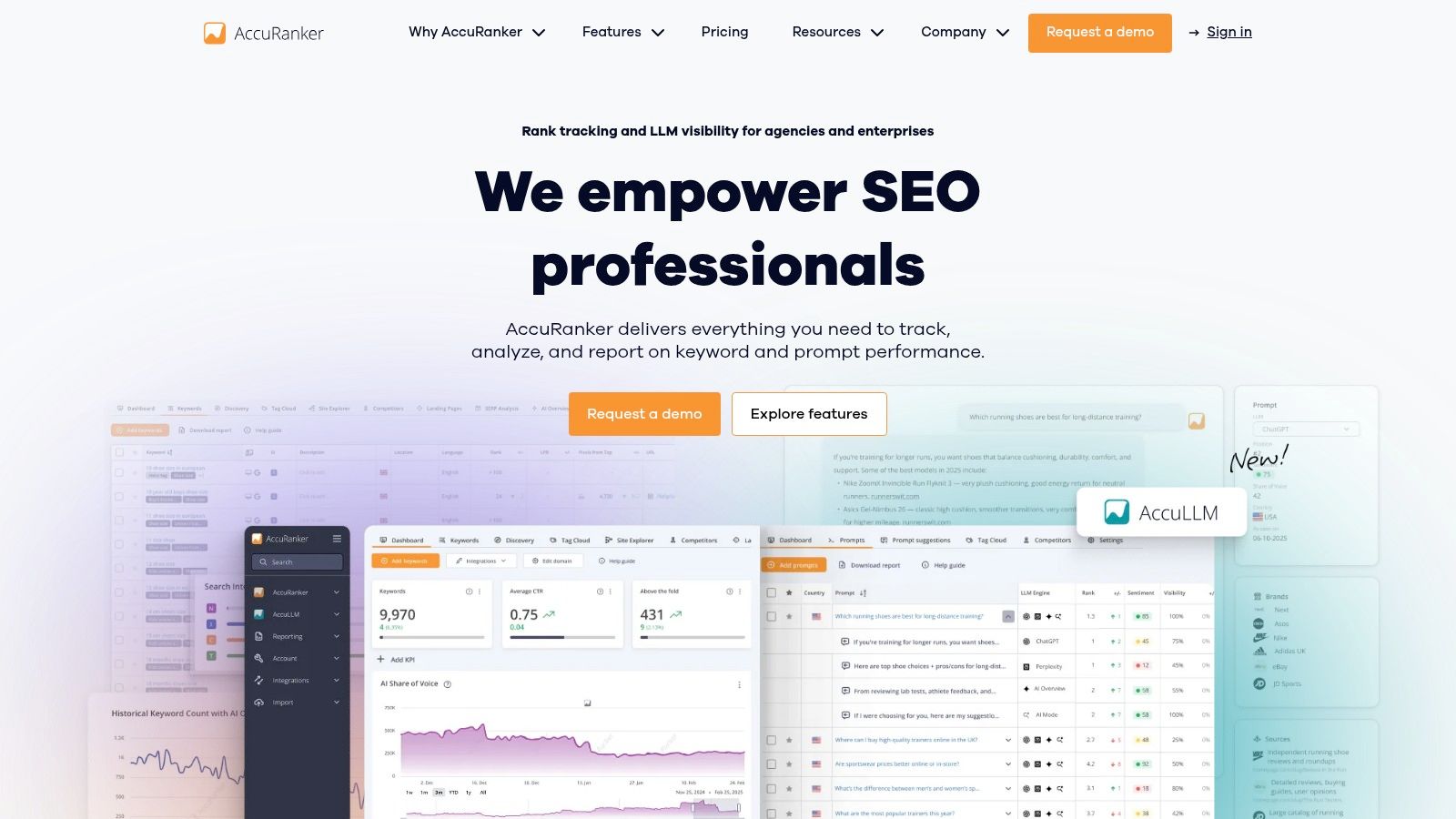
AccuRanker is what I recommend when rank tracking itself is mission-critical and you don’t want to compromise on speed. It’s a specialist. That focus shows.
According to Zapier’s comparison, AccuRanker delivers on-demand updates with sub-minute latency and is priced from $79 per month. That makes it a very different buy from broad SEO suites. You’re paying for precision, refresh speed, and tracking operations that can keep up with active SEO programs.
Best for performance-focused teams
If you manage high-value keyword sets, monitor competitive categories, or need fresh reads after content deployments and technical fixes, AccuRanker is hard to beat. It’s also strong for teams building their own reporting layers because it offers API access, webhooks, and data-friendly integrations.
For local businesses and multi-location brands, it’s worth comparing that specialist approach with a platform built to keep local SEO connected to broader visibility data, such as Surnex local SEO tracking. The right choice depends on whether local rank tracking is your end product or one part of a larger search intelligence stack.
If a rank drop needs a same-day response, weekly or even fixed daily updates can be too slow. That’s where AccuRanker earns its price.
Trade-offs before you buy
AccuRanker isn’t the cheapest entry point, and it usually makes the most sense when you’re tracking at meaningful volume or when delayed data creates real business friction. Smaller teams that mainly want broad SEO tooling may find a general suite more economical.
It’s also less about reducing tool sprawl than some newer all-in-one platforms. AccuRanker can be the best rank checker software for dedicated tracking, but many teams still pair it with separate tools for audits, backlinks, and content planning.
5. ProRankTracker
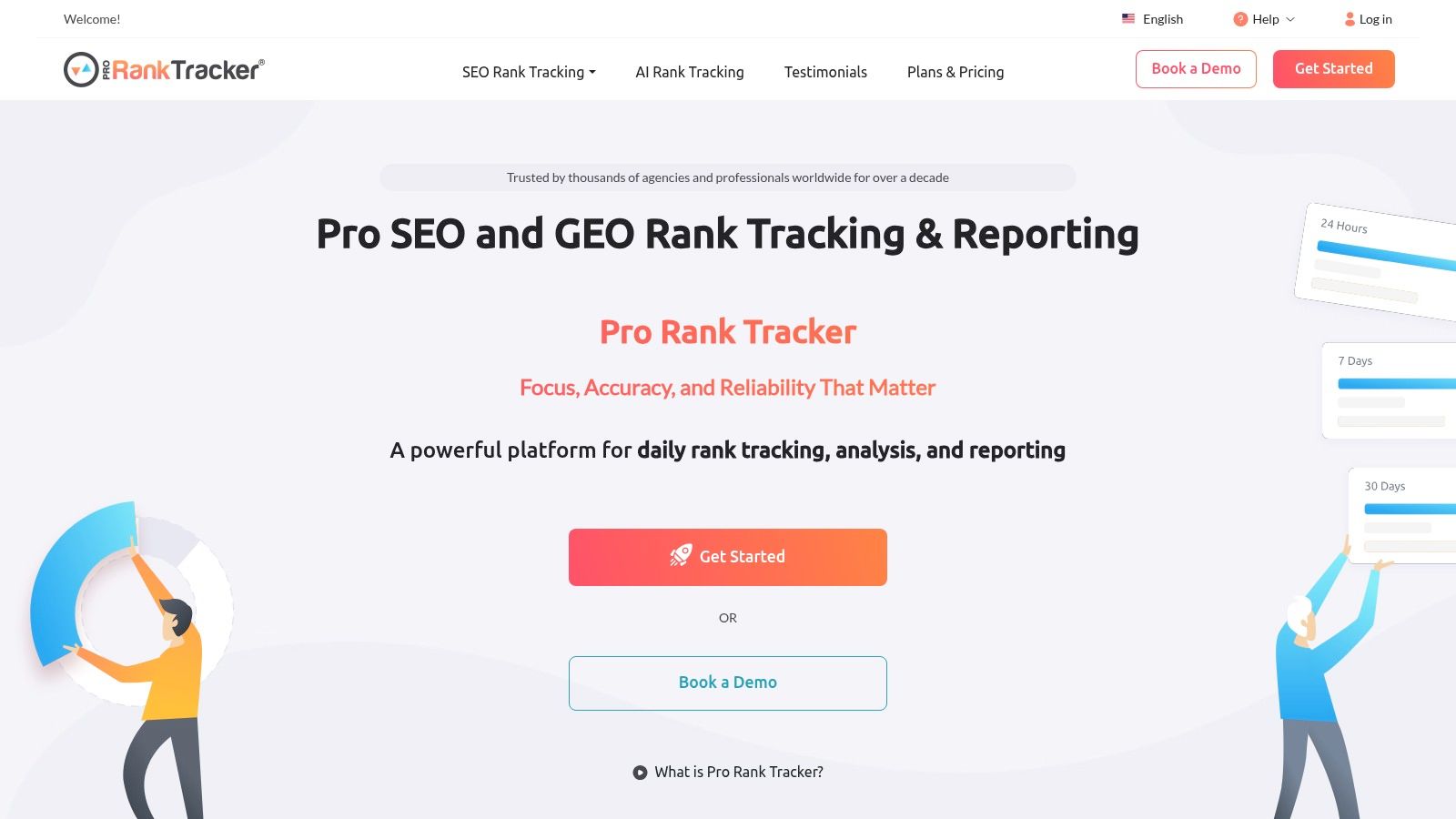
ProRankTracker is one of those tools agencies often keep around because it’s flexible and client-friendly. It covers more than standard web rankings, including YouTube, Google Business Profile and Maps, and newer AI result monitoring. That mix gives it a practical edge for agencies serving local businesses, publishers, and multi-channel brands.
What it does well is packaging. White-label reporting is strong, segmentation is useful, and the MyRanks client app makes it easier to give customers visibility without exposing the full backend. If you manage many client accounts, that kind of operational polish matters more than feature count on a homepage.
Where it earns its keep
I’d put ProRankTracker high on the list for agencies that need lots of reporting flexibility without buying a heavy enterprise platform. It’s also good for teams that want one tracker across web, video, local pack, and AI surfaces, rather than stitching together multiple niche tools.
Its pricing model is also easier to reason about than some suites that bury limits inside projects, credits, and add-ons. If your business runs on clear per-term planning and client billability, that simplicity helps.
What to watch for
The downside is interface depth. ProRankTracker can do a lot, but large campaigns need thoughtful setup. Teams that want a minimal UI with almost no configuration may find it less immediately approachable than lighter tools like Wincher or SERPWatcher.
Still, for agency operations, I’d rather have a platform that takes a bit more initial work and gives stronger client delivery options than one that’s easy on day one but awkward every month after that.
6. SE Ranking Rank Tracker
A common buying problem looks like this. The team has outgrown a basic keyword checker, but a full enterprise platform would add cost and process they do not need yet. SE Ranking fits that middle ground well because it still feels built for rank tracking work first, then layers in the rest of the SEO stack around it.
Its starting price is often cited as $52 per month by OneLittleWeb, which explains why it comes up so often for consultants, smaller agencies, and in-house teams with tight budget control. You get enough depth to run serious reporting, local tracking, and competitor monitoring without stepping straight into enterprise pricing.
Why it works in practice
SE Ranking covers the areas modern teams ask for now: AI visibility tracking, local and map tracking, white-label reporting, keyword grouping, forecasting, and API access. That mix matters. Rank tracking is no longer just ten blue links, and a tool that cannot adapt to AI-driven search features or plug into reporting workflows starts to create manual work fast.
I also like that the product stays readable. Some all-in-one suites bury ranking workflows under too many adjacent features. SE Ranking keeps the day-to-day job clear, which helps when account managers, analysts, and clients all need access to the same system without a long training cycle.
Where the trade-offs show up
The trade-off is depth at the high end. Backlink analysis is serviceable, but teams doing heavy link prospecting, auditing, or competitive link research will still want a specialist tool beside it. Large enterprises that need the fastest possible refresh cadence or highly custom data pipelines may also find tools like AccuRanker, STAT, or a more developer-oriented option such as Surnex better aligned.
SE Ranking is a strong fit for teams that need current rank tracking, AI search visibility, client-ready reporting, and API access without buying a platform built for enterprise complexity first.
That is why I usually treat it as a growth-stage choice. It gives smaller and mid-sized teams room to standardize reporting and automate core workflows now, while keeping enough future-search coverage to avoid another tool switch too soon.
7. Mangools SERPWatcher
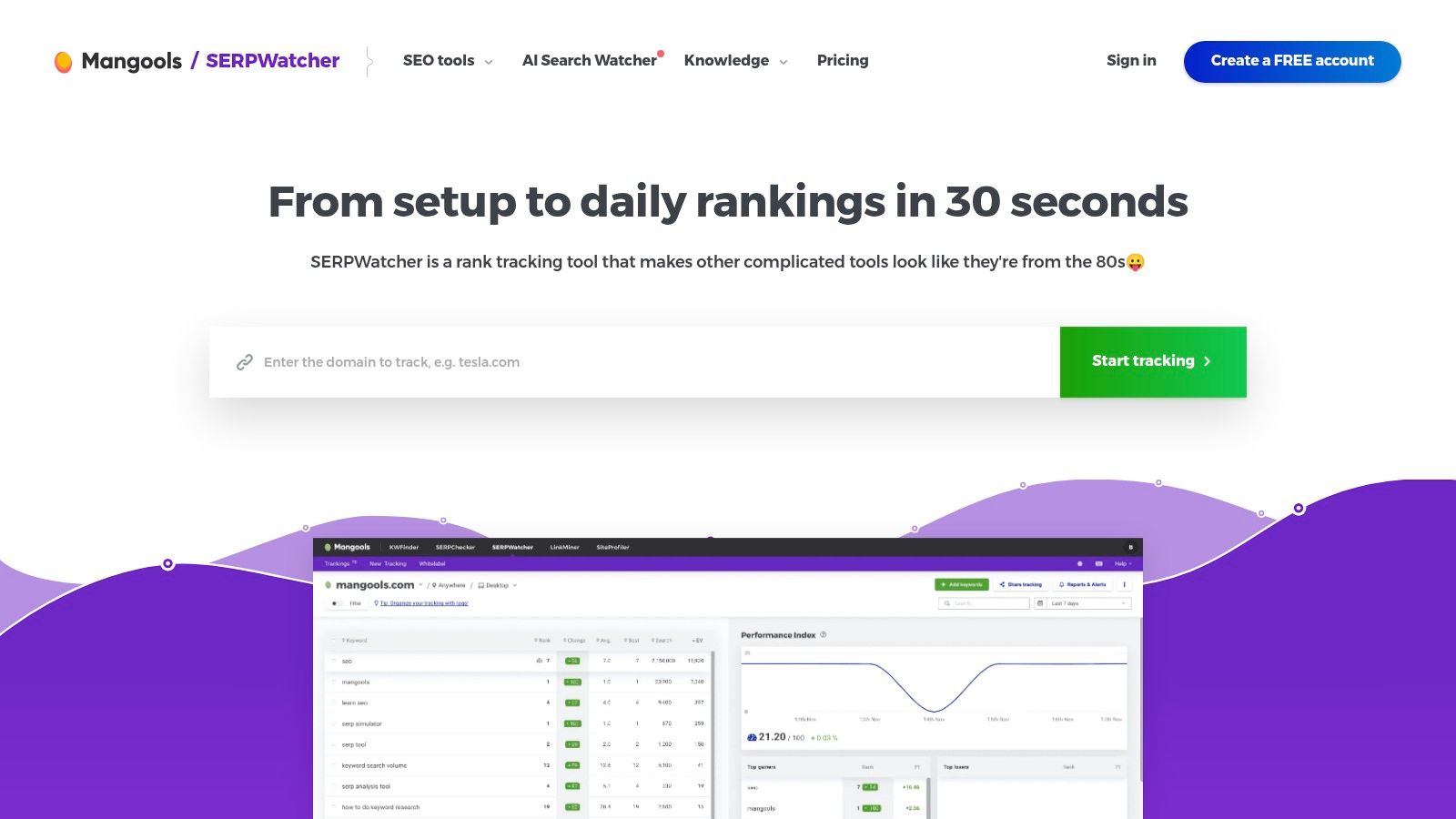
SERPWatcher is the tool I’d hand to a freelancer, a content team, or a small agency that wants rank tracking without a long onboarding process. It’s part of the Mangools suite, and the product philosophy is obvious from the first login. Keep it simple, keep it usable, and don’t drown people in controls they’ll never touch.
That simplicity has real value. Many rank tracking platforms are technically strong but operationally annoying. SERPWatcher avoids that problem. Setup is fast, reporting is clean, and non-specialists can usually understand what they’re looking at.
Where it makes sense
This is a good fit when your main need is daily rank visibility and straightforward trend monitoring. City-level localization and the tie-in with SERPChecker give enough context for a lot of practical SEO work, especially for local businesses and content-led sites.
It’s also one of the easier tools to roll out to junior marketers or clients who need visibility but don’t need every segmentation layer under the sun.
Its real limitation
SERPWatcher is not built for deep historical analysis at enterprise depth. Historical tracking generally starts when you add keywords, so if your team expects rich pre-existing trend layers and advanced segmentation, you’ll feel the ceiling.
That said, not every team needs a heavy platform. A lot of SEO work is slowed down by software that asks too much of the user. SERPWatcher stays valuable because it doesn’t.
8. Wincher Rank Tracker
Wincher has always appealed to teams that want rank tracking to be clean and fast to manage. Its interface is straightforward, reports are easy to export, and onboarding doesn’t feel like a project. For agencies with junior staff, that’s a major operational advantage.
The tool also does a nice job tying rankings to landing pages. That sounds small, but it’s useful when you’re diagnosing whether a keyword drop is really a page problem, an intent mismatch, or a cannibalization issue.
Best use case
Wincher is a strong option for agencies with lots of small and mid-sized accounts. It supports local and mobile tracking, competitor suggestions, white-label reports, and multi-site management without feeling bloated.
I also like it for teams that need clients to understand the reports. Some enterprise tools produce powerful dashboards that only SEO specialists understand. Wincher generally doesn’t have that problem.
The trade-off
Its SERP depth is limited to the top 30. For many campaigns, that’s enough. For deeper research, recovery work, or large opportunity mapping, it can feel restrictive.
That means Wincher is better as a practical reporting and tracking tool than as a deep search intelligence platform. If your workflow starts and ends with clear daily tracking and simple reports, that’s fine. If you want more investigative depth, look higher up this list.
9. Nightwatch
Nightwatch sits in a useful middle ground. It’s a specialist rank tracker with serious accuracy and automation options, but it still feels accessible to agencies that don’t want an enterprise procurement cycle.
What makes Nightwatch attractive is its focus on clean tracking operations: local and mobile simulation, SERP screenshots, white-label reporting, multi-user access, and API availability. Agencies that want dedicated rank tracking without paying enterprise-platform prices often land here.
Why it stays relevant
Nightwatch is good for teams that need confidence in local and device-level reporting. SERP screenshots are especially useful when clients challenge movement or want visual proof of what changed. That saves time in account management.
Its annual plans also make scaling easier to understand for agencies forecasting keyword volume across clients. You can usually map spend to usage without too much guesswork.
A few frictions
Monthly pricing is less clearly presented than annual billing, and some features need extra steps or requests during trials. That’s not a deal-breaker, but it does create more buying friction than tools with clearer packaging.
Agencies that want dedicated rank tracking plus automation often do well with Nightwatch. Teams that want broader SEO workflows from the same login may still prefer a larger suite.
10. STAT Search Analytics by Moz
STAT is built for scale. If you’re running massive keyword sets across markets, devices, and business lines, this is one of the few platforms designed for that complexity from the ground up. It’s less about “checking rankings” and more about managing search visibility as an enterprise reporting system.
That makes it a very different product from SMB-friendly trackers. STAT excels at segmentation, taxonomy, SERP feature parsing, and large-scale daily monitoring. For global brands and large agencies, those are not nice-to-haves. They’re the whole job.
Who should consider it
STAT makes sense for enterprise SEO teams with complex reporting structures. If you need to segment by product line, market, content type, intent cluster, or stakeholder group, this is the kind of platform that can support that model without becoming unmanageable.
It’s also strong for executive reporting where SERP feature visibility matters as much as raw position movement. That makes it useful in environments where SEO teams need to communicate upward, not just optimize downward.
Why smaller teams should probably skip it
Pricing is quote-based, and the entry point is generally higher than SMB tools. That alone rules it out for many teams. But even if the budget worked, plenty of smaller SEO programs do not need this level of structure.
STAT is excellent software. It’s just not trying to be a simple rank checker. If that’s what you need, choose something lighter.
Top 10 Rank Tracker Comparison
| Product | Core features | UX & quality ★ | Value & pricing 💰 | Target audience 👥 | Unique selling points ✨ |
|---|---|---|---|---|---|
| 🏆 Surnex | AI visibility + full SEO toolkit (Google AI Overviews/Mode, ChatGPT, Perplexity) + rank, backlinks, audits, REST API | ★★★★★ Unified dashboard & API‑first workflows | 💰 Free getting‑started; one‑platform pricing, enterprise on request | 👥 Agencies, in‑house SEO teams, developers | ✨ Citation gap analysis, LLM benchmarking, agent‑ready API, white‑label workflows |
| Semrush – Position Tracking | Multi‑device/location rank tracking; local/maps; AI visibility via add‑ons | ★★★★ Mature UI across marketing suite | 💰 Tiered plans; add‑ons can raise cost | 👥 Agencies & full‑stack marketing teams | ✨ Broad marketing toolset; strong local & competitor insights |
| Ahrefs – Rank Tracker | Rank Tracker + SERP history; large backlink & keyword datasets | ★★★★ Accurate data & enterprise integrations | 💰 Paid tiers with clear limits; premium as you scale | 👥 Agencies & in‑house SEO needing link/data depth | ✨ Industry‑scale index & rich backlink context |
| AccuRanker | High‑frequency/daily + on‑demand checks; BigQuery & API access | ★★★★★ Fast, accurate at scale | 💰 Premium pricing; best value at high volume | 👥 Data teams, enterprises, agencies with big campaigns | ✨ On‑demand refreshes, raw SERP access, BigQuery integration |
| ProRankTracker | Daily + on‑demand; AI visibility across LLMs; white‑label & client app | ★★★★ Agency‑friendly, flexible reporting | 💰 Clear per‑term pricing; easy to scale | 👥 Agencies needing white‑label and multi‑engine tracking | ✨ Unlimited projects, MyRanks client app, multi‑engine AI coverage |
| SE Ranking – Rank Tracker | Daily tracking, local/Map, API, Share of Voice & AI prompts | ★★★★ Good UX; accessible features | 💰 Affordable tiers + add‑ons (Agency Pack, API) | 👥 SMBs & agencies on budget | ✨ Strong price‑to‑capability, clear scaling options |
| Mangools – SERPWatcher | Daily updates, city localization, SERP feature context via bundle | ★★★ Lightweight, fast setup | 💰 Lower cost as part of Mangools bundle | 👥 Freelancers & small teams | ✨ Approachable UX, simple rollout for non‑SEOs |
| Wincher – Rank Tracker | Daily local/mobile tracking; white‑label reports; landing‑page insights | ★★★ Clean UI, quick onboarding | 💰 Budget‑friendly; on‑demand refresh on higher tiers | 👥 Agencies needing simple multi‑site reporting | ✨ Easy reporting, unlimited sites on mid/high plans |
| Nightwatch | Accurate daily tracking, SERP screenshots, API & multi‑user support | ★★★★ Accurate & scalable for agencies | 💰 Competitive annual plans; clearer annual pricing | 👥 Agencies seeking automation & white‑label | ✨ Strong location/device simulation, robust APIs |
| STAT Search Analytics (by Moz) | Enterprise daily tracking, SERP feature parsing, deep segmentation & APIs | ★★★★ Enterprise‑grade for large campaigns | 💰 Custom/quote‑based enterprise pricing | 👥 Large agencies & enterprises | ✨ High‑volume taxonomy, share‑of‑voice & executive reporting |
Choosing Your Tool for Modern Search Intelligence
The best rank checker software in 2026 doesn’t just tell you whether a keyword moved up or down. It helps you understand how your brand shows up across classic search, local search, and AI-driven discovery. That shift changes how you should evaluate tools.
Start with your actual workflow. If you run an agency, reporting and segmentation usually matter as much as raw tracking accuracy. You need clean client delivery, white-label options, and enough flexibility to explain why visibility changed even when rankings look stable. Tools like ProRankTracker, Nightwatch, and SE Ranking do that job well. Semrush also works when your agency wants one broader operating system for SEO and adjacent channels.
If you’re in-house, the biggest mistake is often buying software based on a feature checklist instead of operating reality. A massive suite sounds efficient until your team only uses a fraction of it and still needs separate AI visibility monitoring. In-house teams usually do best when the platform reduces switching costs between rank tracking, competitor analysis, content prioritization, and technical diagnostics. That’s where integrated platforms become more attractive than standalone trackers.
Developers and data teams should use a different filter entirely. The question isn’t only whether the UI looks good. It’s whether the platform can plug into internal systems, automate alerts, and support custom reporting without manual exports. If API access, automation, and product integration matter, specialist tools like AccuRanker become appealing, and API-first platforms become even more relevant.
The AI layer is the big separator now. Old-school rank tracking still matters, but it no longer explains the full discovery picture. A brand can maintain conventional rankings and still lose presence in AI-generated answers. That’s why tools built around AI visibility, citation tracking, and LLM benchmarking have an edge going forward. They don’t just record position. They show where demand is being intercepted before the click.
That doesn’t mean every team needs the most complex platform. It means you should buy for the next two years of search behavior, not the last five. Lightweight tools like SERPWatcher and Wincher still make sense for simpler needs. Ahrefs still makes sense when diagnosis depends on deep link and content context. AccuRanker still makes sense when speed and precision are essential. STAT still makes sense at enterprise scale.
But if you want one recommendation that aligns best with where search is headed, Surnex is the most future-ready option on this list. It connects traditional SEO tracking with visibility across AI Overviews, ChatGPT, Perplexity, and other emerging surfaces, while still covering the core SEO work teams need every day. That combination matters more each quarter.
There’s another angle teams often miss. Search visibility is also shaped by site quality, usability, and accessibility. If rankings slip despite solid targeting, technical barriers may be part of the problem, and this guide on addressing WCAG accessibility issues that are hurting SEO rankings is worth reviewing alongside your tooling decisions.
Choose the platform that helps your team act, not just observe. In modern search, that’s the difference between a tracker and a real intelligence system.
If you want a single platform that tracks rankings, monitors AI visibility, highlights citation gaps, and gives your team an API-ready workflow, Surnex is the strongest place to start. It’s built for agencies, in-house teams, and developers who need a clearer view of how brands surface across both traditional search and emerging AI experiences, without juggling a stack of disconnected tools.